
Wheel bearings play a critical role in vehicle dynamics, allowing the wheels to rotate with minimal friction while supporting the vehicle's weight. In the harsh and abrasive environment of the UAE, where high temperatures and desert dust are constant factors, these components endure immense stress. A failed wheel bearing does not simply cause a nuisance; it compromises the safety of the vehicle, leading to potential loss of control at high speeds. When purchasing a used car, visual inspection is rarely sufficient to detect the subtle onset of bearing failure. Understanding the specific warning signs allows buyers to navigate the market with technical competence and avoid expensive repairs down the line.
The Mechanics of a Wheel Bearing Failure
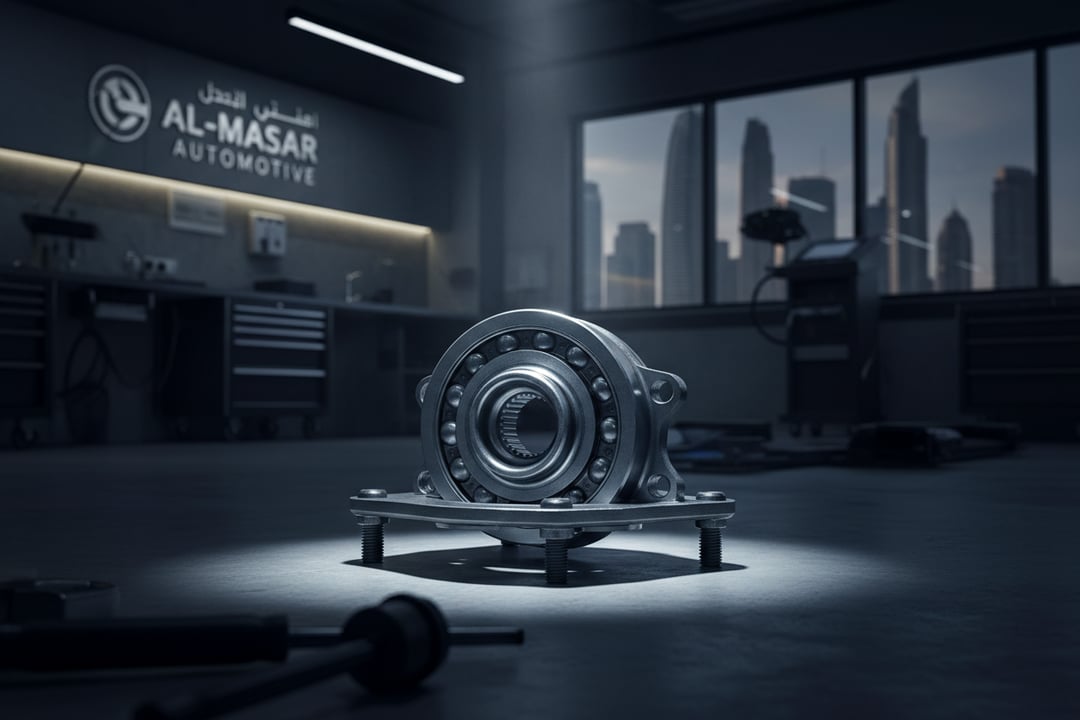
A wheel bearing is essentially a set of steel balls or rollers held in a ring called a race. It allows the wheel to spin smoothly with minimal resistance. The integrity of the bearing relies on a precise fit between the balls and the race, sealed against contaminants and lubricated by high-temperature grease. In the UAE climate, the extreme heat can degrade the grease viscosity and cause the metal to expand, leading to microscopic gaps that eventually result in metal-on-metal contact. Once this contact begins, the bearing heats up further, creating a cycle of rapid degradation and eventual seizure.
The primary danger of driving with a failing bearing is the sudden loss of wheel control. Unlike a brake failure, which is obvious immediately, a bearing failure often worsens gradually. However, neglecting the early symptoms will inevitably lead to the bearing disintegrating, which can lock the wheel, snap the axle, and damage the brake caliper. Detecting these issues before finalizing a purchase is essential for maintaining the mechanical integrity of the vehicle.
Auditory Warning Signs: The Sounds of Failure
The most common and earliest indicator of a failing wheel bearing is a change in the vehicle's noise profile. Because wheel bearings are internal components, the sound often travels through the chassis before reaching the passenger cabin. In a used car inspection, the sound of silence is often deceptive; a car can appear quiet while harboring a ticking or grinding noise that only manifests under specific load conditions.
Buyers must distinguish between tire noise and bearing noise. Tire noise is typically rhythmic and consistent with the rotation of the wheel, often described as a "hush" or "whoosh" sound. In contrast, a failing bearing produces a low-pitched roar or a growl that increases in volume as the vehicle speed increases. This is due to the RPM (Revolutions Per Minute) of the wheel increasing, which compresses the air inside the failing bearing race.
- Growing Hum: A low-frequency drone that changes pitch with speed.
- Grinding or Gritty Noise: Indicative of metal-to-metal contact, often heard when turning corners.
- Clicking/Popping: Often confused with CV joints, but can indicate a loose or failing hub assembly.
Vibration and Handling Instability
As the bearing degrades, the balance of the wheel assembly is disrupted. This imbalance translates directly into physical vibrations that the driver can feel through the steering wheel, the brake pedal, or the seat. In the context of a test drive, these vibrations are the most tangible evidence of a problem that cannot be fixed with an alignment or tire rotation.
A failing wheel bearing introduces play into the steering geometry. This "play" feels like looseness or a vague sensation of the steering wheel not returning exactly to center after a turn. At highway speeds, the vibration often intensifies, causing the steering wheel to shimmy. This instability is not merely uncomfortable; it reduces the driver's ability to respond quickly to road hazards, particularly in the high-traffic conditions of the Emirates.
Visual and Thermal Indicators
While the internal mechanics of the bearing are hidden, the external effects of bearing failure are often visible to the observant inspector. The most immediate sign is heat. Because a bearing is a friction point, a failed bearing will generate significant heat that can be felt by hand on the wheel hub or the wheel rim. In the UAE summer, a hot hub cap can indicate a bearing that is already working overtime to dissipate friction.
Another visual clue is the condition of the rubber seal. If the bearing seal has cracked or disintegrated, it allows the high-temperature grease to leak out. This results in a visible brown or black sludge around the center of the wheel hub or on the suspension components underneath. Furthermore, inspect the tire tread; although less common, a seized bearing can cause a shift in wheel alignment, leading to rapid or uneven tire wear on one side of the vehicle.
| Visual Clue | Diagnostic Implication |
|---|---|
| Overheated hub cap or wheel | Increased friction within the bearing assembly |
| Leaking grease/oil around the axle | Failed seal allowing lubrication loss |
| Uneven tire wear on one side | Alignment shift due to bearing looseness |
The Critical Role of Professional Inspection
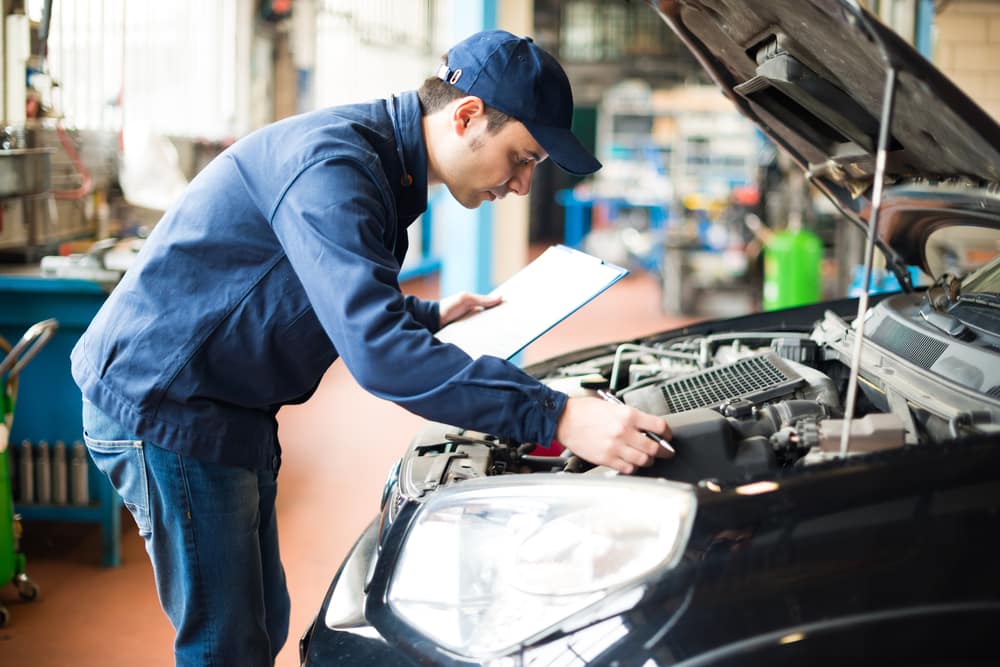
Even with a keen ear and a keen eye, diagnosing a wheel bearing requires a controlled environment that most private sellers cannot provide. The conditions of a busy showroom or a chaotic street do not allow for the specific driving maneuvers necessary to isolate bearing noise. A professional inspection service uses a systematic approach to verify suspension health and drivetrain functionality.
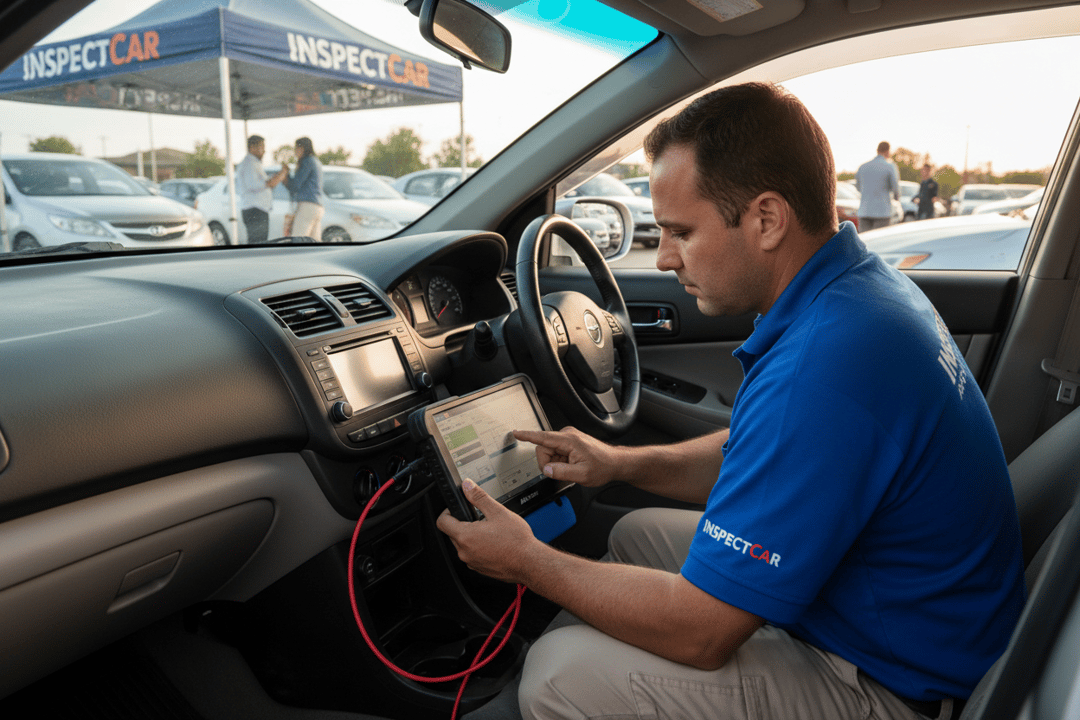
Reliable inspection services utilize a comprehensive checklist that covers all 25 critical categories of vehicle health. This includes a detailed Suspension check to identify play in the bearings and a rigorous Road Test. During the road test, inspectors measure acceleration, braking, and noise levels under varying speeds to pinpoint the source of the vibration. Furthermore, a Computer Diagnostic scan can be performed to check for ABS (Anti-lock Braking System) codes, as a severely failing bearing can sometimes trigger electronic errors in the vehicle's stability control systems.
For buyers looking for the highest level of assurance, a full inspection is the only defense against hidden mechanical defects. While a basic computer diagnostic can rule out engine and transmission faults, it cannot physically feel a vibration or hear a growl. Packages such as the Body & Computer AED 250 provide a solid foundation of checks, while the Comprehensive AED 299 package offers the deepest level of scrutiny, covering frame integrity, panel-by-panel paint analysis, and fluid condition.
Preventing Future Headaches
Investing in a professional pre-purchase inspection is a minor expense compared to the cost of a wheel hub replacement, which can run into thousands of Dirhams when factoring in labor time. A bearing replacement requires removing the brake caliper, rotor, and sometimes the hub assembly, making it a labor-intensive job. By paying for an inspection, the buyer transfers the risk of these hidden defects to the inspector, ensuring they are not bearing the financial burden of previous ownership.
Furthermore, a on-location inspection service offers the convenience of bringing the expertise to the seller, saving the buyer the time and hassle of visiting multiple workshops. The detailed reporting provided by these services, often including HD photos and a comprehensive PDF report, serves as a legal and technical record of the vehicle's condition at the time of purchase. This documentation protects the buyer should disputes arise regarding the vehicle's history.
AutoFay inspects 410+ checkpoints with HD photos and PDF report. Book at autofay.ae or call +971542584458


0 Comments
No comments yet. Be the first to share your thoughts!