


On the dashboard of any modern vehicle, the warning lights indicate the health of specific systems. Codes beginning with "B" specifically relate to the body structure and safety restraint systems. For a buyer in the UAE, encountering a B0 code is a critical signal regarding the vehicle's safety envelope. These codes do not concern the engine or transmission; they address the passive safety features designed to protect occupants during a collision. Understanding these codes prevents the purchase of a vehicle with compromised safety or hidden damage history.
The Fundamentals of B0 Series Codes
The B-series belongs to the Body category within the On-Board Diagnostics (OBD) standard. This standard mandates that all vehicles sold after 1996 provide a standardized method for diagnosing faults. While P-codes indicate engine problems and C-codes denote chassis or suspension issues, B-codes flag defects in the car's body shell and safety equipment. When a code starts with B0, it generally refers to the Supplemental Restraint System (SRS) or the Occupant Restraint System (ORS). In the UAE market, where high temperatures and potential exposure to coastal salt can degrade electrical components, these systems are prone to specific types of failure.
A B0 code typically points to a malfunction in the communication between the sensors and the control module. The vehicle's computer constantly monitors the readiness of the airbags, seatbelt pretensioners, and crash sensors. If the computer detects a voltage drop, a short circuit, or a missing signal, it illuminates the airbag warning light and stores a specific code. Ignoring these warnings can lead to a total system failure upon impact, rendering the safety belts and airbags useless when they are needed most.
Airbag Module Integrity and Crash Memory
One of the most common B0 code categories relates to the airbag modules themselves, including the steering wheel, dashboard, and side airbags. Code readings such as B0040 or B0050 often indicate that the airbag module has deployed in a previous accident. Modern airbag controllers store crash data, even if the airbag did not physically deploy. The vehicle's computer knows that a crash occurred and may disable the system to prevent accidental deployment in a minor subsequent impact.
Purchasing a vehicle that has triggered these codes requires absolute certainty about the severity of the previous accident. A minor fender bender can trigger these codes, but a major collision could have damaged the internal wiring of the airbag module. A professional inspection is required to differentiate between a code triggered by a minor bumper impact and a code resulting from a structural failure of the body frame. Without this verification, the safety of the vehicle is effectively unknown.
Seatbelt Pretensioner Malfunctions
The seatbelt is the primary restraint system in a vehicle, but modern vehicles use pyrotechnic seatbelt pretensioners to enhance safety. These devices are located in the retractor mechanism of the seatbelt. In the event of a collision, the pretensioner activates instantly to pull the belt tight against the occupant's chest, reducing slack and preventing the body from being thrown forward. B0 codes associated with the pretensioner indicate that the trigger mechanism has been activated or is malfunctioning.
If a vehicle has a B0 code for the pretensioner, the belt will still lock if the vehicle stops suddenly, but it will not tighten. This reduces the effectiveness of the belt in high-speed impacts. Furthermore, replacing a seatbelt pretensioner is a complex process that often requires replacing the entire seatbelt assembly. The cost and complexity of this repair are significant, and the safety risk remains high until the system is fully replaced and the code cleared by a professional diagnostic tool.
Occupant Classification Systems (OCS)
Modern vehicles utilize Occupant Classification Sensors to determine if a passenger seat is occupied and by whom. These sensors are typically located in the seat base or the seat cushion. The primary function of this system is to disable the front passenger airbag if a child seat or a small child is detected. B0 codes related to the OCS indicate that the sensor is not communicating correctly with the control module.
A faulty OCS sensor can cause the airbag to deploy when it should not, posing a severe risk to a child passenger. Conversely, the system might incorrectly assume the seat is empty and fail to deploy the airbag when a passenger is seated. This creates a dangerous unpredictability in the vehicle's safety performance. In the UAE, where rear-facing child seats are common, a malfunctioning OCS is a critical safety defect that must be addressed immediately.
Wiring Harness and Connector Corrosion
Electrical faults in the body system are frequently caused by corrosion rather than a broken component. The UAE climate presents a unique challenge for vehicle electronics. High humidity combined with road salt can cause corrosion to form in the wiring harnesses located behind the dashboard, in the door jambs, or under the seat. Corroded connectors create resistance, which can trigger false B0 codes or cause intermittent failures.
Because the wiring for the safety restraint system is often bundled with other critical systems, identifying the exact corroded pin requires advanced diagnostic scanning. Visual inspection is often insufficient to detect internal corrosion or damaged wires. A professional technician must use a multimeter and a diagnostic live-data scanner to pinpoint the fault. Without this level of precision, a temporary repair might clear the code, only for the system to fail again shortly after.
Diagnostic Packages for B0 Codes
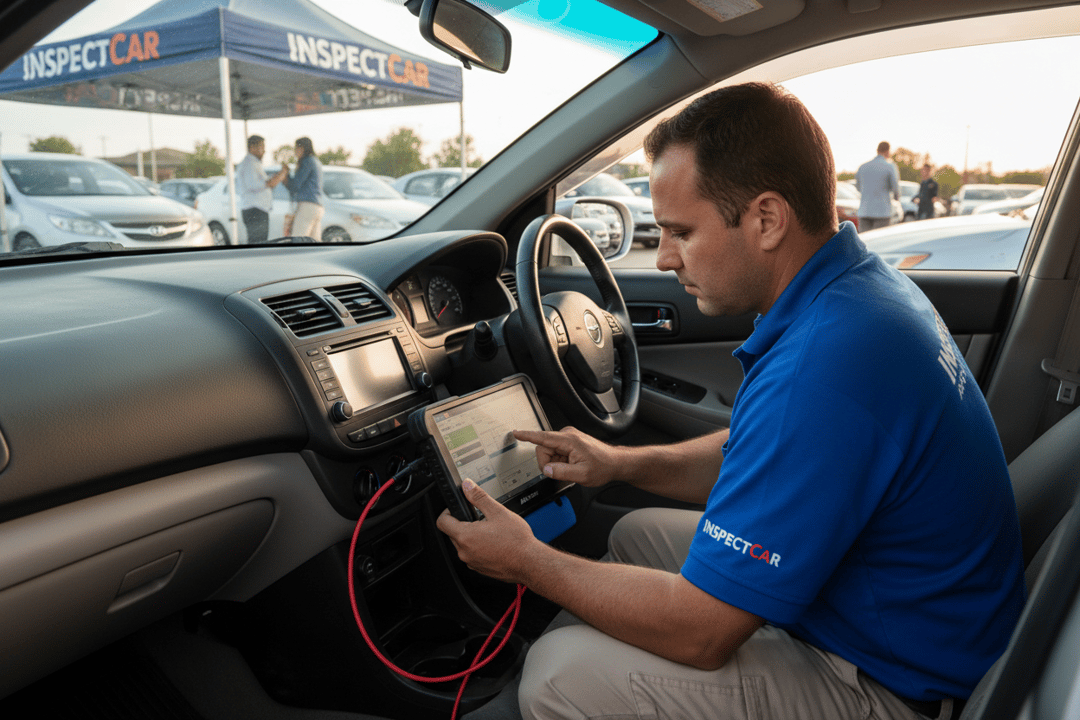
Resolving a B0 code requires more than a simple code reader found in auto parts stores. These readers often provide a generic description but lack the capability to interpret manufacturer-specific data or live sensor readings. A proper diagnosis involves connecting a professional-grade scanner to the vehicle's Data Link Connector to access the body control module. This process allows the technician to verify if the code is a hard fault or an intermittent glitch.
For a comprehensive check that includes the engine, transmission, ABS, and airbag systems, a specialized on-location diagnostic service is the most efficient solution. AutoFay offers a Computer Diagnostic service starting at AED 99, which provides a detailed readout of the vehicle's computer systems. For buyers who require a complete overview of the vehicle's condition, including body and paint integrity, the Body & Computer package at AED 250 covers both the electronic scan and a thorough physical inspection.
Why Professional Inspection is Non-Negotiable
Attempting to clear a B0 code and ignore the warning light is a high-risk practice. The airbag system is a high-voltage safety device that is always armed. A failure in this system can result in unintended deployment or total failure during a crash. Furthermore, a car with B0 codes may fail UAE roadworthiness inspections, leading to legal issues and fines. Professional inspectors can determine if the car has been in a crash, if the sensors are damaged, or if the wiring harness has corroded due to the local climate.
- Verification of Accident History: Inspectors can distinguish between a sensor triggered by a minor impact and one caused by structural damage.
- Live Data Analysis: Technicians can observe the sensor data in real-time to ensure the system is functioning correctly before and after repair.
- Electrical Integrity: Specialists check for moisture ingress and corrosion in the junction boxes that are common in older UAE vehicles.
Common B0 Code Reference
While the specific numbering system varies by manufacturer, B0 codes generally fall into specific categories. Understanding these categories helps in identifying the severity of the fault. The following table outlines common B0-related code ranges and their implications for vehicle safety.
| Code Range | Primary System | Implication |
|---|---|---|
| B0030 - B0040 | Driver/Passenger Airbag | May indicate a previous crash deployment or internal module failure. |
| B0100 - B0105 | Side Impact Airbag | Signals an issue with the side curtain or door airbag activation. |
| B0130 - B0135 | Knee Bolster Airbag | Indicates a malfunction in the knee restraint system deployment. |
| B0140 - B0145 | Seatbelt Pretensioners | Signals that the pyrotechnic tensioners have been activated or are faulty. |
| B1600 - B1605 | Occupant Classification | Indicates the seat sensor is detecting an incorrect load or is malfunctioning. |
Addressing B0 codes early is essential for maintaining the vehicle's safety rating. A simple code clear is not a solution; it is a temporary patch that delays inevitable failure. The mechanical and electrical components of




0 Comments
No comments yet. Be the first to share your thoughts!