
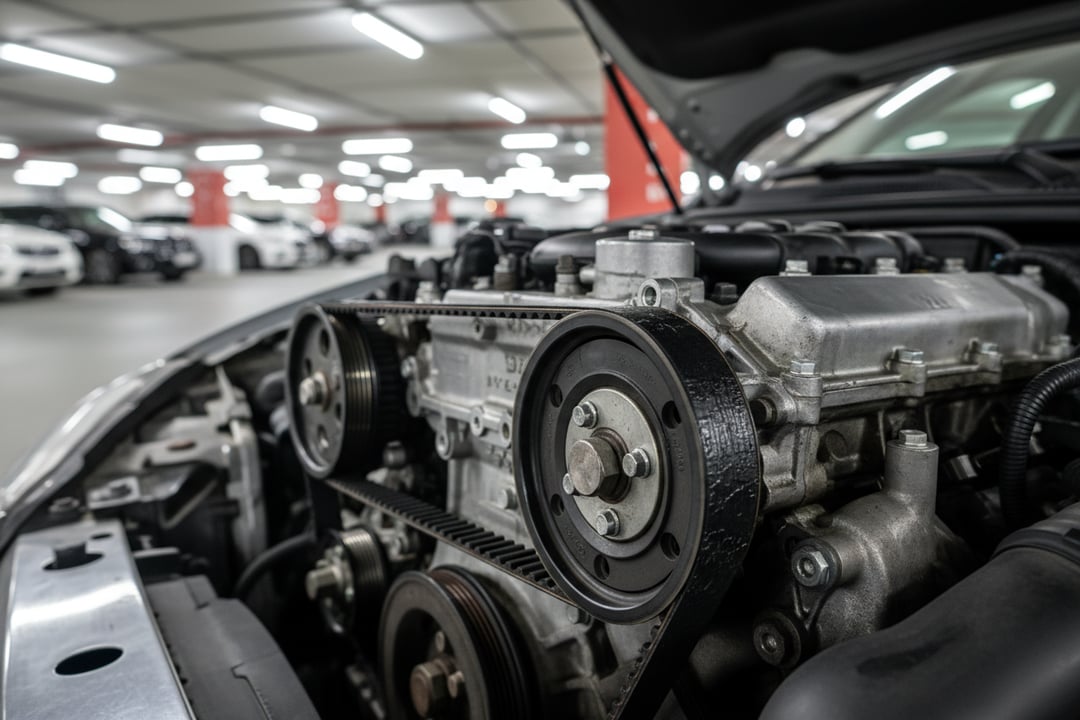
The timing belt serves as the critical synchronization mechanism connecting the crankshaft to the camshaft in an internal combustion engine. Its primary function ensures that the engine's valves open and close at the precise moment the pistons reach their peak positions. In the UAE market, where high-mileage vehicles are common, this component is often the single most overlooked item during a pre-purchase inspection. A failure of the timing belt in an interference engine leads to the pistons colliding with the valves, resulting in bent valves, cracked pistons, and a destroyed cylinder head. Detecting these issues before signing a purchase agreement requires a thorough understanding of the warning signs and a professional inspection protocol.
The Mechanics of Engine Timing
Modern engines utilize an interference design, meaning that the piston and valve travel paths overlap during the combustion cycle. If the timing belt snaps or slips off its gears, the valves remain open while the pistons continue to move upward. This mechanical collision forces the pistons into the cylinder head, causing irreparable damage. Understanding this relationship highlights why the timing belt is not just a routine replacement item but a safety-critical component that dictates the engine's longevity.
Visual Signs of Degradation
Visible wear on the belt itself is the most immediate indicator of potential failure. Inspectors look for signs of material fatigue that compromise the belt's structural integrity. A healthy timing belt possesses a smooth, rubbery texture without visible damage.
- Cracking and Fraying: Inspectors look for cracks running perpendicular to the belt's length or fraying edges. This indicates the rubber has aged and lost its elasticity.
- Glazing: A shiny, smooth surface on the belt suggests the presence of oil or coolant contamination. This glazing causes the belt to slip on the pulleys rather than grip them.
- Missing Teeth: The belt contains teeth that interlock with the pulleys. Missing teeth indicate a breakage that has already occurred or imminent failure.
The Role of Supporting Components
The condition of the timing belt is inextricably linked to the condition of the tensioner and the water pump. The tensioner maintains the correct tension on the belt; if it fails, the belt becomes loose and slips. Additionally, many engines share a common housing for the water pump, which is usually driven by the timing belt. If the water pump bearing fails, it creates excessive heat and vibration that can shatter the timing belt. A professional inspection checks for wobble in the pulleys and signs of coolant leakage around the pump housing.
Auditory and Physical Symptoms
Engine noise often provides the first clue that the timing is off. While a ticking sound can indicate a loose valve lash adjustment, a rhythmic slapping noise near the front of the engine suggests a loose timing belt bouncing off the cover. Another critical symptom is engine stalling immediately after restart. If the engine loses synchronization while the engine is hot and attempting to restart, it may fail to fire. This stalling is a direct result of the camshaft and crankshaft misalignment preventing the spark and fuel injection from occurring at the correct moment.
Fluid Condition and Oil Leaks
Older timing belts often lead to the failure of the crankshaft oil seal. This rubber seal degrades over time and allows engine oil to leak onto the timing belt cover. While the oil may not immediately destroy the belt, it acts as a lubricant, reducing the coefficient of friction between the belt and the pulleys. This reduction in friction causes the belt to slip, leading to a loss of compression and reduced engine performance. Inspecting the area around the front of the engine for fresh oil puddles provides valuable diagnostic information about the belt's history.
Why Professional Inspection is Essential
Visual checks and listening to the engine are insufficient for a complete assessment. Hidden damage often resides inside the engine block, such as a cracked camshaft gear or bent valves that are not immediately apparent without disassembly. Furthermore, modern vehicles rely heavily on sensors to monitor engine performance. A seized water pump can trigger error codes for a cooling system malfunction or a faulty crankshaft position sensor. Without a comprehensive diagnostic scan, a buyer might miss the root cause of the engine's hesitation or rough idle.
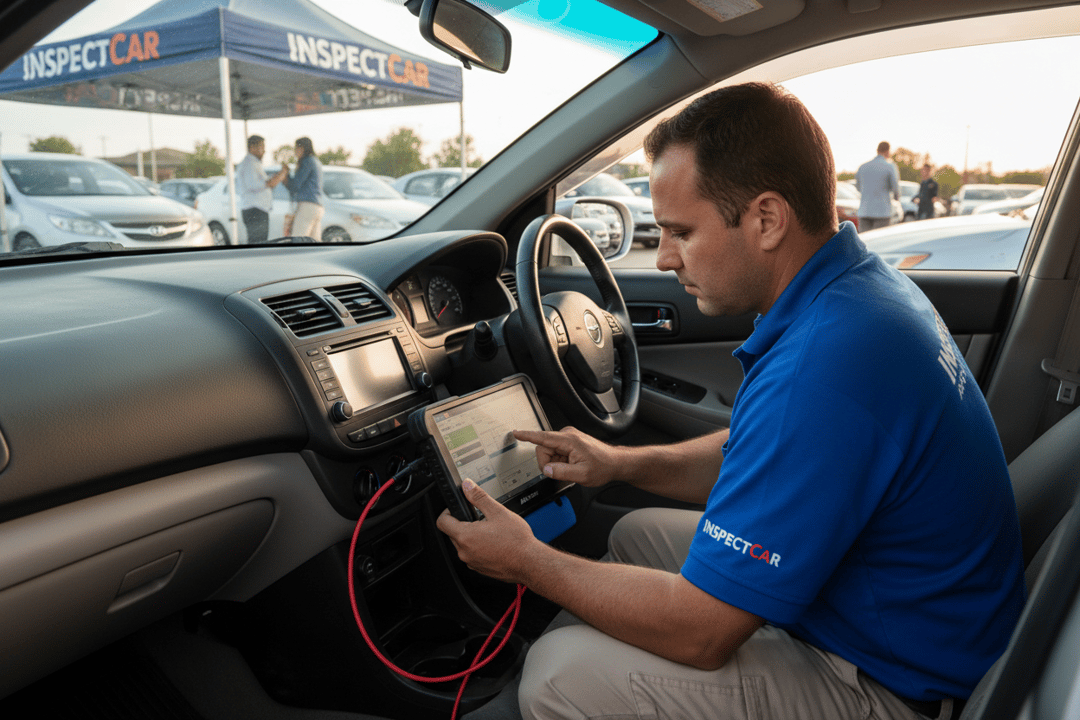
Professional vehicle inspectors utilize advanced diagnostic tools to read the vehicle's onboard computer. These tools can pinpoint specific mechanical faults that manifest as electrical sensor errors. A professional inspection also includes a road test to verify that the engine starts cold and runs smooth under load, ensuring the timing is not only correct but stable.
Service Packages for Pre-Purchase Checks
Utilizing a specialized inspection service reveals the true condition of the vehicle before the financial commitment is made. On-location inspection services in the UAE cover all seven emirates, providing convenience without requiring the seller to transport the vehicle to a workshop. Specialized packages focus on the specific symptoms associated with timing belt issues.
| Package Name | Price (AED) | Focus Area |
|---|---|---|
| Computer Diagnostic | 99 | Engine codes, transmission faults, ABS, airbag systems, and sensor verification. |
| Body & Computer | 250 | Panel-by-panel paint assessment, accident history, engine OBD scan, and body computer check. |
| Comprehensive | 399 | Full 25-category checklist including frame integrity, engine sound analysis, brake performance, suspension, fluids, and tires. |
The Comprehensive package is particularly valuable for used car buyers as it includes a road test to listen for timing-related noises and a visual inspection of the engine bay. Inspectors examine the engine mounts to ensure vibration is not being misattributed to the timing belt, and they check the tire condition to ensure the vehicle drives straight, which can be affected by engine mounting issues.
Buying a used vehicle requires a rigorous approach to avoid purchasing a car with hidden mechanical faults. The timing belt is the heartbeat of the engine; neglecting its condition leads to catastrophic repair bills and vehicle loss. A professional inspection provides the data needed to negotiate the price effectively based on actual condition rather than assumptions.
AutoFay inspects 410+ checkpoints with HD photos and PDF report. Book at autofay.ae or call +971542584458



0 Comments
No comments yet. Be the first to share your thoughts!