

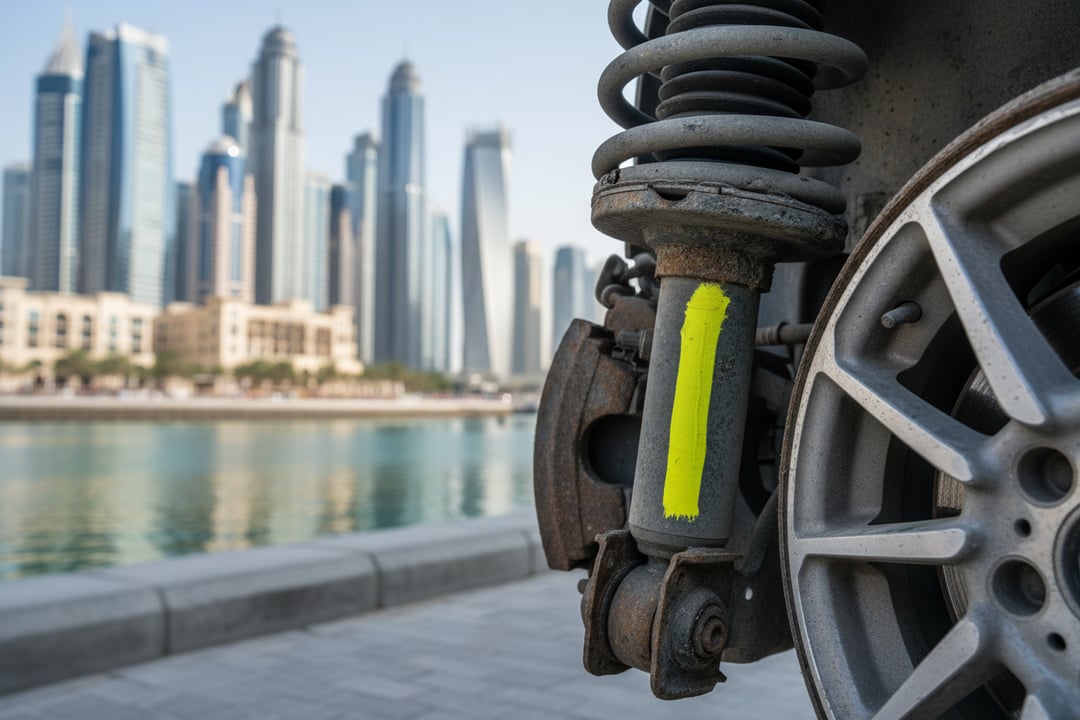
Acquiring a pre-owned vehicle in the United Arab Emirates requires a rigorous evaluation of mechanical and structural integrity. While most buyers focus on the engine's performance or the bodywork's aesthetic condition, the suspension system is a critical component that dictates safety, handling, and ride comfort. In a region characterized by extreme temperatures, heavy traffic, and rough road surfaces, the shock absorbers endure significant stress. Identifying the warning signs of shock absorber failure before finalizing a purchase prevents the acquisition of a vehicle that compromises safety or incurs unexpected repair costs. Understanding the mechanics of damping and observing specific physical symptoms allows buyers to distinguish between a serviced car and a potential liability.
The Mechanics of Damping in a Desert Climate
The primary function of a shock absorber is to control the oscillation of the vehicle's springs, ensuring that the tires remain in constant contact with the road surface. Without functioning dampers, a car would bounce continuously, reducing traction and making steering unpredictable. In the UAE, the ambient heat accelerates the degradation of rubber bushings and seals within the shock assembly. High temperatures cause the hydraulic fluid inside the absorber to thin, reducing its ability to resist motion. Consequently, a vehicle with original components may exhibit symptoms of failure much sooner than the same vehicle would in a temperate climate. Recognizing these environmental factors helps inspectors understand why a car might ride roughly despite appearing mechanically sound.
Visual Indicators of Hydraulic Failure
Visual inspection is the first line of defense when evaluating a used vehicle's suspension. The most obvious sign of a failing shock absorber is hydraulic fluid leakage. This appears as a black, oily residue coating the strut body or the shock shaft. Over time, the seals within the strut assembly wear out, allowing the oil to escape. Even minor seepage indicates that the internal seals are compromised, and the damping efficiency is already diminished. Furthermore, inspectors should look for physical damage to the mounting brackets and the bump stops, which are the rubber components that limit the suspension travel. Any corrosion on the chassis mounting points or signs of recent grinding work suggest that the suspension has been subjected to significant impact.
- Oily Residue: Look for black grease on the strut body, indicating leaking seals.
- Dented Shafts: Inspect the metal rod extending from the top of the strut for bends or dents.
- Corrosion: Check the chassis mounting points for rust, which weakens the structural connection.
- Worn Bushings: Examine the rubber bushings at the ends of the control arms for cracks or crumbling.
Detecting Dynamic Failures During the Road Test
A vehicle's reaction to steering inputs and braking forces reveals the health of the suspension more accurately than a visual inspection. One of the distinct symptoms of worn shock absorbers is "nose diving." This occurs when the front of the vehicle dips sharply forward under hard braking. Because the dampers are unable to absorb the weight transfer, the front tires lose grip momentarily, increasing stopping distance. Conversely, inspectors should listen for unusual noises during cornering; a clunking or thumping sound suggests worn mounting bushings or broken internal components. The "bouncing test" is also a standard diagnostic procedure; pressing down firmly on each corner of the vehicle and releasing it should result in the car settling immediately without multiple oscillations. If the vehicle continues to bounce for more than two cycles, the shock absorbers are likely ineffective.
The Compounded Cost of Neglected Suspension
The consequences of driving with failed shock absorbers extend beyond a rough ride, directly impacting the lifespan of other vehicle components. Worn dampers fail to keep the tires firmly planted to the road, leading to rapid and uneven tire wear known as "cupping" or "scalloping." This results in a bumpy ride and necessitates premature tire replacement. Additionally, poor suspension control affects braking performance significantly. Without proper damping, the brakes compete with the suspension for tire traction, extending stopping distances in emergency situations. Furthermore, the excessive vibration caused by faulty shocks accelerates wear on wheel bearings and steering linkage. A buyer who overlooks suspension issues often faces a cascade of repairs, including tire replacements and suspension component failures, shortly after purchase.
- Tire Wear: Worn shocks cause cupping, leading to rapid, uneven tire degradation.
- Braking Efficiency: Loss of tire contact reduces braking grip and increases stopping distance.
- Steering Instability: Excessive body roll or sway makes the vehicle difficult to steer precisely.
- Structural Fatigue: Constant vibration transmits shock to the chassis, potentially damaging the subframe.
Why Professional Inspection is Non-Negotiable
While visual cues and manual road tests offer valuable insights, they cannot replicate the comprehensive analysis provided by a experienced professional. The limits of a DIY inspection become apparent when attempting to assess the internal health of a strut or the subtle changes in ride height. A professional inspection service utilizes specialized tools and a standardized checklist to evaluate the vehicle's condition under varying loads. This rigorous process identifies issues that might be missed by an untrained eye, ensuring the buyer understands the full scope of the vehicle's health.
AutoFay provides a on-location inspection service across all seven Emirates, bringing experienced inspectors directly to the buyer's location. Their service eliminates the need to transport a potentially unsafe vehicle to a workshop and provides immediate, documented results. The inspection process covers a wide range of vehicle categories, ensuring that no component is overlooked during the evaluation.
AutoFay Inspection Packages and Suspension Focus
AutoFay offers three distinct service packages designed to suit different inspection requirements. The Computer Diagnostic package, priced at AED 99, utilizes an onboard computer to scan for fault codes in the engine, transmission, ABS, and airbag systems, identifying electronic anomalies that may relate to suspension sensors.
The Body & Computer package at AED 250 provides a more detailed evaluation. This service includes a panel-by-panel visual inspection of the exterior and interior, checking for repaints, repairs, and flood damage. It combines the electronic diagnostics with a thorough assessment of the vehicle's cosmetic and structural condition.
The most comprehensive option is the Comprehensive package at AED 299. This service covers all 25 categories of inspection, including a detailed suspension check. During the road test phase of this package, inspectors evaluate acceleration, braking performance, steering response, and noise levels to ensure the vehicle's dynamics are within acceptable parameters. This package also includes a fluid check, assessing the level and condition of essential liquids, and a tire inspection to verify manufacturing dates, tread depth, and wear patterns that may indicate suspension issues.
| Package | Price | Key Inclusions |
|---|---|---|
| Computer Diagnostic | AED 99 | OBD scan for engine, transmission, ABS, and airbag codes. |
| Body & Computer | AED 250 | Panel-by-panel body check + Computer Diagnostic + Fluid Levels. |
| Comprehensive | AED 299 | Full 25-category inspection including Road Test, Brakes, Tires, and Suspension. |
Conclusion
Identifying shock absorber failure is a critical step in the due diligence process for any used car purchase. The symptoms of failure—oil leaks, nose diving, and tire cupping—are clear indicators of underlying mechanical issues that compromise safety and value. Relying on a visual inspection alone is insufficient; the complex interaction between suspension components requires expert evaluation. AutoFay inspects 410+ checkpoints with HD photos and PDF report. Book at autofay.ae or call +971542584458.





0 Comments
No comments yet. Be the first to share your thoughts!