

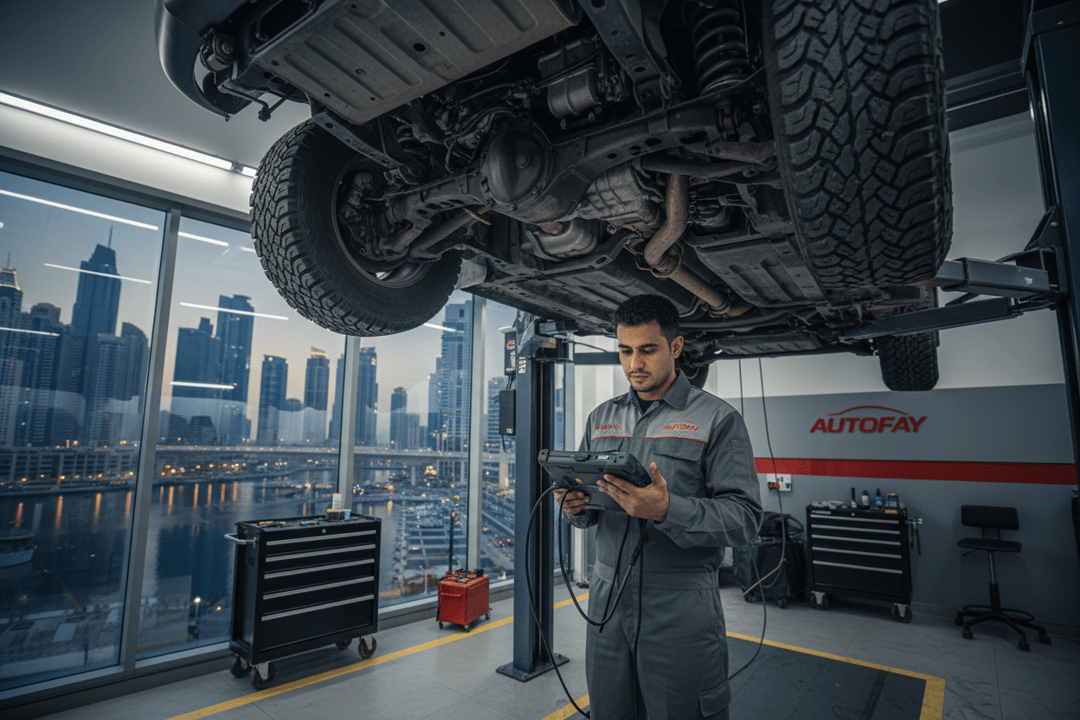
The differential acts as the critical junction where power from the engine meets the wheels. It allows the outer wheel to rotate faster than the inner wheel during a turn, ensuring stable handling and preventing tire scrubbing. In the UAE, where vehicles experience everything from stop-and-go traffic in Dubai to aggressive acceleration on highways and off-road traversals in the desert, the differential endures significant stress. A compromised differential does not wait for a scheduled service appointment; it often announces its failure through distinct noises and vibrations. Understanding these symptoms is the first step in maintaining vehicle integrity and safety.
The Role of the Differential in Drivetrain Dynamics
The differential is not merely a simple gear set; it is a complex system of gears, bearings, and seals designed to manage torque vectoring. In rear-wheel-drive vehicles, it is located at the rear of the axle. In front-wheel-drive vehicles, it is integrated into the transmission. For four-wheel-drive and all-wheel-drive systems, the differential may be split between the front and rear axles, with a center differential or transfer case managing the power distribution between them. Any wear within these mechanisms alters the precise timing of gear engagement, leading to inefficiency and mechanical failure.
Decoding the Whine Under Load
One of the most common complaints regarding a failing differential is a rhythmic whining noise that increases in pitch when accelerating. This sound often disappears or changes pitch when coasting, indicating that the noise is related to power transfer. The "whine under load" typically points to worn pinion bearings or ring and pinion gears. As the teeth of these gears wear down, they lose their sharp edge and begin to overlap during rotation. This overlap creates a high-frequency friction that manifests as a whine that grows louder as the vehicle demands more torque from the engine.
- Pitch Changes with Speed: The noise should generally match the vehicle's road speed. If the whine changes pitch when shifting gears but the road speed remains constant, the issue lies within the gear mesh inside the differential housing.
- Clunking During Turns: Simultaneous whining combined with a clunking sensation when turning suggests worn carrier bearings or broken spider gears, which manage the differential action during turns.
Fluid Condition: Visual and Olfactory Analysis
The differential fluid serves a dual purpose: it lubricates the internal gears and carries away heat generated by friction. Inspecting this fluid provides a clear window into the health of the unit. A visual inspection involves checking the fluid level and color. The fluid should be bright red or pink, indicating it is fresh and contains sufficient additives to protect the gears. If the fluid appears dark brown or black, the internal friction has caused the fluid to degrade rapidly, potentially leading to overheating and gear failure.
Additionally, the smell of the fluid is diagnostic. A burnt, acrid odor suggests the fluid has exceeded its operating temperature threshold. This often happens due to low fluid levels or a malfunctioning cooling system. Metal particles suspended in the fluid are a definitive sign of gear wear or bearing disintegration. If the fluid looks like coffee grounds, the internal components are likely flaking apart.
| Fluid Appearance | Diagnosis |
|---|---|
| Bright Red / Pink | Healthy: Fluid is fresh and protecting gears effectively. |
| Dark Red / Amber | Degraded: Fluid is old and needs replacement soon. |
| Gray / Black | Contaminated: Fluid is burnt or has metal shavings inside. |
Bearing Wear in 4WD and All-Wheel Drive Systems
Four-wheel-drive vehicles present a unique inspection challenge because they rely on multiple differentials and transfer cases. Bearing wear in these systems is often more insidious than in standard vehicles because the extra drivetrain components increase the load on every bearing. A worn bearing in the front or rear differential will produce a howling or humming noise that is most noticeable during highway cruising. In a transfer case, bearing wear often results in a shudder or vibration felt through the floorboard during acceleration.
Inspectors must pay close attention to the movement of the driveshaft. If the driveshaft can be moved significantly up and down or side to side at the yoke, this indicates worn pinion bearings. This play creates slack in the drivetrain, which translates into poor power delivery and accelerated wear on the universal joints. In 4WD systems, failure to detect bearing wear early can lead to the drivetrain locking up or seizing entirely, rendering the vehicle undrivable.
Detecting Off-Road Damage
The UAE’s diverse terrain supports a strong off-road community, but desert driving subjects differentials to impacts that city driving does not. Off-road damage detection requires looking beyond the internal gears to the physical casing. Scrapes and dents on the differential housing, particularly around the pinion flange, can indicate hard impacts with rocks or ruts. While minor cosmetic damage may seem trivial, deep gouges can compromise the structural integrity of the housing, leading to leaks or significant failure if the casing cracks.
Leaks are another critical indicator of off-road trauma. Off-roading often forces differentials to operate at higher temperatures and deeper submersion in water or sand. Water intrusion can wash away grease from the bearings, while sand acts as an abrasive, grinding against the gears. A leaking seal does not just waste fluid; it allows contaminants to enter the housing, leading to rapid internal destruction. Inspectors must check the drain plug and the pinion seal for signs of dried residue or active dripping.
Professional Inspection Protocols
Accurate differential inspection goes beyond a simple visual check of the fluid; it requires a dynamic road test to verify drivetrain performance. A professional inspection service will simulate acceleration, cornering, and load conditions to replicate the symptoms of a failing component. This process involves checking for vibrations that occur at specific speeds, which helps pinpoint the exact source of the noise. Furthermore, the inspection must verify that all mounting points are secure, as loose brackets can amplify noise and cause alignment issues.
For a comprehensive evaluation of drivetrain health alongside the differential, professional services offer structured packages. Inspectors categorize vehicles into specific health scores, examining everything from the engine mounts to the suspension system. Services typically categorize the check into distinct areas such as Fluids and Road Test. During a standard Comprehensive AED 299 inspection, technicians perform a 410+ checkpoint that includes a full road test to diagnose acceleration, braking, noise, and vibration faults in the drivetrain.
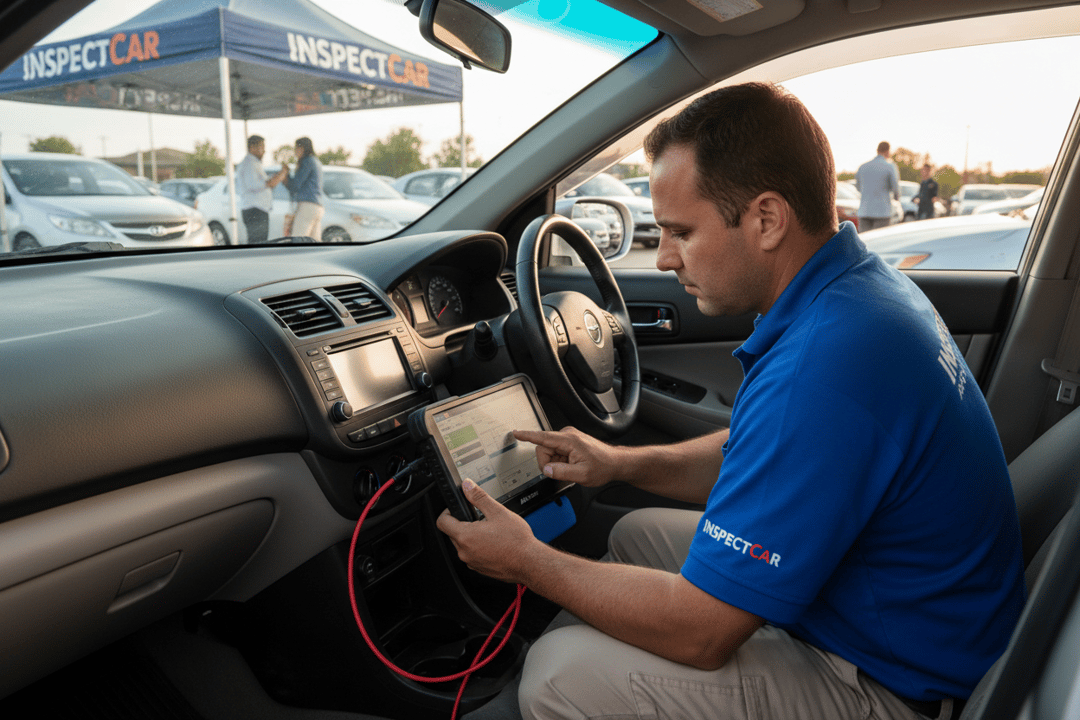
Early detection of differential issues prevents the cost of a complete drivetrain rebuild. A fluid change and bearing adjustment are far less expensive than replacing a shattered ring and pinion set. On-location inspection services provide the convenience of bringing the vehicle to the inspection location, ensuring that the inspection is conducted in a controlled environment. These services utilize computer diagnostics to scan for transmission codes and verify the integrity of sensors related to the drivetrain.
When purchasing a used vehicle, ensuring the differential is in good working order is vital to avoiding unexpected repairs. A pre-purchase inspection highlights whether the previous owner neglected the fluid maintenance or subjected the vehicle to heavy off-road abuse. Reliable inspection companies provide HD photos and a detailed PDF report of every checkpoint, including the differential fluid level and condition, allowing the buyer to make a clear assessment of the vehicle's history.
AutoFay inspects 410+ checkpoints with HD photos and PDF report. Book at autofay.ae or call +971542584458.



0 Comments
No comments yet. Be the first to share your thoughts!