

The Middle Eastern climate presents a paradox for classic vehicle owners: while the region offers ideal conditions for driving, the high salinity levels in the air and intense UV exposure accelerate metal degradation. A visual inspection at a glance is insufficient for assessing a vintage vehicle’s true worth and safety. Professional inspection services, such as AutoFay, provide a critical layer of scrutiny that separates a museum-quality asset from a costly project vehicle. Understanding the specific areas of concern—rust, originality, mechanics, and parts availability—is essential for any buyer or seller in the UAE market.
The Desert Factor: Rust Assessment
The primary enemy of any vintage automobile in the UAE is salt corrosion. Unlike temperate climates where moisture is the main culprit, the Gulf environment introduces chlorides that penetrate microscopic pores in the metal, initiating a galvanic reaction that eats away at the chassis from the inside out. A experienced inspector does not merely look for surface bubbles; they probe the structural integrity of the vehicle. Inspectors focus intensely on the undercarriage, checking the frame rails, floor pans, Sills, and wheel arches for hidden decay. Hidden rust here compromises the structural rigidity of the car and, most dangerously, can affect the safety of the cabin in the event of a collision.
Due to the mobile nature of the inspection service, experts can lift the vehicle to inspect areas that are physically impossible to see from the ground. They assess the severity of rust pitting versus surface corrosion and determine if the metal has been compromised to the point of requiring total replacement or if it can be conserved. For a classic car, the presence of rust does not always indicate immediate failure, but it signals a long-term investment in restoration that must be factored into the purchase price.
Originality Verification
In the collector's market, originality is the primary driver of value. A restored vehicle may offer better aesthetics and performance, but an original vehicle commands a premium due to its historical integrity. An inspection must verify that the car’s history matches its physical condition. This process involves cross-referencing the Vehicle Identification Number (VIN) with the chassis plate and engine block stamping to ensure the car has not been cloned or reconstructed from disparate parts. Inspectors assess panel gaps, paint thickness using digital gauges, and the presence of factory stickers and badges.
Interior and mechanical components are also scrutinized for originality. The trim, stitching, and materials must match the factory specification. An inspection report will flag if the dashboard has been swapped, if the steering wheel is a reproduction, or if the engine bay has been filled with silicone to hide history. This verification protects the buyer from unknowingly purchasing a "Frankenstein" vehicle that has lost its historical significance. AutoFay includes panel-by-panel analysis in its inspection categories to ensure every component is accounted for and verified against its factory state.
The Mechanical Safety Protocol
Even a visually stunning classic car can pose a significant safety hazard if its mechanical systems are compromised. The inspection process rigorously tests the vehicle's ability to move and stop under real-world conditions. This involves a comprehensive Road Test that evaluates acceleration, braking, and steering responsiveness. Mechanics listen for unusual noises from the engine and transmission, checking for leaks, and inspecting the condition of the engine mounts, which prevent excessive vibration from damaging the chassis.
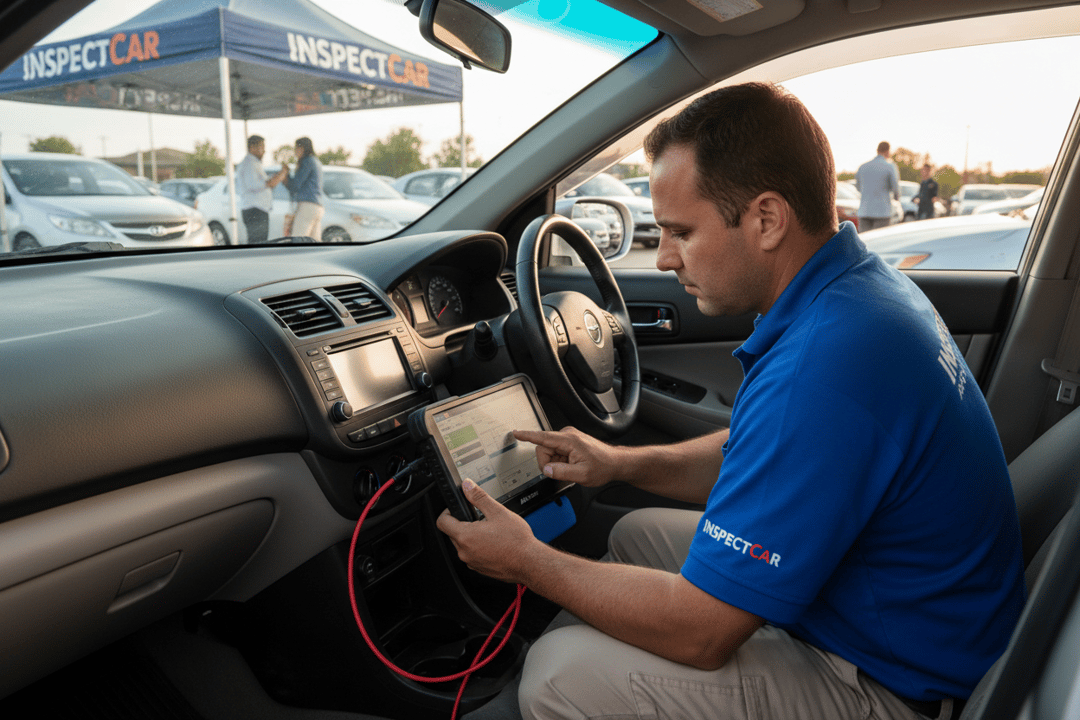
For vehicles equipped with Electronic Control Units (ECUs), a diagnostic scan is mandatory. The OBD scan reveals error codes stored in the engine, transmission, ABS, and airbag systems. This technology is crucial for modern classics that share electronic architecture with contemporary vehicles. An inspector checks fluid levels and condition to ensure the oil has not turned into sludge due to age, which can destroy internal bearings within minutes of operation. Inspectors also rate brake pad thickness against safety standards, determining if the stopping power is adequate for highway driving in the UAE.
The Part Availability Reality
One of the most overlooked risks in purchasing a vintage car is the availability of replacement parts. A vehicle may run perfectly today, but if a critical mechanical failure occurs six months from now, can the part be sourced? In the UAE, this is a particular challenge for cars outside of mainstream manufacturers. An inspection must assess the "age" of the components and the likelihood of sourcing replacements locally.
Inspectors look for parts that are common failures—such as specific brake calipers, fuel pumps, or suspension arms—and verify if they are currently in stock with local vendors. They also assess the general condition of the suspension and steering components, noting if the parts are worn to the extent that replacements will be needed immediately. Understanding the logistics of parts availability prevents the buyer from being stranded with a non-runner that requires months of shipping to repair. This assessment helps the buyer understand the true cost of ownership beyond the initial purchase price.
Choosing the Right Inspection Package
Investing in a professional inspection requires selecting the right level of service to match the complexity of the vehicle. AutoFay offers a tiered structure of services designed to suit different needs, ranging from a quick diagnostic check to a comprehensive mechanical and aesthetic evaluation.
| Package Name | Price (AED) | Scope of Inspection |
|---|---|---|
| Computer Diagnostic | 99 | Engine, Transmission, ABS, and Airbag system scanning for error codes. |
| Body & Computer | 250 | Includes the computer diagnostic service plus a detailed aesthetic assessment of the exterior and interior. |
| Comprehensive | 399 | A full 410+ checkpoint inspection covering all categories including Frame, Suspension, Tires, Fluids, and a thorough Road Test. |
The Computer Diagnostic package is the baseline for safety, identifying electronic faults that are invisible to the naked eye. The Body & Computer package bridges the gap between safety and aesthetics, which is vital for classic cars where bodywork history is a major concern. The Comprehensive package offers the deepest level of scrutiny, utilizing a checklist of 410+ checkpoints across 25 categories. This service is highly recommended for vintage vehicles or high-value transactions where no detail should be overlooked.
Professional Documentation
The value of an inspection lies in its documentation. A professional service provides a detailed report that serves as a legal and financial record of the vehicle's condition at the time of inspection. This report includes high-resolution HD photos documenting every area of concern, from the depth of rust pitting to the condition of the brake pads. This documentation protects both the buyer and the seller by creating a transparent record of the transaction. It prevents disputes regarding pre-existing damage and provides a roadmap for the buyer’s future maintenance needs.
For those navigating the complex market of classic vehicles in the Emirates, relying solely on a seller’s description is a gamble. The expertise of a third-party inspector provides an objective assessment that independent of the seller's motivation. By understanding the specific risks of rust, originality, and mechanical failure, buyers can make calculated decisions that preserve their investment. AutoFay inspects 410+ checkpoints with HD photos and PDF report. Book at autofay.ae or call +971542584458



0 Comments
No comments yet. Be the first to share your thoughts!