

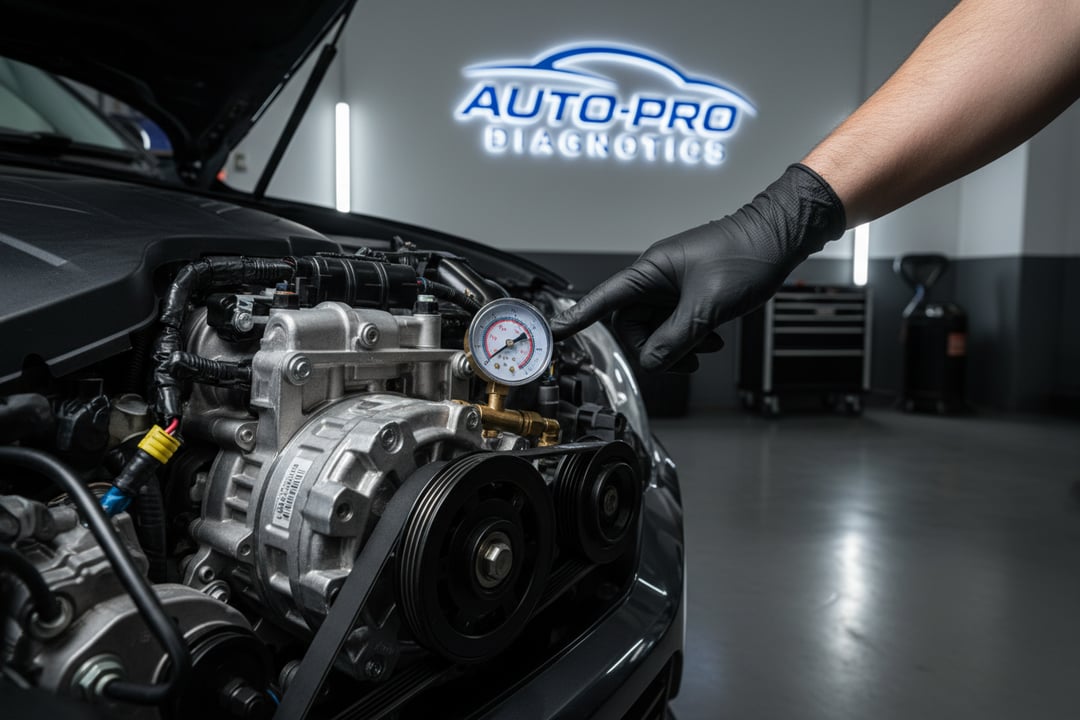
The automotive air conditioning system in the United Arab Emirates functions as a critical safety feature rather than a luxury accessory. The relentless desert heat creates an environment where functional cooling is not merely about comfort, but about driver alertness and vehicle integrity. At the heart of this system lies the AC compressor, a pump that circulates refrigerant to absorb and release heat. When this component fails, the consequences extend beyond sweltering cabin temperatures; it can lead to rapid engine overheating and significant mechanical degradation. A thorough inspection requires a experienced inspector to evaluate the compressor’s mechanical and electrical state, a service provided by professionals who cover 410+ checkpoints across various vehicle categories. Understanding how to inspect the AC compressor ensures a vehicle owner identifies potential failures before they result in expensive repairs.
The Critical Role of the AC Compressor in the Emirates
In a region where ambient temperatures frequently exceed 45 degrees Celsius, the AC system reduces cabin temperatures to survivable levels, preventing heat exhaustion and dehydration. The compressor acts as the system's engine, driven by a serpentine belt attached to the engine's crankshaft. It compresses the low-pressure gas refrigerant into a high-pressure gas, which then flows to the condenser to release heat. Without a fully operational compressor, the risk of heatstroke increases significantly, particularly during long highway commutes or heavy traffic. Furthermore, the cooling system in the engine bay relies on airflow; if the AC condenser fan fails due to compressor issues, the engine may overheat, potentially causing permanent damage to the cylinder head and gasket.
Inspection of Clutch Engagement and Belt Dynamics
The AC compressor is typically equipped with an electromagnetic clutch that engages the pulley when the AC is turned on and disengages it when switched off. A experienced inspector must verify that the clutch pulley spins freely with the engine off to ensure the compressor is not dragging. If the pulley remains stationary while the engine runs, the compressor is locked up, indicating a significant failure. Additionally, the serpentine belt must be inspected for fraying, glazing, or cracks. A worn belt will slip under heavy load, causing the AC to blow warm air and placing excessive stress on the engine's crankshaft pulley. Inspectors should listen for a distinct "clutch engage" click when the AC is activated; silence usually indicates a faulty relay, a blown fuse, or a dead clutch solenoid.
Diagnosing Refrigerant Pressure and Leak Points
Refrigerant pressure is a high-stakes metric that determines the efficiency and safety of the AC system. Low refrigerant levels often indicate a leak, which can be caused by corrosion, physical damage to the condenser, or a failing compressor seal. A professional inspection involves checking for oily residue around the compressor’s shaft, valves, and the condenser core, as refrigerant contains oil that attracts dirt. If a leak is detected, the refrigerant must be recovered before any part is replaced. Using a manifold gauge set, inspectors measure high and low-side pressures to compare them against the manufacturer's specific charts. Deviations from these charts suggest internal compressor wear or a blockage in the expansion valve.
Identifying Strange Noises and Vibration
Abnormal sounds emanating from the engine bay are often the first warning sign of compressor trouble. A grinding or metallic squealing noise usually points to a failing bearing inside the compressor or a slipping belt. If the noise changes pitch when the AC is turned on, it suggests the clutch is engaging intermittently. A clicking sound can indicate the compressor pistons are seizing due to a lack of lubrication caused by a refrigerant leak. Vibration is another critical indicator; excessive shaking at the front of the engine can result from a misaligned pulley or a severely worn compressor mount. These symptoms indicate that the compressor has lost its ability to pump efficiently, leading to increased load on the engine's serpentine belt system and potential damage to other engine components.
The Role of the Electrical System and Sensors
The compressor does not operate in isolation; it relies on a complex network of sensors and controls to function correctly. The A/C pressure switch monitors refrigerant levels and cuts power to the compressor if pressure drops too low to prevent damage. The condenser fan switch regulates airflow over the condenser fins. Electrical faults, such as a blown fuse or a malfunctioning relay, can prevent the clutch from engaging, mimicking a mechanical failure. A experienced inspector must verify the continuity of wiring and the operation of these sensors. Modern vehicles also utilize the OBD (On-Board Diagnostics) system to log error codes related to the climate control module, which can pinpoint electrical faults that are not immediately visible during a physical inspection.
Why Professional Diagnostics and Comprehensive Packages Matter
Attempting to diagnose AC issues without specialized equipment can lead to misinterpretation of symptoms. Professional inspection services utilize manifold gauges, refrigerant analyzers, and electrical multimeters to provide accurate data. For vehicle buyers in the UAE, a pre-purchase inspection is essential to ensure the AC system has been properly serviced and is free of hidden leaks. A comprehensive inspection covers 25 categories, including the engine, transmission, and body, ensuring that no aspect of the vehicle's health is overlooked. Inspector comes to the vehicles offer the convenience of bringing the inspection to the buyer or seller, covering all seven Emirates without additional travel fees.
- Body and Paint Inspection: Panel-by-panel analysis to determine if panels have been repainted, repaired, or are original.
- Frame and Structural Integrity: Examination of rails, pillars, and floor pans to ensure no prior collision damage.
- Engine Condition: Assessment of sounds, motor mounts, and exhaust smoke color to gauge engine health.
- OBD Scan: Reading engine, transmission, ABS, and airbag codes to reveal hidden electrical faults.
- Brake and Suspension: Checking brake pad thickness and suspension components for wear.
- Tires and Fluids: Verifying tire manufacturing dates, tread depth, and fluid levels and conditions.
- Road Test: Evaluating acceleration, braking, noise, and vibration during a live drive.
Investing in a thorough vehicle inspection prevents the purchase of a vehicle with a compromised cooling system, which can lead to expensive repairs and safety hazards. Professional services provide a detailed report with HD photos and documentation, allowing for a transparent transaction. By utilizing expert knowledge, car owners and buyers can avoid the pitfalls of used vehicles with deteriorating AC components.
| Package | Service Included | Price (AED) |
|---|---|---|
| Computer Diagnostic | Engine, transmission, ABS, and airbag code scanning | 99 |
| Body & Computer | Panel-by-panel paint check, computer diagnostics, and road test | 250 |
| Comprehensive | Full inspection of body, frame, engine, OBD, brakes, suspension, tires, fluids, and road test | 399 |
Ensuring the longevity and reliability of a vehicle in the UAE requires a meticulous approach to component inspection. The AC compressor is a high-wear item that demands attention to detail. Don't rely on temporary fixes or guesswork when purchasing or maintaining a vehicle. AutoFay inspects 410+ checkpoints with HD photos and PDF report. Book at autofay.ae or call +971542584458.





0 Comments
No comments yet. Be the first to share your thoughts!