

Understanding the fuel economy of wagon vehicles in the United Arab Emirates requires looking beyond manufacturer stickers. Real-world driving conditions in the UAE, characterized by high ambient temperatures and aggressive traffic patterns, alter fuel consumption metrics significantly. Wagon configurations offer practical cargo space, yet their fuel efficiency varies drastically depending on how the vehicle is operated. This analysis examines the specific variables affecting fuel consumption, including city versus highway dynamics, the impact of air conditioning, and the mechanical verification required to ensure a vehicle delivers on its efficiency promises.
Urban Dynamics: City Fuel Consumption in the UAE
City driving in the Emirates presents a unique set of challenges for fuel efficiency. Stop-and-go traffic forces the engine to cycle between high and low RPMs repeatedly, a process that disrupts fuel atomization and increases consumption. Short trips, common in urban areas, prevent the engine from reaching optimal operating temperature, leading to incomplete combustion and increased emissions. Wagon vehicles, often heavier than sedans due to their additional structural components and cargo capacity, experience a more pronounced drop in efficiency during these conditions.
The reliance on air conditioning in city traffic compounds this issue. Every time a vehicle is stopped, the AC compressor continues to draw power from the engine, creating a parasitic load that reduces the available torque for acceleration. This results in a noticeable decrease in miles per gallon (MPG) compared to highway cruising. Drivers must consider that frequent acceleration to navigate traffic lights and roundabouts consumes significantly more fuel than maintaining a constant velocity.
Highway Efficiency: Open Road Performance
Highway driving offers a different efficiency profile for wagon vehicles. Once the vehicle reaches cruising speed, aerodynamic drag becomes the dominant factor in fuel consumption. While wagons have a higher frontal area than sedans, modern designs incorporate active shutters and streamlined profiles to mitigate this drag. Maintaining a steady speed of highway speeds or higher, which is common on UAE highways, allows the engine to operate in its most efficient power band.
At highway speeds, the engine load stabilizes, and the transmission settles into the highest gear ratio. This reduces engine revolutions per minute (RPM) and minimizes frictional losses within the drivetrain. However, this efficiency is contingent on the condition of the vehicle. A vehicle that struggles to maintain highway speeds due to mechanical issues will inevitably consume more fuel. Therefore, highway fuel economy is often the best barometer for the overall mechanical health of a wagon vehicle.
The Air Conditioning Factor: A Major Variable
The air conditioning system acts as a major variable in fuel economy calculations, particularly in the extreme heat of the UAE. The compressor is driven by the engine, meaning that every unit of fuel burned contributes to moving the car *and* cooling the cabin. When the AC is set to maximum, the compressor runs at full capacity, placing a substantial strain on the engine. This can reduce fuel efficiency by 10 to 15 percent in smaller engines and significantly more in larger, less efficient powertrains.
Understanding AC impact requires looking at the ancillary components of the system. A refrigerant leak reduces cooling capacity, forcing the compressor to run longer and harder to achieve the desired temperature. This constant cycling wears out mechanical parts and increases fuel burn without providing adequate cooling. Furthermore, a failing condenser or evaporator core restricts airflow, creating a bottleneck that the engine must overcome, directly impacting the vehicle's miles per gallon.
Verifying Fuel Economy Through Inspection
Verifying fuel economy is not merely about watching the dashboard gauge; it requires a professional inspection of the vehicle's mechanical systems. A vehicle claiming high fuel efficiency may actually be suffering from hidden inefficiencies that only a comprehensive inspection can uncover. Inspectors look for discrepancies between the odometer reading and the fuel volume consumed, which can indicate the speedometer is inaccurate or fuel sensors are malfunctioning.
Inspectors also evaluate the vehicle's rolling resistance and aerodynamic drag. Worn-out tires with low tread depth increase the effort required to move the vehicle forward. Similarly, misaligned wheels create drag that forces the engine to work harder. A professional inspection service provides the data needed to confirm that the vehicle is operating as efficiently as designed, rather than being penalized by mechanical wear and tear.
Diagnostic Tools and OBD Scans
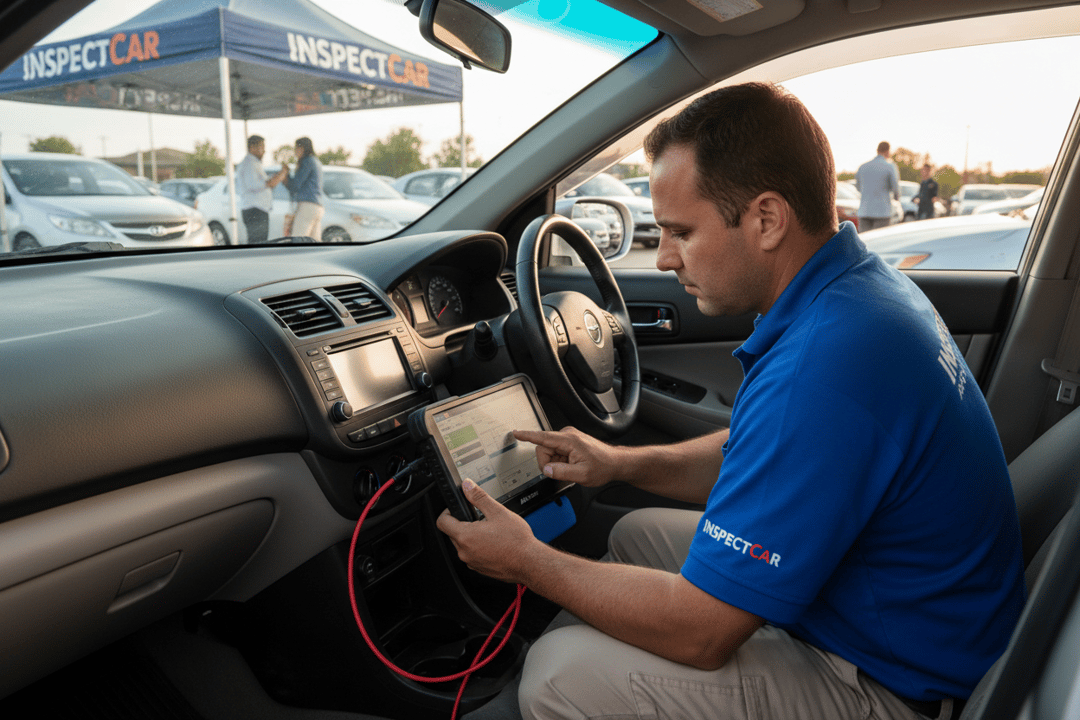
Onboard Diagnostics (OBD) systems provide critical data regarding fuel efficiency issues. An OBD scan reads the Engine Control Unit (ECU) to identify trouble codes that may be causing the engine to run rich or lean. A rich mixture (excess fuel) indicates the engine is consuming more gasoline than necessary, often due to a failing oxygen sensor or a clogged fuel injector. A lean mixture can cause engine hesitation and reduced power, forcing the driver to floor the pedal to compensate, which drastically increases consumption.
For a reliable assessment, a Computer Diagnostic scan is essential. AutoFay offers a Computer Diagnostic service for AED 99, which scans the engine, transmission, ABS, and airbag systems to reveal hidden errors. This service identifies parameters that directly influence fuel consumption, such as sensor readings and throttle body performance. Addressing these codes prevents the vehicle from running at suboptimal efficiency levels.
Comprehensive Mechanical Health Checks
Engine health and fluid condition are pivotal to maintaining fuel economy. Inspectors examine the catalytic converter for blockages, which restrict exhaust flow and force the engine to work harder. They also check engine mounts; if a mount is broken, engine movement is not properly isolated, causing vibrations and potential parasitic drag on the crankshaft. Furthermore, the condition of engine oil and transmission fluid affects internal friction; thick, contaminated oil increases viscosity, forcing the engine to burn more fuel to circulate it.
For a detailed evaluation of these systems, AutoFay provides packages that include a Body and Computer inspection for AED 250. This package covers the OBD scan alongside a visual assessment of the electrical systems and engine bay condition. For the most thorough verification, the Comprehensive package at AED 299 inspects 410+ checkpoints. This includes checking the braking system for drag, which can cause the vehicle to roll with the parking brake applied, and analyzing tire manufacturing dates and wear patterns that affect rolling resistance.
Key Inspection Categories for Fuel Economy
- OBD Scan: Detects sensor malfunctions and misfires that increase fuel usage.
- Engine Sound and Mounts: Identifies mechanical issues causing increased friction and vibration.
- Tires: Ensures proper pressure and tread depth to minimize rolling resistance.
- Fluids: Verifies the condition of gasoline, oil, and coolant to ensure efficient lubrication and cooling.
Comparison of Driving Conditions
The following table outlines the general efficiency characteristics of wagon vehicles under different UAE conditions, highlighting the impact of the climate and driving style.
| Driving Condition | Primary Factors | Expected Impact on Fuel Economy |
|---|---|---|
| Heavy City Traffic | Constant acceleration, idling, frequent braking | Significant reduction in MPG; highest consumption rates |
| Highway Cruise | Aerodynamic drag, constant speed, lower RPM | Optimal efficiency; lowest consumption rates |
| AC Usage (Max) | Engine load, compressor operation | Drop in MPG; varies by engine size and vehicle aerodynamics |
| AC Usage (Eco Mode) | Optimized compressor speed, reduced fan power | Moderate drop in MPG; better preservation of range |
Ensuring a vehicle meets its advertised fuel economy requires a rigorous inspection process. Ignoring mechanical wear leads to a gradual decline in efficiency that compounds over time. By utilizing professional inspection services, buyers and owners can identify the root causes of poor fuel consumption before it becomes a significant financial liability.
AutoFay inspects 410+ checkpoints with HD photos and PDF report. Book at autofay.ae or call +971542584458


0 Comments
No comments yet. Be the first to share your thoughts!