

The Wagon segment in the United Arab Emirates represents a critical intersection of family utility and passenger comfort. Buyers in the GCC market prioritize these vehicles for their spacious interiors and long-distance capabilities, often subjecting them to high-mileage use and diverse road conditions. While manufacturers design these vehicles with robust safety architectures, the condition of the vehicle at the point of purchase dictates whether those safety ratings are realized in real-world scenarios. A vehicle certified as "five-star" in a laboratory environment may lose its protective value if maintenance has been neglected or if structural integrity has been compromised post-sale. Understanding the gap between theoretical safety ratings and physical vehicle condition requires a deep dive into inspection criteria specific to the local market.
Global Crash Test Standards and Local Relevance
Automotive safety ratings, primarily determined by Euro NCAP, G-NCAP, and IIHS standards, provide a baseline expectation for wagon performance during a collision. These organizations test vehicles using dummies to measure injury potential to adults, children, and pedestrians. A five-star rating indicates a vehicle has achieved high marks in occupant protection and safety assist technology. However, these ratings are static figures calculated on new vehicles. When purchasing a used wagon in the UAE, the physical state of the car determines if it still meets those rigorous standards.
For the UAE consumer, where traffic density in cities like Dubai and Abu Dhabi is high, the importance of these ratings cannot be overstated. A vehicle with a history of accidents may have hidden deformities in the passenger cell, rendering the airbag system ineffective or the seatbelts unable to restrain occupants during a sudden impact. Verifying the vehicle's history and current structural health is the only way to ensure that the manufacturer's safety engineering is still active and reliable.
Active vs. Passive Safety Systems: What to Inspect
Safety in a wagon is divided into two distinct categories: Active Safety, which prevents accidents, and Passive Safety, which protects occupants during an accident.
Active Safety Systems rely on electronics to maintain control. Electronic Stability Control (ESC) is the most critical system, automatically applying individual brakes to correct skidding. Traction Control Systems (TCS) prevent wheel spin during acceleration on loose surfaces. Anti-lock Braking Systems (ABS) prevent the wheels from locking up, allowing the driver to steer while braking. In a Wagon, where weight distribution affects handling, these systems must function perfectly.
Passive Safety Systems include the body shell, airbags, and seatbelts. The body shell is designed to crumple in a specific way to absorb energy, protecting the cabin. The airbag system must deploy at the correct speed and angle. Seatbelt pre-tensioners must lock firmly upon impact. If a vehicle has been in a collision, the structural rails or the dashboard may be misaligned, compromising the performance of these passive systems.
The Hidden Dangers: Frame Integrity and Restoration
One of the most overlooked safety risks in the Wagon market is the condition of the vehicle's unibody frame. Unlike older body-on-frame trucks, modern wagons use a single piece of metal that incorporates the chassis and body. If this structure is bent or repaired incorrectly, the vehicle’s Center of Gravity (CoG) shifts. A high CoG increases the risk of rollover, a critical factor for taller vehicles like SUVs and Wagons.
When inspecting a used vehicle, look for misalignment in the gaps between panels. Uneven door gaps or hood gaps often indicate a collision that pushed the frame out of position. A experienced inspector will check the floor pan and the "A" and "B" pillars. If these areas have been welded or repaired, the structural rigidity is compromised. A compromised frame can also affect the deployment of side-impact airbags if the sensors are no longer parallel to the door shut-line.
- Panel Alignment: Verify that doors align with the body lines and the trunk/boot lid closes with even pressure.
- Rail Stress: Inspect the chassis rails for signs of rust or previous welding repairs.
- Pillar Integrity: Check the B-pillars (the vertical pillars behind the front doors) for cracks or deformation.
Mechanical Safety: Brakes, Tires, and Suspension
Even with perfect crash-test ratings, a Wagon cannot protect its occupants if it cannot stop or steer away from danger. The braking system is the first line of defense. Worn brake pads reduce the surface area available to grip the disc, increasing stopping distance. Furthermore, old brake fluid absorbs water, lowering its boiling point. If the fluid boils during heavy braking, the brakes will fail completely.
Suspension components are equally critical. Worn shocks and struts reduce the tire's contact with the road surface, especially during cornering. This reduces traction and increases the risk of hydroplaning on wet roads. A vehicle with failing suspension may handle unpredictably, leading to loss of control.
Tires are the only point of contact between the vehicle and the asphalt. The manufacturing date of the tire is vital; tires older than six years should be replaced regardless of tread depth. A sedan or wagon with bald tires or tires that are past their lifespan is unsafe for high-speed highway driving in the UAE.
Electronics and Safety Assist Diagnostics
Modern wagons contain dozens of sensors dedicated to safety. These include sensors in the bumper for pedestrian detection, pressure sensors in the tires for monitoring, and accelerometers for emergency braking assistance. When these systems fail, they often trigger warning lights on the dashboard.
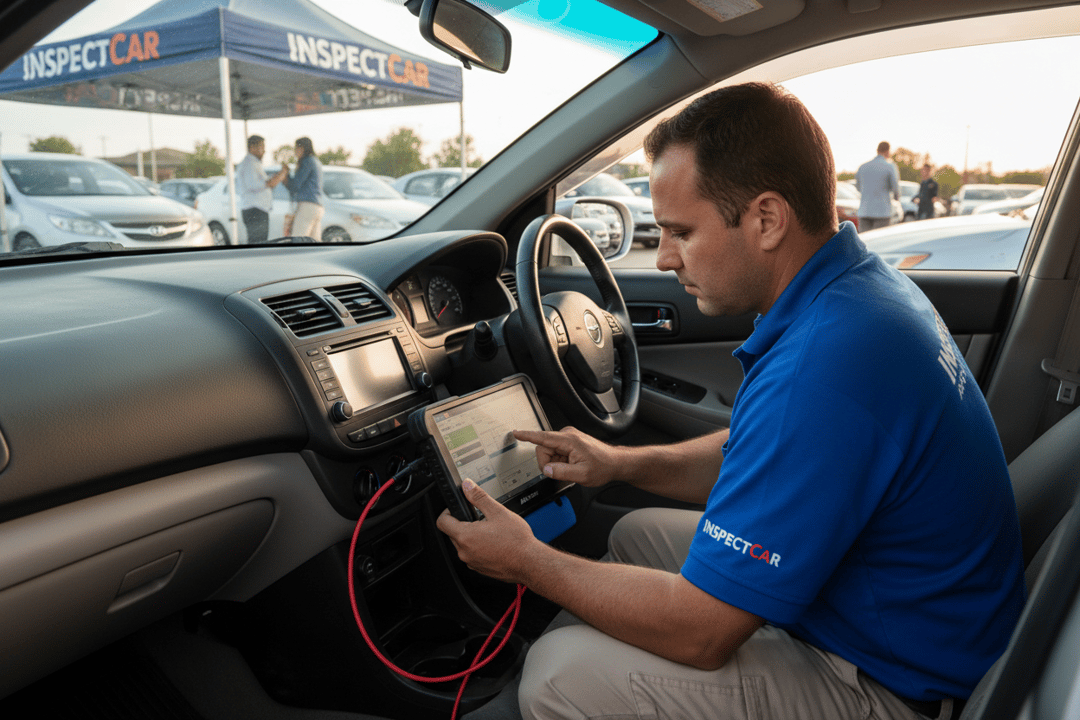
Purchasing a vehicle without a diagnostic scan is risky. A "Service Engine Soon" light could indicate a failing oxygen sensor that affects engine performance, but it could also indicate a faulty wheel speed sensor that disables the ABS. A comprehensive inspection must utilize an OBD (On-Board Diagnostics) scanner to read error codes stored in the vehicle's computer. This reveals whether safety-critical modules, such as the airbag control unit or the stability control module, have stored any fault history.
The Role of Professional Inspection in UAE
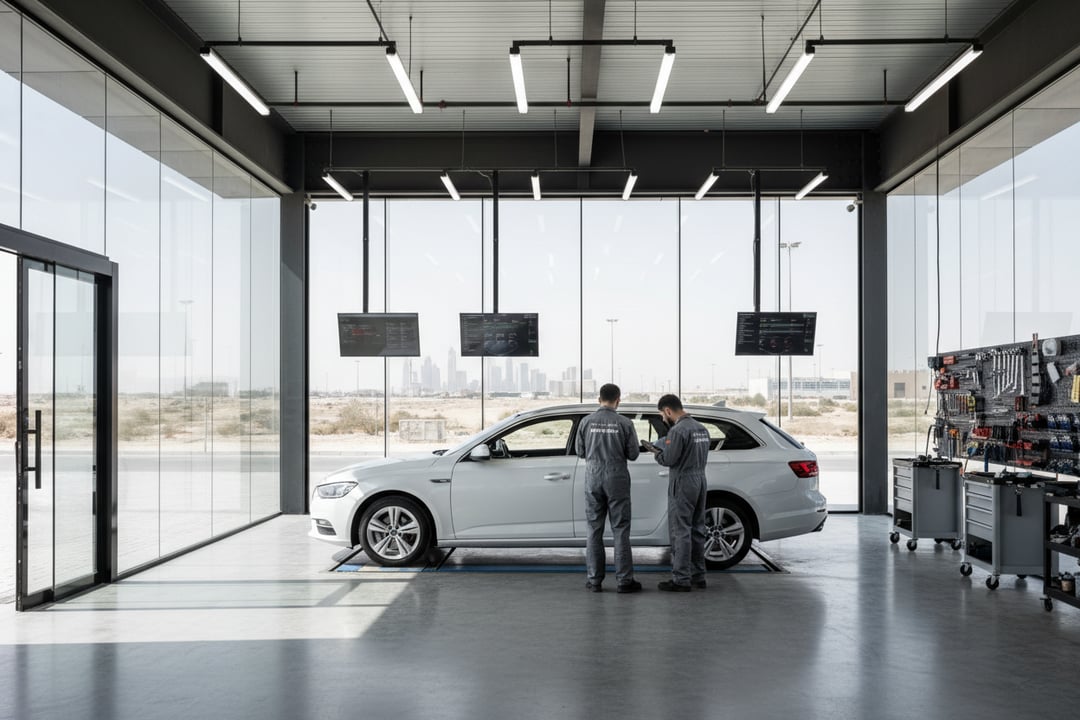
Given the complexity of verifying these safety features, relying on a visual inspection alone is insufficient. The Wagon market in the UAE is saturated with vehicles that may have been damaged in previous years but repaired commercially without disclosure. To ensure a vehicle meets safety standards, a professional service that covers the entire vehicle is essential.
Computer Diagnostic Services are the first step in a safety audit. Identifying stored fault codes for airbags, ABS, or traction control prevents the purchase of a vehicle with compromised safety electronics. This service is available at a starting price of AED 99, making it an affordable entry point for safety verification.
For a deeper assessment, a Body & Computer Inspection priced at AED 250 is recommended. This package allows inspectors to measure paint thickness across the vehicle. Discrepancies in paint thickness between original panels and repaired areas reveal past accidents. Inspectors also check the structural frame rails and pillars for damage or incorrect repair.
The most thorough approach is the Comprehensive Inspection at AED 299. This service provides a complete audit of the vehicle. It includes a road test to evaluate braking performance, acceleration, and noise levels. Inspectors check the suspension for leaks and play, and verify that all tires meet safety standards. This package covers over 410+ checkpoints across 25 categories, ensuring that no safety aspect is overlooked.
| Inspection Package | Price (AED) | Safety Focus |
|---|---|---|
| Computer Diagnostic | 99 | Checks airbag, ABS, and traction control system codes. |
| Body & Computer | 250 | Paint thickness analysis and frame/rail damage assessment. |
| Comprehensive | 399 | Full safety audit including brakes, tires, suspension, and road test. |
For buyers across all seven Emirates, on-location inspection services bring the expertise to the seller's location. A professional inspector will verify that the vehicle has not been modified in a way that affects safety, such as incorrect tire sizing or altered suspension height. They will also check the fluid levels, ensuring brake fluid is clean and free of moisture, which is vital for maintaining brake force.
Ultimately, the safety of a Wagon relies on the integrity of its structure and the functionality of its electronics. A certified vehicle inspection is the only objective method to verify these factors. By utilizing professional services like AutoFay, buyers can identify potential hazards before they lead to injury or accident. Thorough inspection ensures that the vehicle's design rewards are fully realized.
AutoFay inspects 410+ checkpoints with HD photos and PDF report. Book at autofay.ae or call +971542584458

0 Comments
No comments yet. Be the first to share your thoughts!