

The UAE automotive market offers a diverse range of hatchbacks, promising agility, urban maneuverability, and fuel efficiency. However, the disparity between manufacturer claimed fuel economy figures and the reality of driving in the Emirates is often significant. The intense heat, stop-and-go traffic, and the necessity of air conditioning create a unique set of variables that dictate true fuel consumption. Understanding these variables requires a technical examination of the vehicle's mechanics, rather than relying solely on the sticker on the window.
City Driving Dynamics: The Stop-and-Go Reality
Urban driving environments typically yield the lowest fuel economy figures for any vehicle. In the context of UAE cities like Dubai and Abu Dhabi, the volume of traffic and the frequency of traffic lights place the engine in a state of constant load management. The engine spends a disproportionate amount of time idling or accelerating from low speeds, neither of which is optimal for thermodynamic efficiency. Modern hatchbacks utilize start-stop technology to mitigate this, cutting the engine during stationary periods, but the energy required to restart the system and the increased wear on the starter motor negate some fuel savings.
Furthermore, aerodynamic drag plays a negligible role in city speeds, meaning that rolling resistance and engine efficiency become the dominant factors. A vehicle that may achieve 20 kilometers per liter on a highway might struggle to reach 12 kilometers per liter in heavy Dubai traffic. This variance is not an anomaly; it is a mechanical inevitability caused by the engine operating outside its optimal efficiency band for the majority of the journey.
Highway Efficiency: The Aerodynamic Threshold
Highway driving offers a different set of challenges and efficiencies. Once a vehicle reaches a cruising speed above highway speeds, aerodynamic drag becomes the single largest factor influencing fuel consumption. A hatchback with a sleek profile will exhibit significantly better fuel economy at highway speeds compared to a boxier model. However, maintaining a constant speed on UAE highways requires the engine to work continuously to overcome wind resistance, unlike the pulsating demand of city driving.
At these speeds, the engine operates at a steady RPM, often in the mid-range where fuel injection is tuned for maximum efficiency. However, the use of cruise control on undulating roads can sometimes lead to inefficient throttle modulation, causing the engine to hunt for the correct gear and power output. Drivers must recognize that while highways are generally more fuel-efficient than cities, the specific aerodynamic characteristics of the hatchback model determine the final mileage outcome.
The Air Conditioning Penalty: A Heavy Load
The impact of air conditioning on fuel economy is the most significant variable in the UAE climate. The refrigeration cycle places a substantial load on the engine, requiring the alternator to spin faster and the compressor to work harder. This parasitic drain forces the engine to burn additional fuel to generate the necessary power. In some hatchbacks, running the AC can reduce fuel efficiency by anywhere from 5 to 15 percent, depending on the engine size and the efficiency of the climate control system.
- Recirculation Mode: Utilizing the recirculation setting (turning the knob clockwise) reduces the load on the AC system by cooling already conditioned air rather than pulling in hot external air. This is crucial during peak afternoon temperatures.
- Cabin Pre-cooling: Running the AC while the vehicle is stationary before entering the car reduces the interior temperature significantly, allowing the driver to switch to fresh air mode immediately, saving fuel during the initial minutes of the journey.
- Temperature Settings: Setting the thermostat to the lowest temperature (e.g., 16°C) forces the compressor to run continuously at maximum capacity. Adjusting the setting to 22°C or 24°C maintains comfort with less compressor strain.
Mechanical Factors Influencing Consumption
Beyond driving conditions, the mechanical health of the vehicle directly dictates fuel efficiency. A vehicle with low tire pressure increases rolling resistance, forcing the engine to work harder to propel the car. A drop in tire pressure of just 10 percent can reduce fuel economy by up to 4 percent. Additionally, wheel alignment issues cause uneven tire wear and drag, further straining the drivetrain.
Engine performance is equally critical. A failing oxygen sensor, a clogged air filter, or a malfunctioning fuel injector can disrupt the air-fuel mixture. This leads to the engine running rich (too much fuel) or lean (not enough fuel), both of which decrease efficiency and increase emissions. Ignoring these mechanical imperfections results in a gradual decline in fuel economy that accumulates over thousands of kilometers.
- Engine Mounts: Worn mounts allow engine vibration, which can sometimes cause the engine to run slightly rougher than optimal, reducing combustion efficiency.
- Brake Performance: Squeaky brakes or seized calipers increase rolling resistance. During a road test, a technician listens for grinding noises and checks the brake pad percentage rating to ensure the brakes are not holding the vehicle back.
- Fluid Levels: Low brake fluid or engine oil can increase friction within the system, leading to higher energy consumption.
Verification Through Inspection
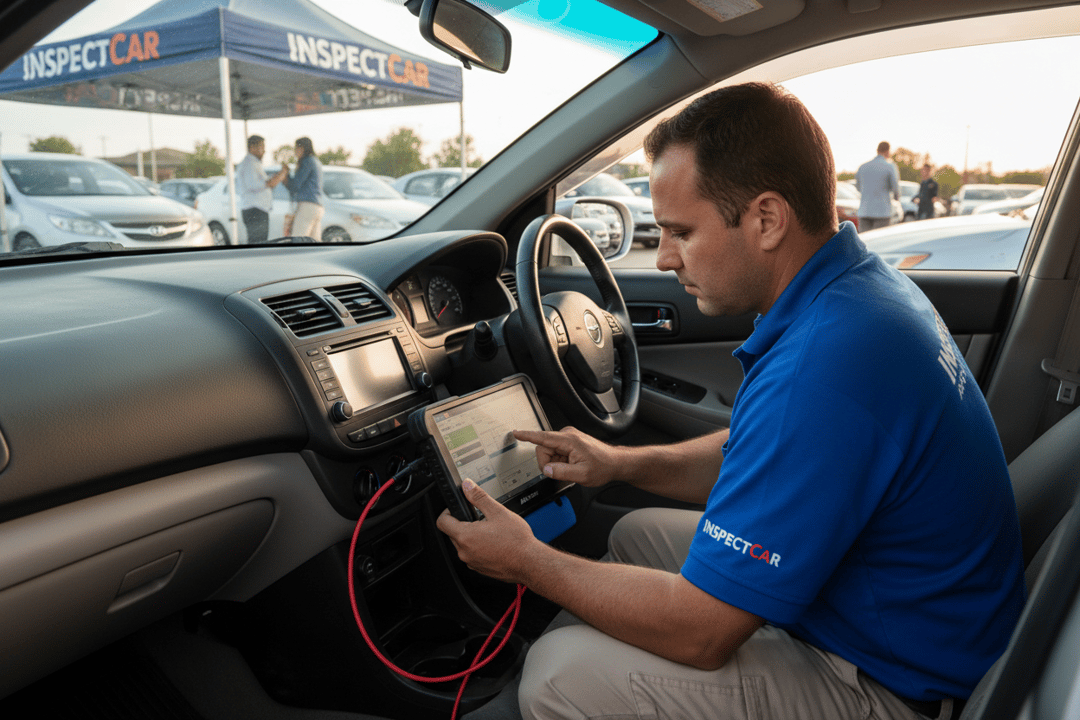
Verifying actual fuel consumption requires more than just a fuel gauge; it requires a mechanical audit. The first step is an OBD scan, which reads the vehicle's computer to check for stored error codes and monitor live data. This data reveals "fuel trims," indicating whether the engine is compensating for air leaks or sensor failures that reduce efficiency. A hidden vacuum leak, for example, can inject unmetered air into the engine, causing the computer to inject excess fuel to compensate.
The Road Test Component
A professional road test is the final verification step. This involves assessing acceleration, braking, and noise levels. A vehicle that hesitates during acceleration or emits excessive black smoke from the exhaust is burning fuel inefficiently. The suspension and tire condition are also evaluated during this phase to ensure there is no excessive rolling resistance or drag from misalignment.
Relying on a pre-purchase inspection is the only method to uncover these hidden variables. A buyer cannot determine engine health or brake efficiency through visual inspection alone. This is where a comprehensive service becomes a necessary investment to avoid purchasing a vehicle that consumes fuel at an unacceptable rate.
AutoFay: Technical Verification Services
For buyers and sellers in the UAE, determining the true mechanical condition of a hatchback is best achieved through a professional inspection. AutoFay provides a on-location inspection service across all 7 Emirates, covering over 410+ checkpoints. This ensures that no aspect of the vehicle's fuel efficiency potential is overlooked.
AutoFay utilizes a comprehensive checklist that includes body, frame, and engine diagnostics. The service identifies issues that directly impact fuel economy, such as engine misfires, air conditioning efficiency, and tire wear. By providing a detailed PDF report with HD photos, the inspection process offers a transparent view of the vehicle's condition before a transaction is finalized.
Inspection Packages and Pricing
AutoFay offers tiered packages designed to target specific areas of concern. The most economical entry point is the Computer Diagnostic package at AED 99. This service is essential for verifying engine and transmission codes that may affect fuel consumption. For a broader assessment, the Body & Computer package at AED 250 covers paint defects, panel repairs, and electrical systems.
The highest tier, the Comprehensive package at AED 299, delivers the full 410+ checkpoint inspection. This includes a thorough road test, brake pad analysis, suspension checks, and a full fluid inspection. This package is the definitive method for verifying that a vehicle is mechanically sound and operating at its designed efficiency levels.
| Package | Price (AED) | Key Focus Areas |
|---|---|---|
| Computer Diagnostic | 99 | OBD scan for engine/transmission codes, live data monitoring. |
| Body & Computer | 250 | Panel-by-panel paint analysis, body structure integrity, electrical systems. |
| Comprehensive | 399 | Full 410+ checkpoints including frame, engine, brakes, suspension, and road test. |
Understanding the real-world fuel economy of a hatchback requires an appreciation for the mechanical variables at play. From the cooling load of the AC to the rolling resistance of tires, every component contributes to the final consumption rate. Buyers must verify these factors through professional inspection to ensure the vehicle matches its claimed efficiency. AutoFay inspects 410+ checkpoints with HD photos and PDF report. Book at autofay.ae or call +971542584458.



0 Comments
No comments yet. Be the first to share your thoughts!