

Driving in the United Arab Emirates presents a unique set of challenges, ranging from high-speed highways to extreme temperature fluctuations. Among the vehicle types dominating the local roads, the crossover remains a favorite for its elevated driving position and utility. However, high seating does not guarantee superior protection in the event of a collision. Understanding the nuances of crossover safety ratings and the physical condition of the vehicle is critical before finalizing any purchase or maintenance routine.
Decoding Crash Test Ratings for Crossovers
Certified crash test ratings, such as those provided by Euro NCAP and IIHS, offer a standardized benchmark for occupant safety. These organizations simulate frontal, side, and rollover impacts to gauge how well a vehicle protects its passengers. A five-star rating indicates that the vehicle’s structure successfully manages the transfer of energy away from the cabin during a high-velocity impact.
Drivers must understand that a high rating is a baseline, not a lifetime guarantee. The structural integrity of a crossover depends on the precise alignment of its load path—the system of rails, pillars, and floor pans designed to absorb kinetic energy. If a vehicle has been involved in a prior impact, even if the damage was concealed, the load path may be compromised, reducing the effectiveness of the safety cell during a subsequent crash.
What Ratings Don't Show
Standardized tests utilize new vehicles with pristine components. They cannot predict how older vehicles with worn components will perform. For instance, a vehicle with corroded brake lines or bald tires will fail its physical safety tests in the real world long before a crash occurs. Therefore, raw ratings must be viewed in conjunction with a comprehensive physical and electronic inspection.
Essential Safety Features to Verify
When inspecting a crossover, identifying the presence and functionality of advanced safety features is non-negotiable. Modern crossovers rely on a suite of technologies to prevent accidents before they happen. The following features should be verified during any thorough evaluation.
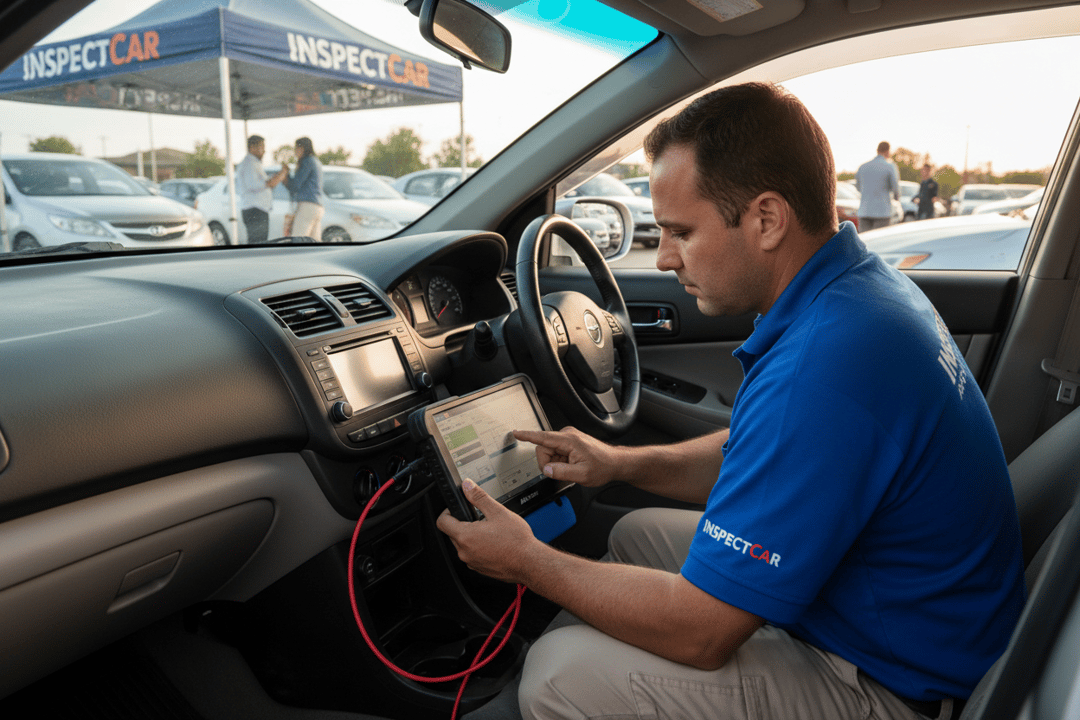
- Autonomous Emergency Braking (AEB): This system detects pedestrians and vehicles in the path of travel and automatically applies the brakes if the driver does not react in time. Verification requires connecting the vehicle’s On-Board Diagnostics (OBD) system to ensure the radar and camera sensors are calibrated and communicating correctly with the ECU.
- Electronic Stability Control (ESC): This system prevents the loss of traction by automatically applying brakes to individual wheels. A crossover with damaged suspension components or worn tires may fail to engage ESC effectively, increasing the risk of rollover.
- Structural Reinforcement: Look for the presence of side-impact beams within the doors and reinforced B-pillars. These components are designed to disperse crash energy laterally, protecting occupants from intrusion.
- Tire Condition: Tires are the only point of contact between the vehicle and the road. Verify the manufacturing date of the tires; rubber degrades over time regardless of mileage, and old tires can blow out at high speeds.
The Critical Role of Frame and Body Integrity
The "frame" of a crossover is the skeleton upon which safety relies. Unlike a traditional unibody monocoque, many crossovers feature a Body-on-Frame construction or a complex high-strength steel unibody that incorporates the frame rails into the chassis. These components are designed to crumple in a controlled manner to absorb impact energy.
During an inspection, one must look beyond the cosmetic surface to identify structural distress. Misaligned panels, uneven gaps between doors and the body, or a "sagging" ride height often indicate that the frame rails have been bent or the chassis has been compromised. Restoring a compromised frame is rarely feasible; a damaged load path renders the vehicle unsafe and significantly lowers its resale value.
Electronic Diagnostics: The Hidden Safety Layer
Many modern safety systems are governed by complex electronic control units. A malfunctioning sensor or a corrupted data log can disable safety features without the driver’s knowledge. A computer diagnostic scan is essential to ensure that the Anti-lock Braking System (ABS), Electronic Brake-force Distribution (EBD), and airbag deployment logic are functioning within factory specifications.
Failure to detect a software glitch in the ABS system could result in brake lock-up during a panic stop, leading to a loss of steering control. Furthermore, an airbag module that has been deployed and reset without professional programming may not deploy successfully in a subsequent accident. These hidden electronic failures are the most common reasons why seemingly new vehicles fail to perform in real-world emergency scenarios.
Professional Inspection: Beyond the Visual Check
A visual inspection is insufficient for verifying the safety of a crossover, particularly one imported to the UAE market. The local environment subjects vehicles to sand, salt, and intense sun, accelerating the degradation of mechanical components. A professional service provides a multi-layered analysis that exceeds standard visual checks.
For example, a experienced inspector will measure the wear percentage on brake pads to determine if replacement is imminent. They will check the condition of brake fluid, which absorbs moisture over time and reduces the braking efficiency of the system. They will also inspect the suspension bushings and ball joints for cracks or separation, which can lead to unpredictable handling characteristics.
AutoFay Inspection Packages
Utilizing a specialized inspection service ensures that safety-critical systems are evaluated against a strict set of criteria. AutoFay offers a on-location inspection service across all seven Emirates, bringing the inspection directly to the buyer or seller. Their comprehensive process covers 25 distinct categories to ensure no safety oversight occurs.
| Inspection Package | Price (AED) | Key Safety & Mechanical Checks |
|---|---|---|
| Computer Diagnostic | 99 | Engine, Transmission, ABS, Airbag codes, and sensor communication verification. |
| Body & Computer | 250 | |
| Comprehensive | 399 |
The Consequences of Neglected Safety Systems
Attempting to bypass or ignore minor mechanical issues often leads to catastrophic safety failures. For example, driving with low brake fluid levels compromises the hydraulic pressure required to stop the vehicle safely. Similarly, neglecting a worn strut mount can allow the wheel to wobble violently at high speeds, potentially causing the tire to separate from the rim.
In the context of a crossover, which has a higher center of gravity than a sedan, compromised suspension geometry significantly increases the risk of a rollover accident. Even if the structural frame remains intact, a vehicle with worn suspension components may not hold the road during evasive maneuvers, leaving the driver unable to avoid a collision altogether.
Verifying safety is an investment in personal security and asset protection. A vehicle with a clean inspection report commands a higher resale value and offers reliable performance on UAE roads. By relying on professional expertise rather than guesswork, buyers can ensure that the vehicle they operate is truly capable of protecting its occupants.
AutoFay inspects 410+ checkpoints with HD photos and PDF report. Book at autofay.ae or call +971542584458


0 Comments
No comments yet. Be the first to share your thoughts!