

Understanding the actual fuel consumption of crossover vehicles in the United Arab Emirates requires looking beyond the manufacturer’s sticker rating. The combination of high ambient temperatures, stop-and-go urban traffic, and the aerodynamic inefficiency of larger body styles creates a unique fuel economy profile. Drivers often find a significant variance between the rated MPG and their real-world driving experience. This discrepancy is rarely the result of a faulty vehicle; rather, it is a product of the specific environmental and driving demands placed upon the car. To accurately assess a crossover's efficiency, one must evaluate its performance under city conditions versus highway cruising, and critically analyze the impact of the air conditioning system.
Urban vs. Expressway Dynamics
City driving in the UAE fundamentally alters a crossover's fuel efficiency. The heavy chassis of a crossover, designed for off-road capability and passenger space, creates significant rolling resistance. In stop-and-go traffic, the vehicle spends the majority of its time at low speeds with frequent acceleration and deceleration. This results in the engine working harder to overcome inertia, often running at lower RPMs where efficiency is generally lower. The frequent use of brakes also dissipates the kinetic energy that could otherwise be recovered, meaning the driver must expend more energy to return to speed.
On the other hand, highway driving offers a different set of challenges. While the crossover remains heavy, the aerodynamic drag—air resistance—becomes the dominant factor at higher speeds. Crossovers, with their higher ride height and boxier shapes, do not cut through the air as efficiently as sedans or sports cars. Consequently, maintaining a constant speed of 120 km/h on the Sheikh Zayed Road can consume significantly more fuel than cruising at 80 km/h. The engine remains under a constant load to overcome drag, leading to a consistent, albeit higher, fuel burn rate compared to city driving.
The Air Conditioning Penalty
The air conditioning system is a primary determinant of fuel economy in the UAE climate. Unlike many other climates where the A/C might be used sparingly, residents here rely on climate control almost year-round. The A/C system operates using a compressor driven by the engine's crankshaft. This places a parasitic load on the engine, diverting horsepower that would otherwise be used for propulsion. In a crossover, which often has a larger cabin to cool, the compressor must work harder and for longer durations.
When the ambient temperature exceeds 40 degrees Celsius, the compressor cycles continuously to maintain an interior temperature of 20 to 22 degrees. This constant strain forces the engine to inject more fuel into the cylinders to compensate for the power loss. Studies consistently show that running the air conditioning can reduce fuel economy by 10% to 25% depending on the vehicle model and the intensity of the cooling required. This impact is most pronounced during city driving, where the engine is already struggling to manage stop-and-go traffic and the added load of the A/C compressor.
Diagnosing Poor Fuel Economy
When a crossover’s fuel economy drops below expectation, it is rarely a symptom of the car itself but rather a sign of underlying mechanical issues or external factors. The first step in verification is checking tire pressure. Under-inflated tires increase rolling resistance, forcing the engine to work harder to move the vehicle. Furthermore, heavily worn tires reduce traction and increase fuel consumption. Inspectors must also look for physical damage to the suspension, such as bent control arms or worn bushings, which alter the vehicle's alignment and increase drag.
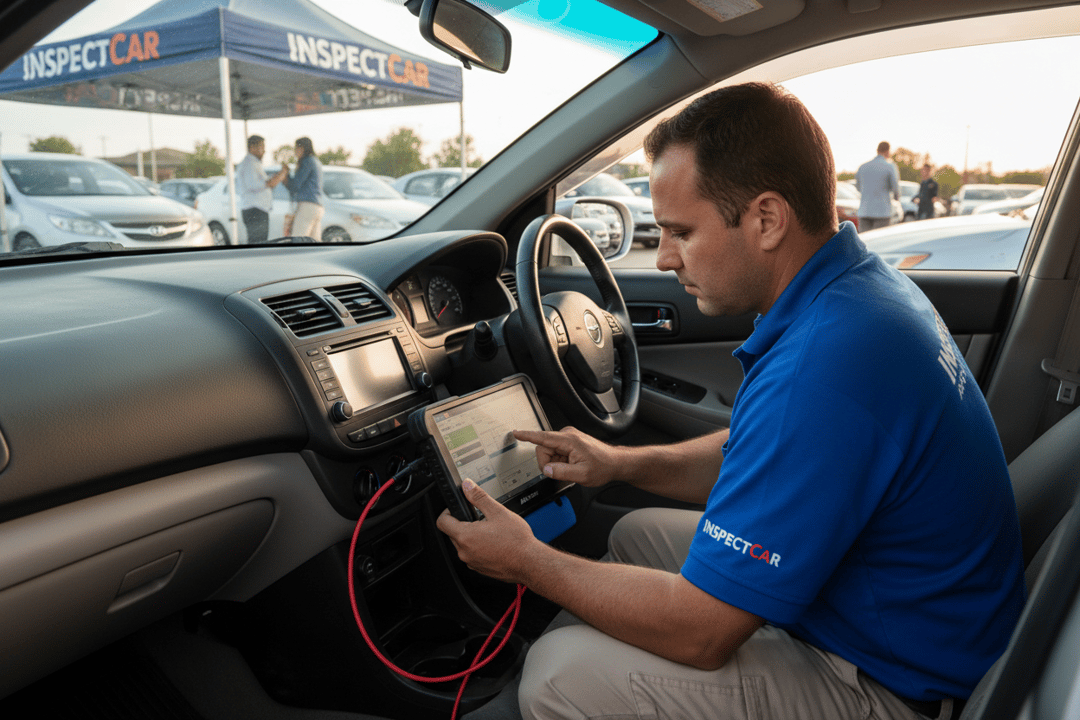
Engine health is another critical area. Clogged air filters restrict airflow to the engine, reducing combustion efficiency. Leaking fuel injectors or a malfunctioning oxygen sensor can disrupt the air-fuel mixture, leading to incomplete combustion and wasted fuel. Modern vehicles are equipped with On-Board Diagnostics (OBD) systems that log these errors. However, a scan does not always reveal the root cause of poor performance, as it only detects codes rather than the physical condition of the engine components. This is where a comprehensive visual and mechanical inspection becomes essential to separate genuine fuel efficiency issues from maintenance neglect.
The AutoFay Inspection Advantage
Verifying the health of a crossover to ensure optimal fuel economy requires a rigorous inspection process. Standard visual checks are insufficient when dealing with complex mechanical systems. ASE-experienced inspectors utilize a structured methodology to identify every factor that contributes to fuel waste. The inspection process begins with a visual assessment of the vehicle's structure. The inspector examines the body panels for signs of damage or improper repairs that could affect aerodynamics or alignment. Frame integrity is checked to ensure the vehicle has not been involved in accidents that would compromise its structural geometry.
Under the hood, the focus is on the engine and transmission. Inspectors listen for unusual sounds, such as ticking valves or knocking pistons, which indicate internal wear. They physically inspect the engine mounts to ensure the engine is secure and not vibrating excessively, which wastes energy. The condition of the fluids is also analyzed; thick, dark oil or contaminated transmission fluid can cause the drivetrain to work harder than necessary. Modern diagnostics are performed using computer scanners, which check for error codes in the engine, transmission, ABS, and airbag systems. However, AutoFay inspectors go further by testing the brakes and suspension during a road test to ensure the vehicle is driving true and not fighting resistance.
Recommended Packages for Economy Verification
To properly assess a vehicle's condition before purchase or after maintenance, utilizing a professional on-location inspection service is the most efficient method. AutoFay offers a range of packages designed to cover specific needs, ensuring that every critical aspect of the crossover is evaluated without unnecessary expense. These services are conducted across all seven Emirates, providing convenience and accessibility for vehicle owners.
| Package Name | Price (AED) | Inspection Scope |
|---|---|---|
| Computer Diagnostic | 99 | Engine, transmission, ABS, and airbag error code scanning. |
| Body & Computer | 250 | Panel-by-panel body and paint analysis combined with engine diagnostics. |
| Comprehensive | 399 | Full 410+ checkpoint inspection including body, frame, fluids, tires, suspension, and road test. |
For buyers and sellers involved in the used car market, the comprehensive package is the most valuable tool for verifying fuel economy. This service covers 25 key categories, ensuring that hidden issues such as suspension wear, brake pad degradation, or engine mounting failures are documented. By identifying these issues, the inspection report provides a clear picture of the vehicle's operational costs. A vehicle with worn suspension or a leaking transmission will naturally show higher fuel consumption; identifying these issues prevents future financial burdens.
Key Inspection Categories
- Body & Paint: Panel-by-panel analysis to confirm original manufacturing and detect accidental repairs that impact aerodynamics.
- Frame & Structure: Inspection of rails, pillars, and floor pan to ensure structural alignment is preserved.
- Fluids: Verification of fluid levels and quality to ensure the engine and transmission are operating efficiently.
- Suspension & Brakes: Assessment of wear levels on pads and the condition of suspension components to ensure smooth, efficient motion.
Verifying fuel economy is not merely about looking at a digital readout; it requires a holistic understanding of the vehicle's mechanical state. The extreme conditions of the UAE climate and road conditions demand a vehicle that is mechanically sound. By utilizing professional inspection services, vehicle owners can uncover the true cost of ownership. AutoFay inspects 410+ checkpoints with HD photos and PDF report. Book at autofay.ae or call +971542584458.


0 Comments
No comments yet. Be the first to share your thoughts!