


Driving a coupe in the United Arab Emirates presents a unique blend of aerodynamic performance and mechanical demand. These vehicles prioritize low-slung styling and wide tracks, often necessitating larger engines and specific aerodynamic compromises that impact fuel consumption. While manufacturers list theoretical figures on the window sticker, real-world driving in the Emirates reveals a different picture influenced by extreme climate, traffic density, and highway speeds. Understanding the disparity between factory estimates and actual consumption requires an analysis of driving conditions and a mechanical understanding of vehicle efficiency.
The Urban Efficiency Challenge
City driving in the UAE is defined by stop-and-go traffic and frequent acceleration. A coupe, designed for high-speed stability, often suffers in low-speed environments because its aerodynamic shape offers minimal wind protection at crawling speeds. The engine spends a significant amount of time idling in traffic, consuming fuel without moving the vehicle forward. Furthermore, the aggressive acceleration required to merge onto busy highways causes the engine to operate in high RPM ranges, which increases fuel injection rates and reduces thermal efficiency.
- Rapid acceleration: Jumping off the line repeatedly burns excess fuel that would otherwise be conserved during gradual acceleration.
- Frequent braking: Braking converts kinetic energy into heat, a process that wastes the fuel previously used to create that energy.
- Idling time: Extended periods spent stationary with the engine running consume a steady amount of fuel without contributing to mileage.
Highway Performance Dynamics
Highway driving offers a distinct contrast to urban dynamics. Once a coupe reaches cruising speed, the engine operates at its most efficient point, often in the lower half of the tachometer. The primary resistance at highway speeds is aerodynamic drag, which increases exponentially with velocity. A well-designed coupe minimizes this drag, allowing the transmission to lock up in higher gears and minimize engine revolutions per mile.
However, maintaining high speeds in the UAE heat still requires significant energy. Drivers must balance the desire for speed with the reality of fuel consumption. The physics of drag mean that simply increasing speed by highway speeds can increase fuel consumption by a non-linear margin, testing the limits of the vehicle’s fuel tank range more quickly than expected.
The Impact of Air Conditioning
Operating an air conditioning system places a significant load on the engine. In a coupe, the cabin volume is often smaller than that of a sedan, but the large glass area and low roofline allow direct solar radiation to heat the interior rapidly. This forces the air conditioning compressor to cycle at full capacity to lower the cabin temperature.
The engine must divert power to drive the compressor, reducing the power available for the wheels. This results in a measurable drop in fuel economy. In extreme temperatures common in the Emirates, running the AC at maximum power can reduce fuel efficiency by 10 to 25 percent depending on the vehicle's efficiency rating and the severity of the external heat.
Verifying Fuel Consumption Through Inspection
Reduced fuel economy is rarely a mystery; it almost always points to specific mechanical faults or vehicle condition issues. A certified vehicle inspection can identify the root causes of excessive fuel usage. Drivers should suspect mechanical inefficiency if the vehicle consumes more fuel than predicted, particularly if the change happens suddenly or after specific driving conditions.
- Tire Pressure and Condition: Under-inflated tires increase rolling resistance. The engine must work harder to push the vehicle, directly increasing fuel burn.
- Engine Health: A failing oxygen sensor or a clogged air filter can disrupt the air-fuel mixture, causing the engine to run rich or inefficiently.
- Suspension Issues: Worn suspension components can increase drag on the wheels, forcing the engine to compensate for mechanical losses.
AutoFay Inspection Capabilities
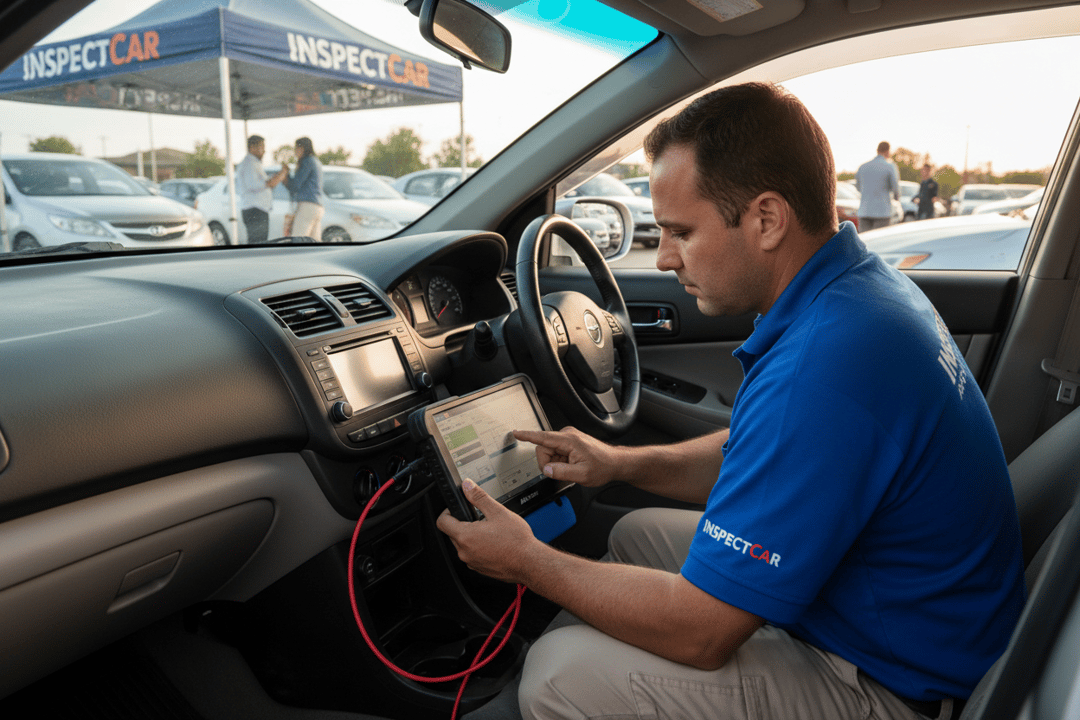
Verifying the condition of a vehicle requires a systematic approach. AutoFay provides a licensed inspection service across the seven Emirates, utilizing a on-site team to assess vehicle health at the buyer's location. The inspection process evaluates over 410+ checkpoints categorized into specific systems, including the engine, brakes, suspension, and bodywork.
The "Road Test" category within the inspection is particularly relevant for fuel economy verification. Inspectors listen for unusual noises that suggest mechanical friction or poor combustion. Additionally, the "Computer Diagnostic" service checks for error codes in the engine control unit that might indicate sensors or actuators affecting performance.
For a comprehensive assessment of a used coupe, the Comprehensive AED 299 package offers the most detailed analysis. This package includes a full physical inspection of the body, frame, and undercarriage, alongside a computer diagnostic scan. Alternatively, a Computer Diagnostic AED 99 service is available for those specifically wishing to target engine and transmission faults. The Body & Computer AED 250 package combines exterior and interior assessment with electronic diagnostics.
| Inspection Focus | Impact on Fuel Economy | AutoFay Package |
|---|---|---|
| Engine Diagnostics | Identifies sensor errors, misfires, or leaks that force the engine to consume excess fuel. | Computer Diagnostic (AED 99) |
| Tire & Suspension | Checks for uneven wear indicating alignment issues or low pressure increasing rolling resistance. | Comprehensive (AED 299) |
| Full Road Test | Evaluates drivetrain noise and mechanical response which can indicate transmission drag. | Comprehensive (AED 299) |
| Fluid Condition | Assesses if old oil or transmission fluid is causing internal friction and reduced efficiency. | Comprehensive (AED 299) |
Examining the vehicle's frame and floor pan is also critical. Structural issues can alter the vehicle's alignment and drag characteristics, which might not be immediately visible but will affect long-term fuel consumption. By utilizing AutoFay's all-Emirates on-location inspection, buyers can ensure that the mechanical health of the coupe aligns with the fuel economy figures provided by the seller.
Conclusion
Real-world fuel economy for coupe vehicles in the UAE is a function of aerodynamic design, driving style, and mechanical condition. City driving and air conditioning usage create significant efficiency penalties, while highway speeds test the engine's thermal limits. Verifying a vehicle's true condition requires more than a visual check; it demands a diagnostic approach.
AutoFay inspects 410+ checkpoints with HD photos and PDF report. Book at autofay.ae or call +971542584458


0 Comments
No comments yet. Be the first to share your thoughts!