

The Toyota Yaris has established itself as a staple in the UAE used car market, favored for its compact dimensions, fuel efficiency, and perceived reliability. However, the market is saturated with vehicles ranging from pristine showroom models to high-mileage workhorses. A pre-purchase inspection is the only reliable method to determine the true mechanical and structural condition of a vehicle before financial obligation. This guide outlines the specific areas an inspector examines on a used Yaris and highlights the red flags that differentiate a sound investment from a liability.
Engine and Transmission Diagnostics
The 1.3-liter VVT-i engine found in most Yaris variants is generally robust, but it is not immune to wear. Inspectors focus heavily on the cooling system during the initial walk-around. The radiator and thermostat are common failure points in this engine family; a leaking radiator or a failed thermostat leads to overheating, which can result in a blown head gasket. A blown head gasket causes white smoke from the exhaust and milky oil, signaling catastrophic internal damage.
Transmission health is the second critical area of focus. Automatic Yaris models equipped with the CVT (Continuously Variable Transmission) are prone to oil degradation and solenoid failures over time. An inspector listens for abnormal whining or grinding noises during acceleration and checks the transmission fluid condition. Dark, burnt-smelling fluid indicates the gearbox has been abused or neglected, often leading to immediate transmission failure. Inspectors also verify the operation of the clutch (in manual models) for signs of slipping or juddering.
Suspension and Steering Dynamics
Excessive bounce when pressing down on each corner of the vehicle reveals worn shock absorbers or struts. In the UAE climate, suspension components degrade faster due to dust and temperature extremes. Worn shock absorbers shorten stopping distances and reduce tire life. Inspectors also inspect the control arms and ball joints for play, which causes a clunking noise when turning or accelerating over bumps.
Steering play is another indicator of suspension wear. A loose steering wheel suggests worn tie rod ends or a failing rack and pinion assembly. These components are safety-critical; failure can result in a loss of steering control. Inspectors also check the track rod ends for rust, particularly on vehicles that have spent time near coastal areas where salt air accelerates corrosion.
Structural Integrity and Body Assessment
Corrosion remains one of the most persistent issues for vehicles in the UAE, particularly during winter when roads are salted. Inspectors meticulously check the sills, wheel arches, and door bottoms for bubbling paint or rust intrusion. Rust on the structural rails compromises the vehicle's safety cage and requires expensive structural repairs to resolve.
Panel alignment is a primary indicator of collision history. Inspectors measure the gaps between doors, the hood, and the trunk using a feeler gauge. Uneven gaps suggest a previous impact, even if the damage was repaired. They also look for mismatched paint colors or spray textures, which indicate a DIY repair job rather than professional work. The frame rails beneath the car must be straight; any bending suggests the vehicle was in a serious accident.
Electrical Systems and Safety Features
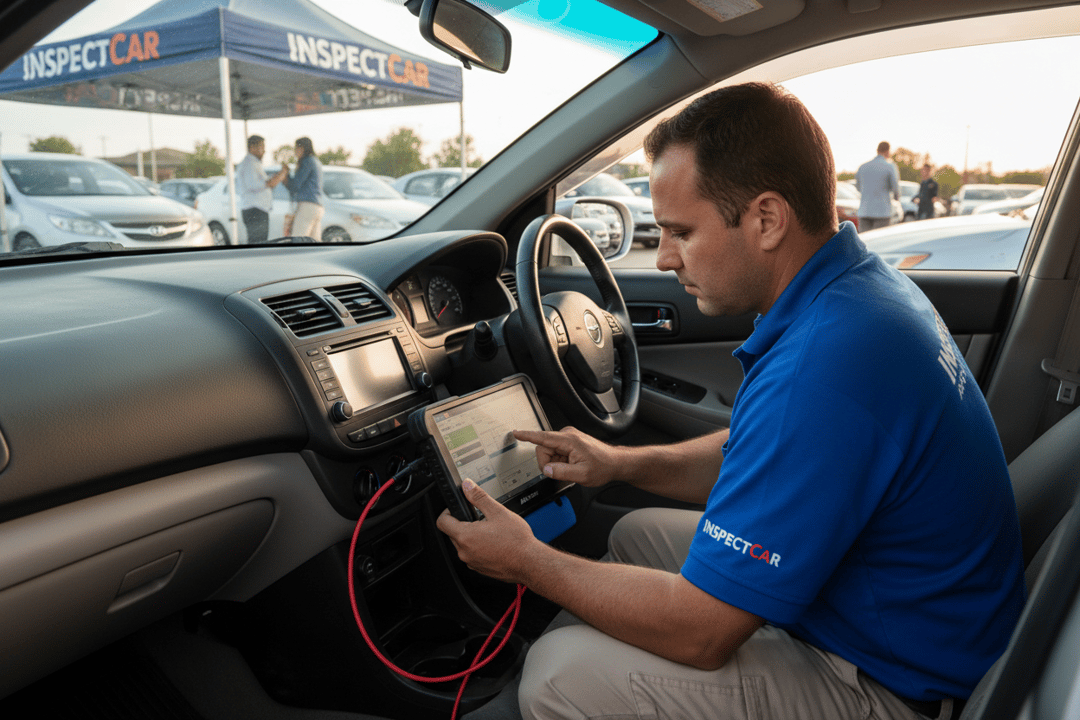
Modern vehicles rely on complex electronic networks. Inspectors use an OBD II scanner to retrieve diagnostic trouble codes from the engine, transmission, ABS, and airbag systems. Codes related to the throttle body, mass airflow sensor, or ignition coils often appear in higher mileage Yaris models. A malfunctioning immobilizer can render the car undrivable, a costly repair that is easily missed without a professional scan.
Functionality of safety systems is rigorously tested. This includes the operation of the parking sensors, reverse camera (if equipped), and headlights. Faulty ABS modules sometimes lock up during braking tests, compromising stopping performance. Inspectors also check the battery health and the condition of the alternator to ensure the electrical load of the car does not drain the battery during daily use.
Tires, Brakes, and Fluids
Tire manufacturing date is often overlooked but is critical for safety. Tires degrade over time regardless of mileage; a tire older than six years may suffer from dry rot. Inspectors identify the manufacturing date on the sidewall and reject tires that are approaching or past their service life. Uneven tire wear patterns indicate alignment issues or suspension problems.
Brake performance is evaluated through a road test. Inspectors check the pad thickness using magnetic calipers and rate them on a percentage scale. Thin brake pads decrease stopping power and damage the rotors. They also inspect the brake lines for leaks and check the brake fluid for moisture content, which lowers the boiling point and reduces braking efficiency in hot weather.
The Value of a Professional Inspection
Relying on a visual inspection alone is insufficient for a high-value purchase. Professional inspection services provide a comprehensive evaluation across 25 distinct categories and over 410+ checkpoints. This ensures that every aspect of the vehicle, from the subframe to the spark plugs, is verified by a neutral third party.
On-location inspection services allow potential buyers to have the vehicle tested at the seller's location, eliminating the need to transport the car to a workshop first. This service is available across all 7 Emirates. Choosing a professional inspection prevents the financial burden of undisclosed mechanical defects and provides a clear roadmap for any necessary repairs.
| Inspection Category | Key Checks |
|---|---|
| Computer & Engine | OBD scan for error codes, compression test, oil leak check, smoke test |
| Body & Frame | Panel alignment, rust inspection, accident damage verification, paint thickness |
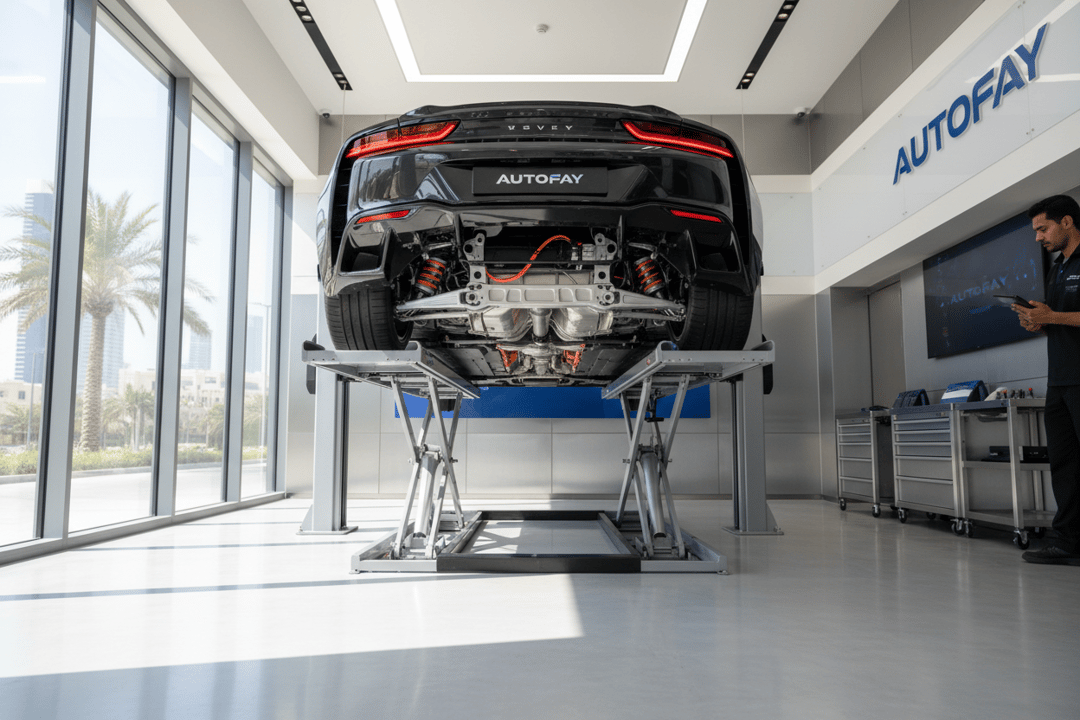
| Under Carriage | Suspension components, exhaust system, drivetrain, frame straightness |
| Electrical & Safety | Dashboard lights, airbags, sensors, lights, battery, alternator output |
| Brakes & Tires | Pad thickness, rotor condition, tire age/brand, brake fluid condition |
- Common Red Flag: The check engine light is on, and the seller claims it is "just a sensor."
- Common Red Flag: The transmission jerks or hesitates when shifting gears.
- Common Red Flag: Smoke appears from the exhaust during cold starts or acceleration.
- Common Red Flag: The steering wheel vibrates at speeds above 80 km/h.
Don't gamble with your hard-earned money on a used vehicle. Ensure the vehicle matches the seller's description with a detailed technical analysis.
AutoFay inspects 410+ checkpoints with HD photos and PDF report. Book at autofay.ae or call +971542584458


0 Comments
No comments yet. Be the first to share your thoughts!