
The Toyota Rush has established itself as a versatile workhorse and family vehicle across the emirates. Its compact footprint belies a surprisingly spacious interior, making it a popular choice for delivery services, school runs, and small families. However, the UAE market is saturated with vehicles that have undergone heavy usage or neglect. Purchasing a used Toyota Rush without a rigorous examination exposes the buyer to significant financial and safety risks. A thorough pre-purchase inspection bridges the gap between a dealer’s marketing gloss and the vehicle’s reality.
The Toyota Rush: Common Mechanical Weak Points
While the Rush is generally robust, specific components are prone to wear in the harsh UAE climate. Inspectors frequently identify issues related to the air conditioning system, which must operate at peak efficiency to combat the intense summer heat. Another common failure point involves the suspension system; the suspension absorbs the impact of speed bumps and uneven road surfaces, and components like shock absorbers and coil springs degrade over time, leading to a poor ride quality.
Electrical gremlins are also prevalent in higher-mileage examples. The power window regulators, central locking systems, and dashboard cluster sensors often malfunction due to long-term exposure to dust and temperature fluctuations. Ignoring these electrical faults can lead to complete failure of essential safety and convenience features. Furthermore, the 1.5-liter engine, while reliable, is susceptible to oil leaks from the valve cover gasket, which is a common maintenance item that requires replacement before it causes significant engine damage.
Structural Integrity and Body Condition
Structural soundness is non-negotiable when purchasing a pre-owned vehicle. Inspectors examine the car’s frame to ensure it has never been bent in a collision. A bent frame compromises the structural integrity of the vehicle, affecting safety and alignment. Inspectors pay close attention to the "rails" of the vehicle and the floor pan, particularly in areas where the vehicle may have been exposed to water or salt.
Rust is a critical concern in the UAE, especially for vehicles previously registered in coastal regions like Dubai Marina, Sharjah Corniche, or Khasab. Even minor surface rust can indicate underlying corrosion that is spreading. Inspectors check for bubbling paint, which often signals rust formation underneath. Panel alignment is another key indicator; uneven gaps between doors, the hood, and the trunk suggest previous accidents or poor quality repairs, which can lead to wind noise and water leaks.
The Inspection Checklist: What Inspectors Look For
A professional inspection covers a vast array of systems to ensure the vehicle is roadworthy. The process involves a detailed examination of the engine compartment, looking for oil leaks, loose hoses, and the condition of belts and batteries. The oil itself is analyzed for metal shavings or excessive sludge, which indicates internal engine wear.
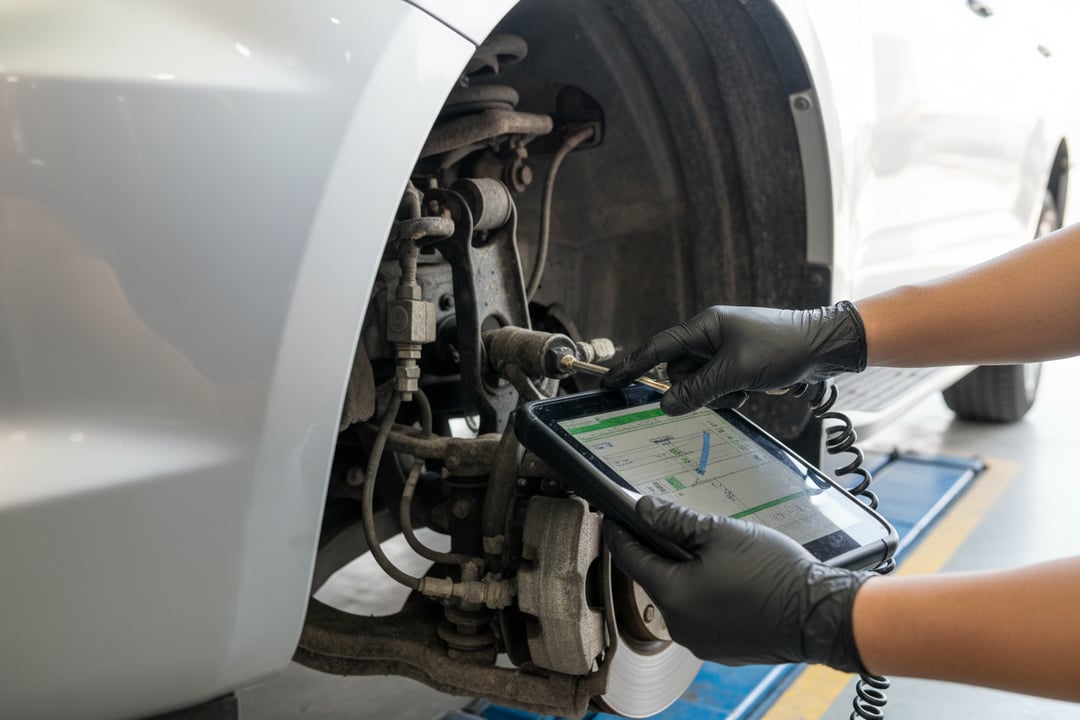
Inspectors rigorously test the braking system. This includes checking the brake pads and rotors for thickness and measuring the fluid level. Worn brakes are a direct threat to safety. The suspension is put through its paces, checking for play in the ball joints and damage to the control arms. Tires are inspected for manufacturing date and tread depth, ensuring they provide adequate grip and comply with UAE road regulations.
- Engine Sound and Vibration: The engine should run smoothly without knocking or ticking sounds. Excessive vibration through the steering wheel or seat indicates potential drivetrain issues.
- Brake Performance: The vehicle must stop in a straight line without pulling to one side. Squeaking or grinding noises indicate worn brake pads.
- Tire Condition: Tires must have sufficient tread depth and be free of cracks or bulges. Manufacturing dates are verified to ensure the tires are not older than five years.
- Fluid Levels and Condition: Engine oil, coolant, brake fluid, and power steering fluid are checked for levels and clarity. Contaminated fluids suggest neglect or internal component failure.
Red Flags Specific to the Toyota Rush
Certain red flags should immediately halt the negotiation process. One major indicator is the "smell" of the vehicle; a strong smell of burning oil, coolant, or unburnt fuel indicates serious mechanical failures. Another red flag is hesitation during acceleration or stalling when the engine is cold, which could point to fuel injector issues or air intake problems.
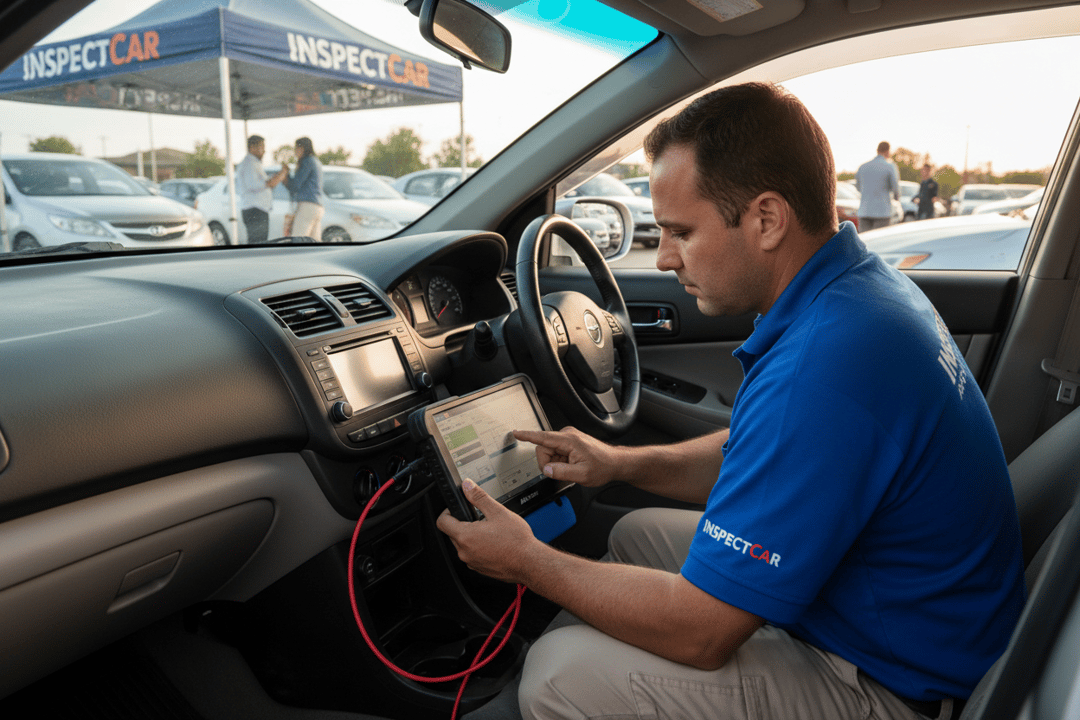
Inspectors also look for signs of "salvage" or "cloned" history. This is often revealed through inconsistent VIN numbers on documents versus the physical vehicle or mismatched serial numbers on major components like the ECU or engine block. Additionally, if the dashboard warning lights remain illuminated after the engine starts, it indicates unresolved fault codes that require a diagnostic scan.
Water damage is a silent killer. If the vehicle was submerged, water can remain trapped in the carpet and headliner, leading to mold and electrical short circuits that may not appear until months after purchase. Any evidence of recent bodywork that does not match the age of the vehicle is a warning sign of potential undisclosed accidents.
Investing in a Professional Inspection
Relying on a standard test drive is insufficient for a comprehensive evaluation. A professional inspection provides a detailed report on the vehicle's condition, often including over 410+ checkpoints across 25 different categories. This depth of analysis ensures that no silent killer—such as a blown head gasket or failing transmission—is missed.
Utilizing a specialized service provides objective data rather than subjective opinion. The buyer receives a clear understanding of the vehicle's current state and what repairs are immediately required. This knowledge allows the buyer to negotiate the price down based on actual repair costs rather than estimated market value.
| Inspection Package | Key Features | Best For |
|---|---|---|
| Computer Diagnostic | Full OBD scan for engine, transmission, ABS, and airbag fault codes. | Verifying dashboard lights and engine status before purchase. |
| Body & Computer | Includes diagnostic scan and exterior/interior condition assessment. | Checking for accident damage and electronic faults. |
| Comprehensive | Full 410+ checkpoint inspection covering body, frame, engine, brakes, and road test. | Buying a used vehicle with high confidence and zero surprises. |
Consequences of skipping this step can be severe. A vehicle that appears mechanically sound on a test drive may hide a failing transmission or a compromised frame that will lead to expensive repairs shortly after ownership. Investing in a professional inspection is a fraction of the cost of a major repair bill that would result from buying a problematic vehicle.
AutoFay provides a on-location inspection service across all 7 Emirates. We utilize advanced technology to generate HD photos and a comprehensive PDF report. Our team of experienced inspectors ensures that every detail is documented accurately.
AutoFay inspects 410+ checkpoints with HD photos and PDF report. Book at autofay.ae or call +971542584458


0 Comments
No comments yet. Be the first to share your thoughts!