
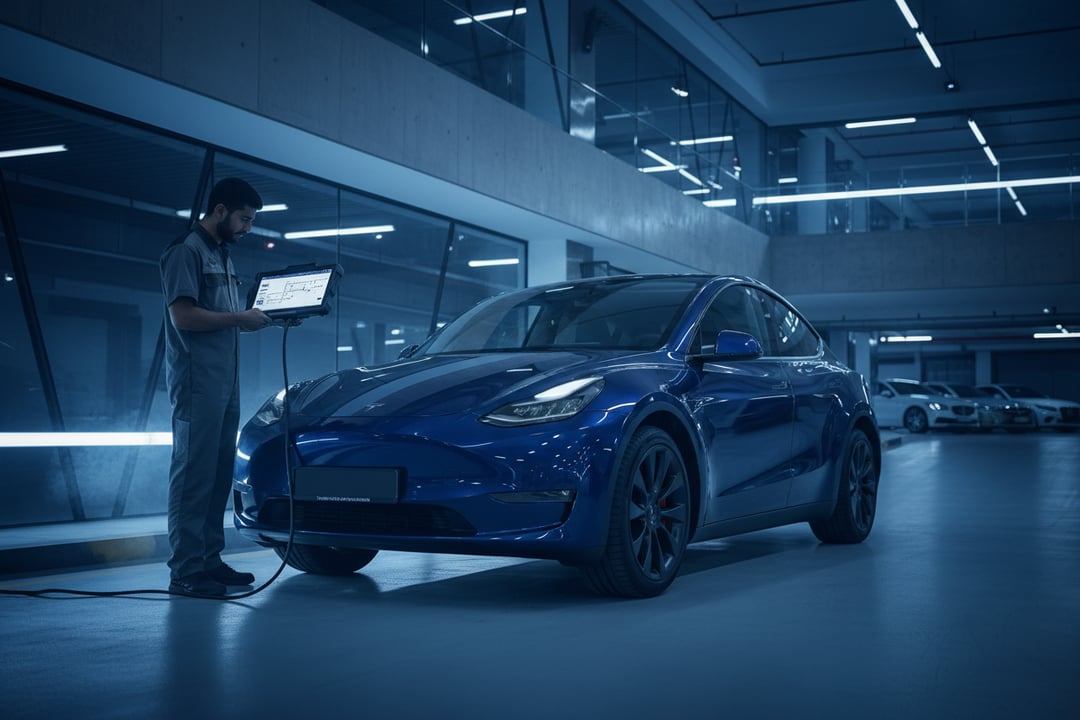
The Tesla Model Y has surged in popularity across the UAE, offering a blend of space, performance, and technology. However, purchasing a used electric vehicle requires a different approach than inspecting a combustion engine car. Electric vehicles rely on complex high-voltage systems and software integration that can mask mechanical failures behind a dashboard screen. A thorough inspection is essential to uncover issues that are not visible to the naked eye. This guide outlines the critical checkpoints inspectors evaluate to ensure the Model Y maintains its safety and longevity.
The "Silent" Danger: Drivetrain and Cooling Systems
One of the most significant differences between electric and traditional vehicles is the absence of an exhaust system and engine noise. While silence is often preferred, it also means that coolant leaks or bearing wear can go unnoticed for long periods. The cooling system is the lifeblood of the Model Y, circulating liquid to maintain optimal temperature for the battery and power electronics. Inspectors look for signs of parasitic cooling system leaks, which can lead to overheating and permanent battery damage.
The electric motor itself requires rigorous examination. Inspectors listen for unusual whining, grinding, or humming sounds that indicate bearing wear or inverter issues. Since there is no transmission fluid reservoir to check, the health of the drivetrain is inferred from the vehicle's road behavior. A jerky acceleration or a lack of power response often points to an issue with the inverter or the onboard rectifier, both of which are expensive components to replace.
The Critical 12-Volt Auxiliary Battery
Many buyers focus entirely on the 100 kWh battery pack while overlooking the 12-volt auxiliary battery. This smaller battery powers essential systems such as door locks, central locking, hazard lights, and the infotainment screen. If this auxiliary battery fails, the car will not start, even though the main high-voltage battery is fully charged. In older Model Ys, this battery is prone to corrosion and failure, requiring replacement every few years.
Inspectors test the voltage and condition of the 12-volt system during the road test. A failing auxiliary battery can cause the car to enter "limp mode" or prevent the doors from unlocking remotely. Replacing this battery is a straightforward service, but in an overheated UAE climate, it fails much faster than in temperate regions. Neglecting this system leads to the frustration of being stranded with a "fully charged" vehicle that simply will not turn on.
Software Diagnostics and Sensor Calibration
A Tesla is essentially a computer on wheels, and software glitches can manifest as physical problems. Inspectors use specialized computer diagnostics to scan for error codes related to the MCU (Media Control Unit), the BMS (Battery Management System), and the ADAS (Advanced Driver Assistance Systems). A frozen screen or unresponsive touchscreen often indicates a failing MCU, which controls the display, navigation, and music system.
Calibration of sensors requires specific tools and time. If the vehicle has been in a minor accident or the camera has been replaced, the lane-keeping assist and autopilot features may be disabled or inaccurate. An inspector verifies that all cameras, ultrasonic sensors, and radar units are functioning correctly. Failure to calibrate these sensors after service compromises the vehicle's safety features and can prevent the car from driving above certain speed limits until the error is cleared.
Body Integrity and Solar Roof Integrity
The Model Y is equipped with a panoramic glass roof, which is a notorious weak point in this specific model. The adhesive used to bond the glass to the roof panel can degrade over time due to thermal stress from the UAE sun. Inspectors meticulously check the perimeter of the roof for gaps or separation between the glass and the interior headliner. Water ingress through a compromised seal can lead to mold growth and damage to the interior electronics.
Panel alignment is another critical area. The doors of the Model Y should open and close with a solid, precise sound and consistent gaps between panels. Uneven gaps or misaligned trunks indicate previous collision repairs that may have compromised the vehicle's structural rigidity. Repainted panels often hide underlying frame damage, so a panel-by-panel paint analysis is necessary to determine if the car has been subjected to major bodywork.
Suspension, Brakes, and Chassis Stress
The heavy weight of the Model Y, combined with the high center of gravity, places significant stress on the suspension components. Inspectors examine the control arms, ball joints, and tie rods for wear or play. In the UAE, the combination of speed bumps and sharp turns accelerates bushing degradation. A worn suspension will result in a rough ride, increased tire wear, and compromised handling stability.
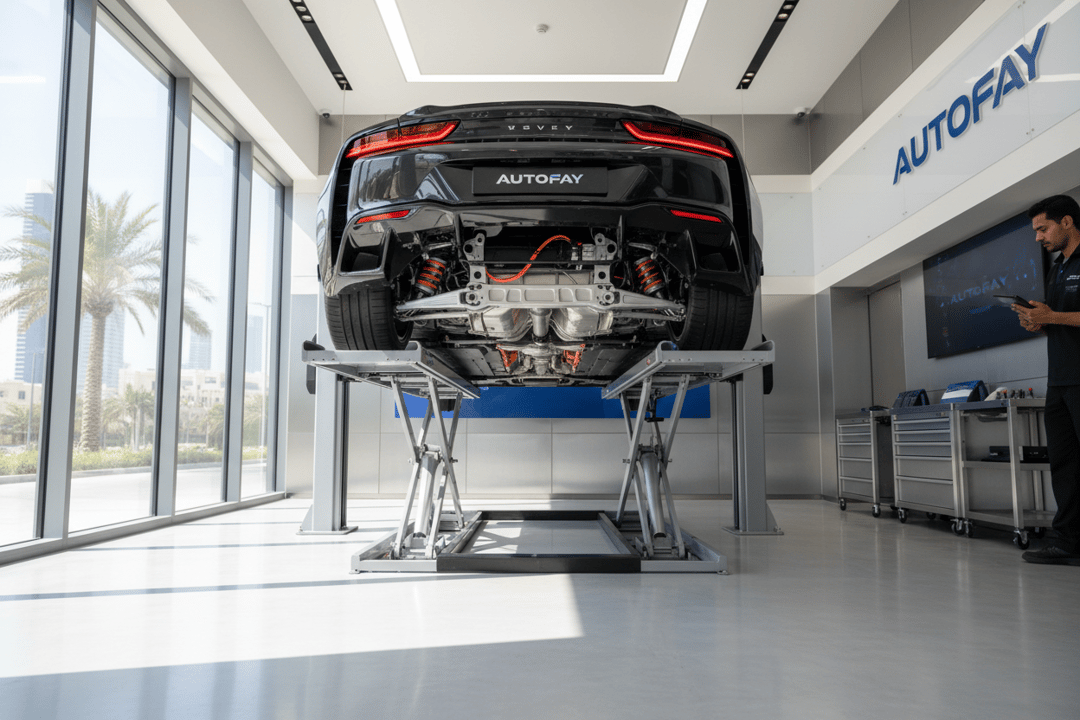
Brake systems on Teslas differ from conventional cars due to regenerative braking. While brake pads tend to last longer, the rotors can overheat if regenerative braking is disabled or if the car is driven aggressively. Inspectors check the brake pad thickness and the condition of the rotors for scoring or warping. They also inspect the undercarriage for leaks from the shock absorbers or the differentials. Any fluid leak on the chassis suggests imminent failure of the component and can lead to a vehicle breakdown.
| Package | Price (AED) | Primary Focus |
|---|---|---|
| Computer Diagnostic | 99 | Engine/Trans codes, OBD scan, battery health check. |
| Body & Computer | 250 | Panel-by-panel paint analysis, OBD scan, 12V battery check. |
| Comprehensive | 399 | Full inspection: Body, Frame, Engine, Computer, Brakes, Suspension, Road Test. |
Navigating the pre-purchase inspection of a Tesla Model Y demands a systematic approach to uncover hidden faults. The absence of a traditional engine bay simplifies the visual check but complicates the diagnostic process regarding software and high-voltage systems. Buyers must understand that a clean exterior does not guaranteed a mechanically sound vehicle. The complexities of the electric drivetrain and the fragility of the 12-volt systems require professional expertise to evaluate accurately.
Investing in a professional inspection is the only way to validate the seller's claims and ensure the vehicle is roadworthy. A experienced inspector brings the necessary tools and technical knowledge to identify issues that a layperson cannot see. This verification process protects the buyer from unexpected repair bills and ensures the vehicle meets safety standards before the transfer of ownership.
AutoFay inspects 410+ checkpoints with HD photos and PDF report. Book at autofay.ae or call +971542584458


0 Comments
No comments yet. Be the first to share your thoughts!