

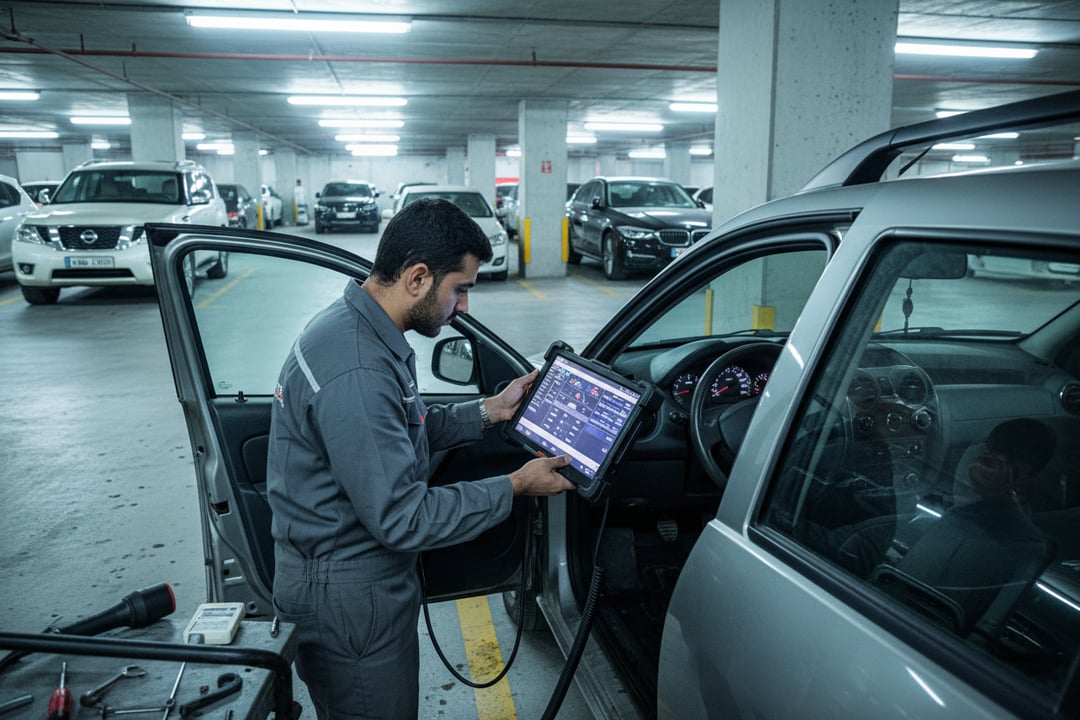
The Renault Duster has established a reputation for reliability and off-road capability, making it a frequent choice for buyers in the UAE. However, the local climate subjects vehicles to extreme temperatures and abrasive desert conditions, which accelerates wear on specific components. A thorough pre-purchase inspection is critical to uncover hidden defects that could lead to costly repairs. This guide outlines the specific areas inspectors examine on a used Duster and highlights the warning signs that separate a genuine bargain from a money pit.
Common Model-Specific Issues in the UAE Climate
The high ambient temperatures in the Emirates place immense stress on a vehicle's cooling and sealing systems. The radiator and cooling hoses are particularly prone to deterioration due to prolonged exposure to heat and UV radiation. Inspectors look for hardened rubber and hairline cracks in these components, as failure can lead to overheating during heavy traffic. Additionally, the air conditioning system undergoes rigorous daily use, often leading to refrigerant leaks or compressor fatigue.
Another prevalent issue in older models is the degradation of rubber O-rings and gaskets. These seals wear out over time, resulting in minor oil or coolant seepage that is visible as dampness or residue on the engine block. While these leaks may appear cosmetic, they indicate that the engine has been operating under pressure with compromised seals. Addressing these leaks immediately prevents further damage to belts and hoses.
AutoFay Inspection Packages: Choosing the Right Level
Selecting the appropriate inspection package ensures that the vehicle's critical systems are evaluated without unnecessary expense. A basic service may miss subtle electrical faults, while an overly complex scan might be unnecessary for a vehicle with low mileage.
| Service Level | Key Checkpoints | Price |
|---|---|---|
| Computer Diagnostic | Engine, transmission, ABS, and airbag system error codes. Checks for active faults and stored history. | AED 99 |
| Body & Computer | Panel-by-panel paint analysis, identifying repairs versus original factory work, combined with the diagnostic scan. | AED 250 |
| Comprehensive | Full multi-point inspection covering 410+ checkpoints across 25 categories, including frame integrity and fluid levels. | AED 299 |
The Engine and Transmission Check
The engine bay requires a visual and auditory assessment to determine mechanical health. Inspectors listen for abnormal ticking sounds, which can indicate valve train issues or a lack of lubrication. Smoke from the exhaust provides immediate diagnostic clues; blue smoke suggests burning oil, white smoke often points to a blown head gasket, and black smoke indicates an air-fuel mixture imbalance.
The transmission must be evaluated during a road test to ensure smooth gear transitions. A lag in acceleration or hesitation when shifting gears may point to a failing clutch or transmission fluid degradation. Inspectors also check the transmission mounts, which support the engine and transmission assembly. Broken mounts cause excessive vibration felt through the steering wheel and seat, leading to driver fatigue.
- Oil Condition: Dark, gritty oil indicates that the vehicle has not received regular oil changes. Inspectors check the dipstick for frothy residue, which suggests coolant contamination.
- Fluid Leaks: Inspectors use UV lights to locate UV-dye additives in existing leaks, tracing the source of the drip to the Nissan or Renault transmission and gearbox.
- Timing Belt: This critical component must be checked for wear and replaced according to the manufacturer's strict mileage interval to prevent catastrophic engine failure.
Body, Paint, and Frame Integrity
Rust is the silent enemy of vehicles in coastal UAE regions. Inspectors meticulously examine the rocker panels, door sills, and the underbody for bubbling paint or corrosion. The wheel arches are particularly vulnerable to salt spray, so inspectors look for rust creeping from the inside out. The frame rails and floor pan must remain structurally sound; any evidence of welding or repair here suggests a serious accident or flood damage.
Panel gaps between doors, the bonnet, and the trunk should be uniform and consistent. Wide gaps often indicate a previous accident where the mounting points were bent, requiring force to close. A color mismatch is the most obvious sign of a repair. When inspecting the paint thickness, inspectors use digital gauges to detect spray-over, confirming whether panels have been repainted to hide accident damage.
Suspension, Brakes, and Tires
The suspension system absorbs the impact of rough roads and speed bumps. Inspectors look for leaking shock absorbers, which prevent the vehicle from stabilizing over undulations. Excessive tire wear on the inside or outside edges suggests alignment issues, which can be traced to worn suspension components. Tires must be checked for their manufacturing date; a tire older than six years, regardless of tread depth, poses a safety risk.
Brake performance is non-negotiable for safety. Inspectors measure the remaining pad material against the minimum safety limit. Worn pads damage rotors, leading to a pulsating brake pedal and increased stopping distances. The brake fluid should be clear and free of air bubbles; dark, dirty fluid indicates moisture ingress and reduced braking efficiency.
Electrical Systems and Dashboard Warnings
Modern vehicles rely heavily on electronics, and the Duster is no exception. Inspectors run the vehicle's On-Board Diagnostics (OBD) system to retrieve error codes stored in the computer. Common Duster electrical issues include malfunctioning ABS sensors, airbag module faults, and power window failures. A clear dashboard with no warning lights is a positive sign, but codes that clear themselves immediately can indicate intermittent wiring faults.
The sunroof area is a known weak point in many SUVs. Inspectors check the rubber seals for cracks and listen for motor strain when opening and closing the glass. Water intrusion here can cause electrical shorts in the dashboard and mold growth in the headliner.
AutoFay inspects 410+ checkpoints with HD photos and PDF report. Book at autofay.ae or call +971542584458




0 Comments
No comments yet. Be the first to share your thoughts!