

The Nissan Sunny remains a ubiquitous presence in the UAE pre-owned market, valued for its reliability, fuel efficiency, and practicality. As these vehicles age, however, the harsh desert environment and high mileage exposure reveal specific mechanical and structural vulnerabilities. Purchasing a used Sunny without a professional evaluation poses significant financial and safety risks. A thorough inspection uncovers latent issues that a visual walk-around cannot reveal, ensuring the vehicle meets the demanding standards of daily UAE driving.
Engine Health and Common Wear Patterns
The QG15DE engine found in most Nissan Sunny models is generally robust, yet it exhibits distinct failure modes under prolonged stress. Inspectors prioritize checking the oil dipstick for consistency; excessive oil consumption is a known trait of this engine design, but significant discrepancies indicate worn piston rings or valve seals. Mechanics must listen for unusual noises during idle, such as ticking or rattling, which may signal a stretched timing chain or failing hydraulic lifters. A compression test verifies the structural integrity of the cylinders, ensuring the engine maintains power output.
The cooling system requires strict scrutiny, as overheating can destroy the engine in minutes. Inspectors check the radiator, water pump, and thermostat for leaks or corrosion. A compromised cooling system often leads to expensive engine replacement, making it a critical area of inspection. Additionally, the condition of the exhaust system should be assessed; blue smoke indicates burning oil, while white smoke suggests coolant leaks into the combustion chamber. These symptoms point to internal mechanical failure requiring immediate attention.
Transmission and Drivetrain Performance
Transmission health dictates the drivability and longevity of the vehicle. Early models equipped with a Continuously Variable Transmission (CVT) are susceptible to belt slippage or sudden jerking motions, particularly under heavy load. A test drive must include acceleration from a stop and highway cruising to identify hesitation or shuddering. If the transmission slips gears or takes too long to engage, it often points to internal clutch pack wear, which usually requires professional rebuild or replacement.
Manual transmission models demand assessment of the clutch system. A soft clutch pedal or difficulty shifting gears signals worn clutch plates or a failing release bearing. Mechanics will also check the universal joints and drive shafts for play or vibration during movement. Drivetrain vibration transmitted through the chassis indicates worn components that compromise the vehicle's stability and safety.
Suspension, Steering, and Ride Comfort
The suspension system in a used Sunny absorbs significant impact from UAE road conditions and speed bumps. Worn shock absorbers or struts reduce vehicle control and increase stopping distances. Inspectors check for leaking shock bodies and test the rebound effect by pushing down on each corner of the vehicle; excessive bounce indicates the suspension components have lost their damping ability. This wear affects ride comfort and tire life, necessitating replacement to maintain handling performance.
Steering components, including tie rods and ball joints, must be inspected for play and wear. Loose steering components affect alignment and can lead to dangerous loss of vehicle control. Inspectors also check the power steering fluid level and condition; low levels or a burnt smell suggest leaks or internal pump failure. Ensuring the suspension and steering systems operate with precision is essential for safe maneuvering in urban traffic and highway driving.
Body Integrity and Rust Risks
Despite being a compact car, the Nissan Sunny can suffer from significant body corrosion if not maintained properly. The primary areas of risk are the wheel arches, sills, and the undercarriage, where sand and salt accumulate. Inspectors use a magnet to check for body filler over rusted areas, which indicates previous repair work but may not address underlying corrosion. Panel gaps should be consistent, and gaps that widen significantly suggest recent collision damage affecting the unibody structure.
Paint thickness measurements are necessary to verify the vehicle's accident history. Thicker paint on a specific panel usually indicates repainting after an accident. Scratches and dents should be assessed not only for aesthetics but for potential intrusion into the vehicle’s structure. A compromised frame, even if hidden by bodywork, can lead to alignment issues and safety hazards in the event of a collision.
The Inspection Process: What AutoFay Checks
A comprehensive inspection requires a systematic approach covering numerous systems simultaneously. AutoFay employs a detailed methodology to ensure no detail is overlooked during the evaluation process. Inspectors utilize advanced technology and professional judgment to assess the vehicle's overall condition across 25 distinct categories.
- Body and Paint: Panel-by-panel inspection to verify original paint versus repair, checking for panel gaps and structural alignment.
- Frame and Structure: Examination of the chassis rails, pillars, and floor pan for rust and accident damage.
- Engine Compartment: Assessment of belts, hoses, wiring, and the overall condition of the engine bay.
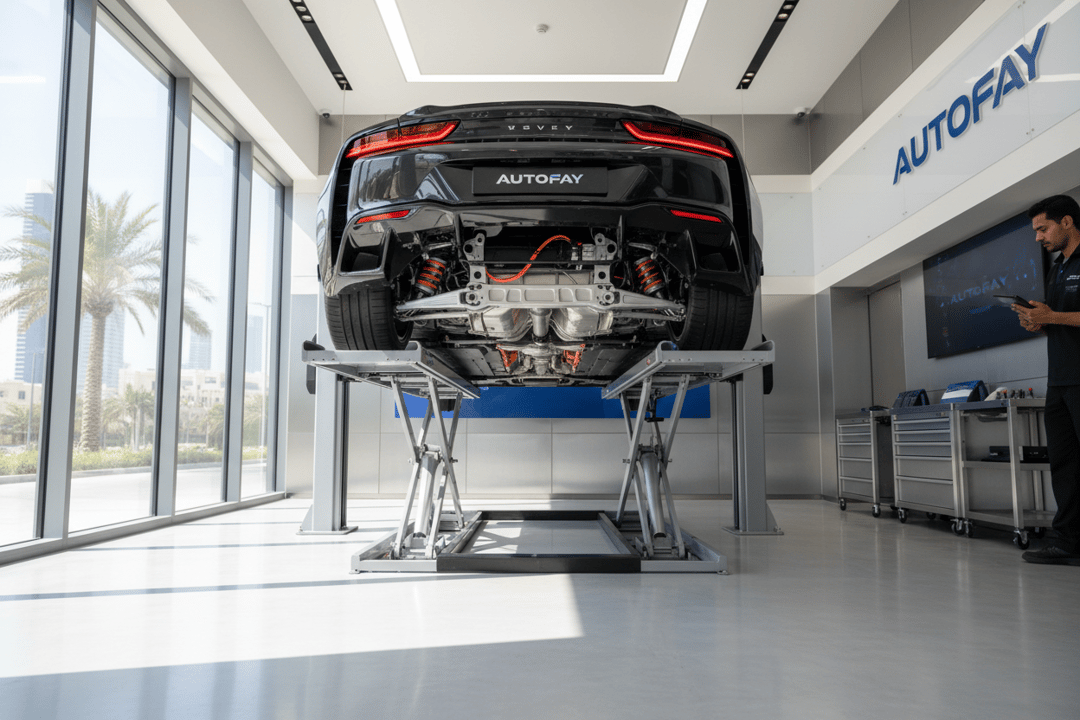
- Undercarriage: Detailed check of the differential, exhaust, and suspension components for leaks and wear.
- Tires and Wheels: Verification of tire tread depth, manufacturing date, and wheel balance.
- Fluids: Analysis of engine oil, transmission fluid, coolant, and brake fluid levels and condition.
Diagnostic Packages and Value
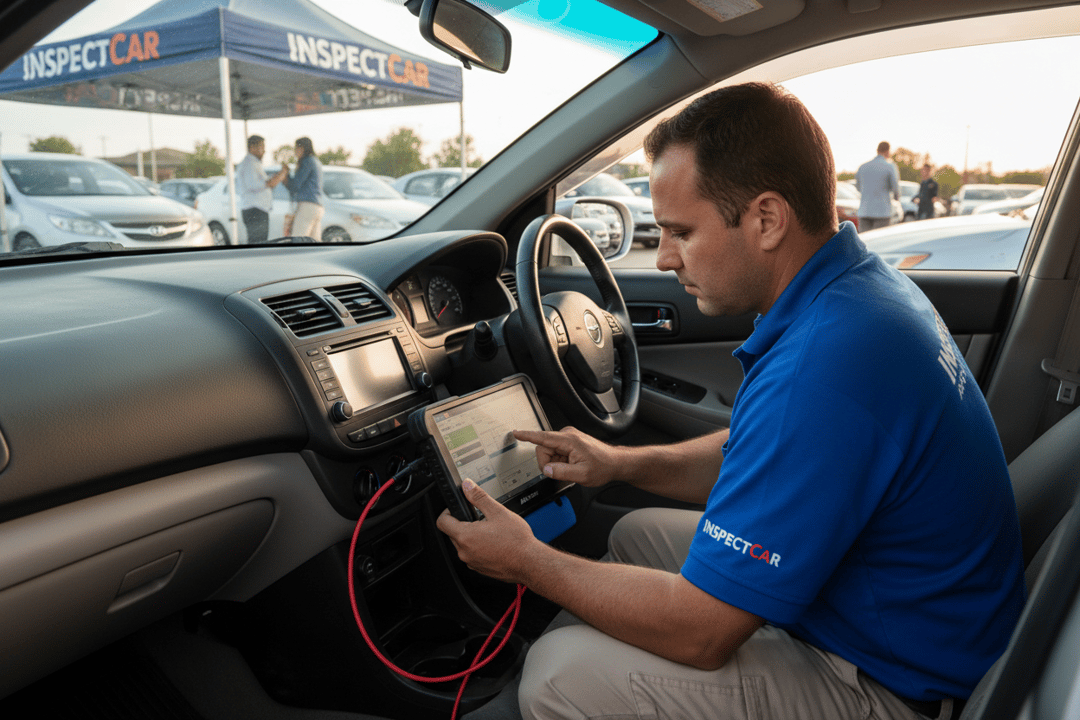
Utilizing professional diagnostic tools provides critical data regarding the vehicle's electronic control units. A simple computer diagnostic scan reveals hidden error codes stored in the Engine, Transmission, ABS, and Airbag systems. Ignoring these codes can lead to gradual component failure that escalates repair bills. AutoFay offers on-location diagnostic services to retrieve this essential data without moving the vehicle.
Understanding the cost of inspection versus the potential cost of repairs is a prudent investment. Relying on a visual inspection alone often misses intermittent electrical faults or underlying mechanical stress. A professional report highlights these risks, allowing the buyer to budget accurately for future maintenance or negotiate the purchase price based on factual data.
| Package | Services Included | Price |
|---|---|---|
| Computer Diagnostic | OBD scan for engine, transmission, ABS, and airbag codes. | AED 99 |
| Body & Computer | Full computer diagnosis plus exterior condition check. | AED 250 |
| Comprehensive | Full 25-category inspection including road test, fluids, and frame. | AED 299 |
Investing in a comprehensive inspection prevents the acquisition of a vehicle with undisclosed structural damage or imminent mechanical failure. The final phase of the inspection involves a rigorous road test to assess acceleration, braking performance, noise levels, and vibration transmission. This holistic evaluation ensures the vehicle is safe to operate and mechanically sound for the UAE climate.
AutoFay inspects 410+ checkpoints with HD photos and PDF report. Book at autofay.ae or call +971542584458


0 Comments
No comments yet. Be the first to share your thoughts!