

The Nissan Altima has carved a significant niche in the UAE automotive market due to its spacious cabin, comfortable ride, and reputation for reliability. However, navigating the used car sector requires a deep understanding of how specific models behave under the region’s extreme environmental conditions. The relentless combination of scorching asphalt temperatures, high humidity, and arid sand storms subjects vehicles to accelerated wear and tear. For prospective buyers, identifying potential mechanical failures before purchase is not just a matter of saving money; it is a prerequisite for safety and long-term ownership. This analysis explores the critical areas where used Nissan Altimas typically falter, specifically focusing on engine health, transmission stability, suspension durability, and electrical system resilience within the UAE context.
Engine Performance Under Extreme Heat
The longevity of an engine in the UAE relies heavily on its ability to dissipate heat and maintain lubrication. A common issue discovered during vehicle inspections is carbon buildup on intake valves and piston crowns. This occurs when engines are frequently started in high temperatures but driven for short distances, preventing the combustion process from burning off deposits completely. Such accumulation disrupts the air-fuel mixture, leading to reduced power and hesitation during acceleration. Furthermore, the VQ engine series found in many Altimas is susceptible to oil dilution, where unburned fuel seeps into the oil pan. This dilutes the lubricating properties of the oil, significantly increasing the risk of bearing wear and eventual engine seizure if not addressed through regular maintenance and quality oil changes.
Inspectors must also scrutinize the condition of the timing chain and guides. Over time, especially in high-mileage units, the tensioners can fail, causing the chain to stretch. This slack results in a rattling noise during cold starts and, if left undetected, can lead to catastrophic engine failure where the chain snaps, destroying internal engine components. A thorough inspection involves listening for abnormal noises during a road test and checking for oil leaks around the valve cover gaskets, which are prone to hardening and cracking due to extreme temperature fluctuations.
Transmission Durability and Fluid Condition
The automatic transmission, particularly the continuously variable transmission (CVT) variants, represents one of the most significant potential points of failure for the Nissan Altima. The CVT design relies on a belt and pulley system that operates under constant high load. In the UAE, where stop-and-go traffic is frequent, the transmission undergoes significant thermal stress. A primary indicator of a failing CVT is a delay in acceleration or a "shudder" sensation felt through the steering wheel when the vehicle is at a standstill and the transmission attempts to move. This shudder is often caused by warped torque converter plates or worn transmission bands.
Fluid degradation is another critical concern. Transmission fluid not only lubricates but also acts as a coolant and hydraulic fluid. Over time, exposure to the intense heat of the cabin environment and under-hood temperatures causes the fluid to break down, losing its viscosity and protective additives. Inspecting the transmission dipstick reveals whether the fluid is burnt or smells acrid, which indicates internal overheating. For buyers, this is a warning sign that the transmission may require immediate servicing or replacement, as continued driving with degraded fluid will lead to complete transmission failure.
Suspension and Chassis Integrity
The UAE road network, while generally well-maintained, presents challenges such as speed bumps, uneven asphalt patches, and the abrasive nature of desert sand. The suspension system of a used Altima often shows the cumulative effects of these road conditions. Worn control arm bushings and ball joints are frequently observed during inspections. This wear manifests as clunking noises over bumps and a noticeable decrease in steering precision. In a harsh climate, rubber components dry out and crack much faster than in temperate regions, compromising the vehicle's ability to absorb shocks and maintain tire contact with the road.
Tire wear patterns provide immediate insights into suspension health. Excessive inner or outer shoulder wear on tires suggests misalignment caused by worn suspension components, which eventually leads to premature tire replacement and uneven fuel consumption. A professional inspection must include a road test to identify vibrations transmitted through the chassis, as these often point to issues with the wheel bearings or the struts. Neglecting these signs can result in unsafe handling dynamics, particularly during high-speed maneuvers on highways.
Electrical Systems Overload
The electrical architecture of modern vehicles is a complex network of sensors and control units that manages everything from engine timing to cabin comfort. In the UAE, the air conditioning system runs almost continuously, placing a massive load on the vehicle's charging system. This heavy usage can lead to premature failure of the alternator or the battery. Weak batteries often struggle to hold a charge after sitting idle, leading to starting difficulties in the morning or while parked in the heat.
Electrical faults also frequently arise in the vehicle’s sensor systems. Oxygen sensors, mass airflow sensors, and knock sensors are sensitive to the environment and can become contaminated with carbon deposits or oil vapors. When these sensors fail, the engine management computer enters "limp mode," restricting power to protect the engine. This results in a noticeable decrease in performance and increased fuel consumption. Detecting these electrical glitches requires a specialized diagnostic tool capable of reading engine and transmission codes, which is essential for uncovering hidden issues that may not be visible to the naked eye.
The Critical Role of Professional Vehicle Inspection
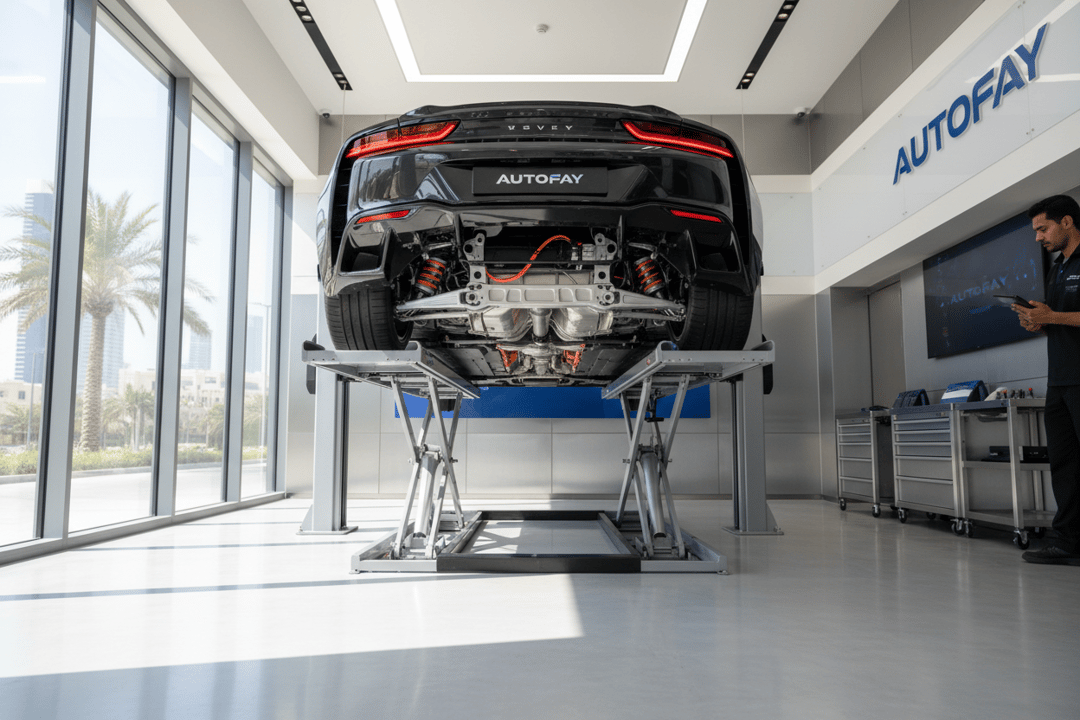
Given the complexity of these potential failures, relying solely on visual inspections or online vehicle history reports is insufficient for ensuring a vehicle's true condition. A professional inspection process involves a comprehensive evaluation of over 250 specific checkpoints across 25 distinct categories. This rigorous approach ensures that no aspect of the vehicle's health is overlooked, from the structural integrity of the frame to the functionality of the braking system.
For a detailed assessment, utilizing a specialized on-location inspection service offers the most practical solution. Modern inspection packages provide targeted analysis based on the buyer's budget and priorities. For example, a basic computer diagnostic scan for engine, transmission, ABS, and airbag systems is available for AED 99. This service identifies stored error codes that point to specific component failures. A more extensive evaluation, such as the Body & Computer AED 250 package, combines the diagnostic scan with a visual assessment of the exterior and interior condition, checking for accident damage, panel misalignment, and electronic component functionality.
For buyers seeking complete assurance, the Comprehensive AED 299 package delivers the highest level of scrutiny. This package includes a panel-by-panel body check, frame integrity analysis, engine sound evaluation, mount inspection, brake pad percentage rating, tire manufacturing date and wear analysis, fluid condition checks, and a detailed road test. The final output is a professional PDF report accompanied by HD photos documenting every finding, providing undeniable evidence of the vehicle's mechanical state.
| Inspection Package | Price (AED) | Key Inclusions |
|---|---|---|
| Computer Diagnostic | 99 | OBD scan (Engine, Transmission, ABS, Airbag codes) |
| Body & Computer | 250 | Visual body check + Computer Diagnostic scan |
| Comprehensive | 399 | Full 410+ checkpoint inspection (Frame, Engine, Brakes, Suspension, Tires, Road Test, HD Photos, PDF Report) |
AutoFay inspects 410+ checkpoints with HD photos and PDF report. Book at autofay.ae or call +971542584458



0 Comments
No comments yet. Be the first to share your thoughts!