
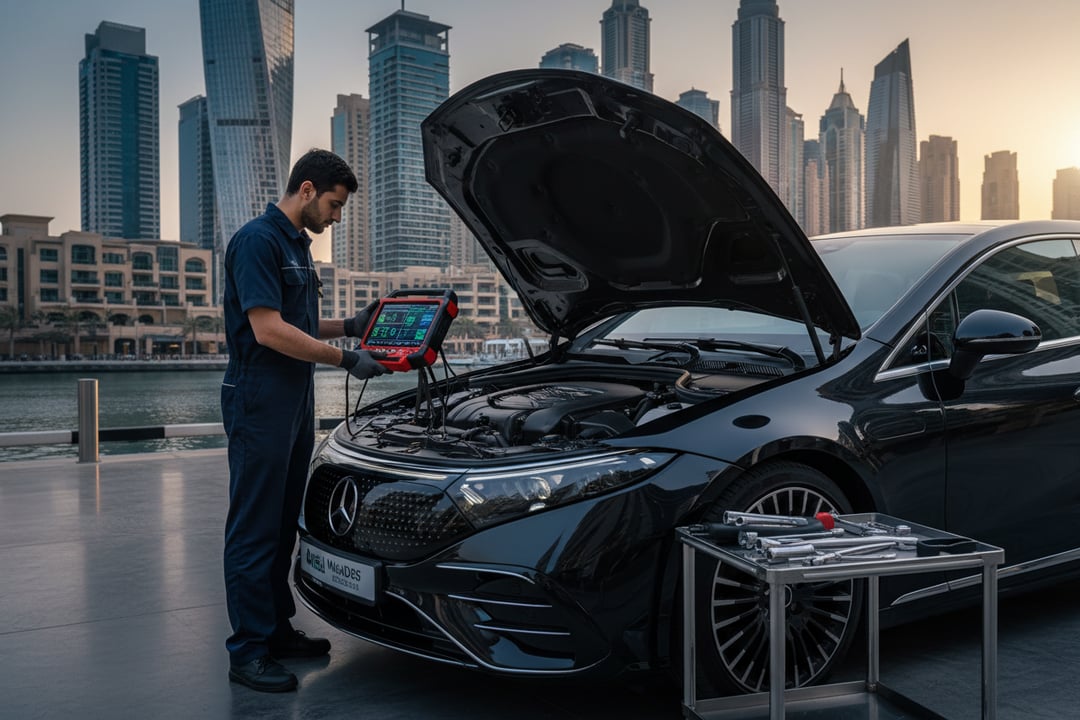
The Mercedes-Benz EQS has established itself as a flagship electric vehicle in the UAE, offering unparalleled luxury and efficiency. However, purchasing a used model requires a deep understanding of its unique engineering, particularly its battery management systems and air suspension architecture. A standard visual inspection is often insufficient for this complex machine, necessitating a professional approach to identify latent defects that could compromise safety or resale value.
Electrical Architecture and Battery Management Issues
The EQS relies on a high-voltage architecture that integrates heavily with the infotainment system. Inspectors must verify the integrity of the battery modules and the cooling loops, as the thermal management system is critical for maintaining battery health and range. A compromised cooling system can lead to thermal throttling, forcing the vehicle to limit power output to prevent overheating.
Electrical faults within the high-voltage inverter or motor electronics can trigger error codes that do not affect driveability immediately but increase the risk of a significant failure at high speeds. An OBD scanner is essential to detect these latent faults. At AutoFay, the Computer Diagnostic AED 99 package provides access to these critical error codes, ensuring the buyer understands the electrical health of the vehicle before commitment.
Suspension System Vulnerabilities
The EQS utilizes an air suspension system known for a smooth, floating ride, but air springs and compressors are susceptible to wear and tear over time, especially in the UAE's extreme heat. Inspectors must check for leaks around the air struts and the compressor unit, which are usually located in the spare tire well. A leaking air spring causes the vehicle to sag at one corner, significantly affecting the aerodynamic profile and placing uneven stress on the tires.
Furthermore, the complex self-leveling sensors must be calibrated correctly after any impact or maintenance. Incorrect calibration results in a vehicle that bounces excessively over bumps or fails to adjust ride height when carrying passengers. The Suspension category within a comprehensive inspection detects these issues, ensuring the ride quality matches the manufacturer's specifications.
Software Glitches and Infotainment Reliability
As a digital-first vehicle, the EQS is heavily dependent on software stability. Dead pixels on the Hyperscreen and navigation failures are documented issues among older models, often requiring software recalibration or hardware replacement. Inspectors must verify that the touchscreen responds accurately and that all driver assistance systems function without lag.
Software glitches can also affect the charging integration, causing the vehicle to fail to communicate properly with DC fast-chargers. An OBD scan is mandatory to check for stored software errors in the gateway module. Without a proper diagnostic check, a buyer may encounter unexpected downtime at public charging stations, rendering the vehicle difficult to use in daily life.
Structural Integrity and Body Alignment
Due to its large dimensions, the EQS is susceptible to parking lot incidents and minor collisions. Inspectors must meticulously check for panel misalignment and uneven gaps, which indicate previous impact damage that may have been repaired poorly. A misaligned front bumper can disturb the aerodynamics, increasing drag and reducing efficiency.
Crucially, the Frame inspection ensures the cabin's safety cell remains intact. Even a minor rear-end impact can compromise the mounting points for the seatbelts or the high-voltage battery casing. AutoFay’s inspection covers the rails, pillars, and floor pan to verify that the structural rigidity of the sedan has not been compromised by previous accidents.
Brake System Dynamics
Regenerative braking systems in electric vehicles differ significantly from traditional hydraulic-only setups. Inspectors must look for uneven pad wear on the front disc brakes, as regenerative braking takes a significant load off the pads during normal driving. Strange noises, such as grinding or squealing, during deceleration may indicate a failing electric motor brake or a stuck caliper.
The condition of the tires is also paramount, as the EQS is a heavy vehicle that requires high-traction tires for stability. Inspectors assess the Tires to confirm the manufacturing year and tread depth, ensuring the vehicle meets safety standards for wet and dry road grip in the UAE climate.
Why a Professional On-Location Inspection Matters
Given the complexity of the EQS, selecting an appropriate inspection tier is crucial. Different levels of scrutiny offer varying degrees of detail for specific vehicle concerns. The following table outlines the core categories covered by AutoFay's packages, designed to address the unique needs of high-end electric vehicles.
| Package | Price (AED) | Key Categories Covered |
|---|---|---|
| Computer Diagnostic | 99 | OBD scan (Engine, Transmission, ABS, Airbag) |
| Body & Computer | 250 | Body/Paint, Frame, Computer Diagnostic |
| Comprehensive | 399 | Full 25 categories: Suspension, Tires, Fluids, Road Test, etc. |
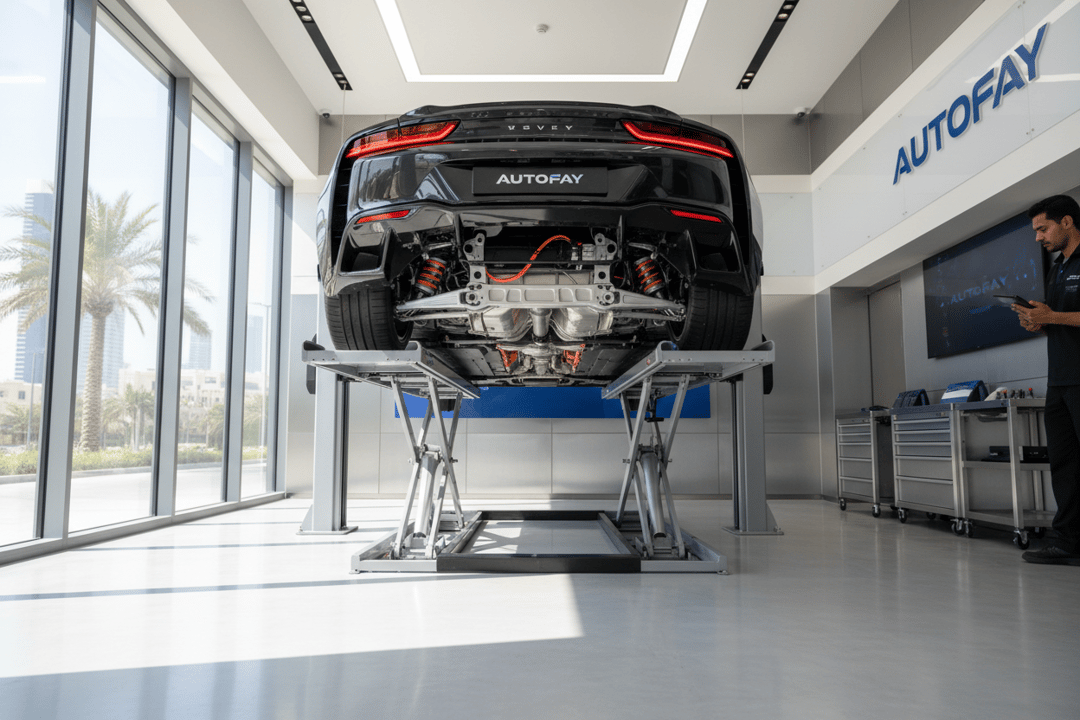
AutoFay provides a on-location inspection across all 7 Emirates, allowing the inspection to take place at the seller's location. This eliminates the need for the buyer to travel while a experienced inspector evaluates the vehicle on a lift. The Road Test component is vital for the EQS, assessing acceleration, braking, noise, and vibration to ensure the drivetrain operates smoothly.
Acquiring a used Mercedes-Benz EQS in the UAE demands a meticulous evaluation of its high-voltage components, software health, and suspension dynamics. Skipping a professional inspection exposes the buyer to significant financial risk and safety hazards associated with this premium electric architecture.
AutoFay inspects 410+ checkpoints with HD photos and PDF report. Book at autofay.ae or call +971542584458



0 Comments
No comments yet. Be the first to share your thoughts!