

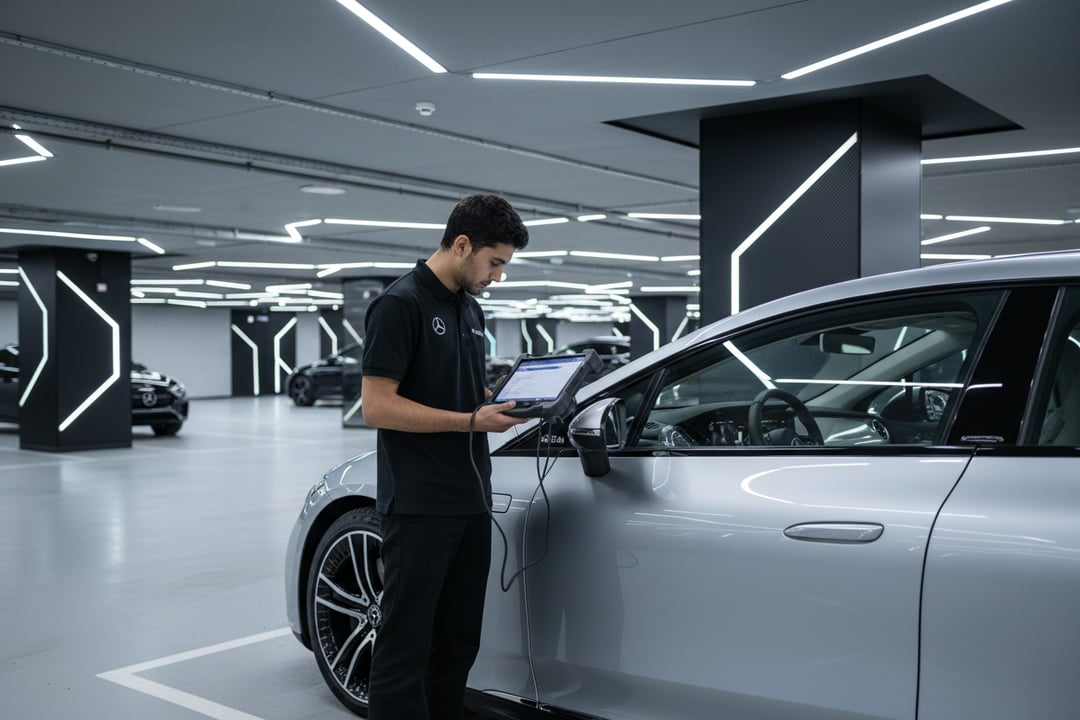
The Mercedes-Benz EQS represents the pinnacle of electric luxury, yet its sophisticated engineering faces unique stressors within the harsh UAE environment. While these vehicles offer unparalleled comfort and range, the relentless desert climate accelerates wear on specific components that remain dormant in milder climates. Identifying these latent failures requires a rigorous, data-driven approach rather than a casual visual assessment. Understanding the specific vulnerabilities of the EQS allows buyers to separate genuine luxury from potential electric significant issue.
High-Voltage Battery Management System (BMS) Stress
The cornerstone of any electric vehicle is its battery pack, and the EQS is no exception. However, the Lithium-Ion cells within these packs degrade faster when subjected to sustained high temperatures. The Battery Management System (BMS) is the electronic brain responsible for monitoring cell health and thermal regulation. Over time, heat can cause the electrolyte inside the cells to degrade, leading to reduced energy density.
A failing BMS may trigger thermal throttling, where the software intentionally reduces power output to cool the battery. This results in noticeably diminished acceleration and range, often appearing suddenly to the driver. If the cooling system fails to maintain optimal temperatures, the battery cells can swell or become unstable. Inspectors must verify that the battery temperature sensors are reading accurately during a static check.
Diagnostic Requirements
Standard visual inspections cannot reveal the health of the BMS. Specialized diagnostic tools are required to access the State of Health (SOH) data and any hidden fault codes. An incomplete scan might miss early warning signs of cell imbalance, which can lead to permanent capacity loss months after purchase.
Drivetrain Inverter Cooling Pump Failures
Unlike internal combustion engines, electric vehicles rely on an inverter to convert direct current from the battery into alternating current for the electric motors. The inverter generates significant heat during operation, necessitating a robust cooling loop. A common failure point in the EQS is the inverter cooling pump, which is responsible for circulating coolant through this sensitive component.
The cooling pump in this application is not a simple mechanical device; it is an electrically driven pump that operates under high thermal stress. Overheating due to a clogged filter or a failing motor can cause the inverter to overheat, forcing the vehicle into a limp-home mode. Replacing an inverter assembly is a complex procedure involving high-voltage safety protocols, making it a critical failure to avoid.
Road Test Indicators
A reliable inspector will conduct a detailed road test to listen for unusual noises coming from under the center console or near the rear axle. While the pump itself is quiet, a mechanical failure in the cooling loop can lead to airlocks that cause the vehicle to vibrate during acceleration.
Thermal Management and HVAC System Overload
The UAE climate demands that the climate control system run continuously to maintain cabin comfort. This places immense stress on the thermal management system, which also serves as the primary cooling mechanism for the high-voltage battery. The HVAC system shares components, such as the compressor and various pumps, with the battery cooling circuit.
Over the lifespan of a used EQS, the seals in the high-pressure refrigerant lines and the water pumps for the climate system tend to wear out. A leaking water pump can lead to a loss of coolant, causing the engine temperature to rise or, in an EV, the battery temperature to fluctuate erratically. Furthermore, the constant cycling of the AC compressor shortens its service life.
Fluid Analysis
Checking the condition of the engine coolant and transmission fluid becomes essential during an inspection. Contamination or a low level in the expansion tank can indicate a leak in the thermal management system that requires immediate attention.
Suspension Components and Bushing Degradation
The EQS utilizes air suspension to deliver its signature "air cushion" ride, which provides superior comfort over uneven UAE roads. However, the rubber components within the suspension, specifically the bushings and bellows, are highly susceptible to degradation caused by extreme heat. Prolonged exposure to temperatures above 45°C causes the rubber to harden and crack.
When suspension bushings fail, they often result in a distinct clunking noise over speed bumps or potholes. More critically, air bellows can rupture due to thermal expansion and contraction, causing the vehicle to sag on one side. A sagging suspension alters the vehicle's aerodynamics and handling characteristics, potentially leading to tire wear and reduced stability.
Mechanical Inspection
Inspectors must physically check the air lines and bellows for cracks and ensure the air compressor is engaging correctly. A failing compressor will make a loud whining noise when the car is turned on, signaling imminent replacement needs.
Paint Fading and Panel Alignment
While not a mechanical failure, cosmetic degradation is a primary concern for EQS owners in the UAE. The paint on these vehicles, particularly the pearlescent white and metallic finishes, fades rapidly under intense UV radiation. The chemical composition of the clear coat breaks down, leaving the paint dull and chalky.
Panel gaps on large vehicles like the EQS tend to widen slightly over time due to thermal expansion of the body panels. While some gap variation is normal, excessive misalignment can indicate that the vehicle has been involved in a collision and repaired without proper alignment.
Body and Paint Analysis
A thorough inspection involves checking the paint thickness using a digital gauge to detect any overspray from previous repairs. Panel-by-panel analysis ensures that the vehicle’s aesthetic integrity has not been compromised.
| AutoFay Inspection Package | Service Inclusions | Price |
|---|---|---|
| Computer Diagnostic | OBD scan for engine, transmission, ABS, and airbag codes to identify hidden electronic faults. | AED 99 |
| Body & Computer | Combined panel-by-panel paint analysis, frame check, and full OBD scanning. | AED 250 |
| Comprehensive | Full 410+ checkpoint inspection including brake pad rating, tire manufacturing year, suspension health, road test, and fluid conditions. | AED 299 |
Navigating the complexities of a used Mercedes-Benz EQS requires expertise that goes beyond a standard walk-around. The electrical architecture and thermal management systems are intricate, and minor symptoms can escalate into major failures if ignored. To avoid these pitfalls, a professional inspection is non-negotiable. AutoFay inspects 410+ checkpoints with HD photos and PDF report. Book at autofay.ae or call +971542584458.



0 Comments
No comments yet. Be the first to share your thoughts!