

The Lincoln Aviator occupies a distinct segment in the UAE market, blending American luxury with premium SUV utility. As a vehicle featuring an aluminum unibody chassis, it offers exceptional ride quality but presents specific maintenance challenges compared to standard steel-frame vehicles. A pre-purchase inspection is not merely a suggestion; it is a mandatory step to uncover hidden structural damage or mechanical failures that are common in the regional climate and driving conditions.
Engine and Drivetrain Anomalies Specific to the Lincoln Aviator
The Lincoln Aviator relies on a capable Twin-Turbo V6 EcoBoost engine paired with a 10-speed automatic transmission. While powerful, this powertrain is susceptible to specific issues that inspectors must verify. The engine utilizes advanced turbocharging technology, which makes it sensitive to oil quality and consumption rates.
Inspectors should listen for abnormal noises during the cold start-up phase. A ticking sound, particularly in the upper engine bay, may indicate lifter wear or camshaft issues, common in high-mileage EcoBoost engines. Furthermore, the driver must observe the exhaust tailpipe during a brief idle. Blue smoke indicates burning oil, which suggests piston ring failure, while black smoke points to fuel system inefficiencies. Transmission shifts must occur smoothly without hesitation or harsh jerks. Hard shifts often signal low transmission fluid levels or worn internal clutches.
Advanced Driver Assistance Systems (ADAS) Calibration
Modern Lincolns are heavily reliant on technology, and the Aviator is no exception. It utilizes a suite of sensors for lane-keeping assist, adaptive cruise control, and emergency braking. If a previous owner was involved in even a minor fender-bender affecting the bumper or the windshield, these sensors may have misaligned.
Misaligned sensors render these safety features ineffective. Inspectors must verify that the ADAS warning lights are not illuminated on the dashboard and that the calibration status is active. Failure to recalibrate these systems can lead to erratic braking behavior or failure of the lane-centering features, posing a safety risk during highway driving.
Structural Integrity and Body Panel Alignment
The use of aluminum in the Aviator’s body construction allows for a lighter vehicle but complicates repair. Aluminum dents differently than steel, and repairs require specific techniques and materials. If a vehicle has been in an accident, the structural rails and pillars are critical areas.
Inspectors perform a panel-by-panel inspection to check the gap consistency between doors, the hood, and the trunk. Uneven gaps suggest recent bodywork or a distorted frame. Additionally, corrosion is a significant red flag in the UAE due to coastal humidity and salt exposure. Rust on the frame rails or the wheel arches indicates the vehicle has not been properly maintained, potentially compromising structural safety in the event of a collision.
Key Inspection Categories and What to Look For
A comprehensive inspection goes beyond the engine. It requires a systematic approach to safety and longevity. Inspectors evaluate the braking system by measuring the friction material thickness on the brake pads. Low pad life increases the cost of replacement and reduces stopping power, especially during heavy braking on mountain roads like the Hajar mountains.
- Tire Condition: Inspectors verify the manufacturing date of the tires. Tires older than six years may degrade prematurely, leading to blowouts. Uneven tread wear patterns indicate alignment issues or suspension problems.
- Suspension Bushings: The suspension system absorbs road imperfections. Worn bushings cause clunking noises and a loose steering feel, requiring significant labor to replace.
- Electrical Systems: The Aviator features complex electronics, including memory seats and heated/cooled seats. Inspectors test these features to ensure wiring harnesses are intact and the battery is capable of handling the high electrical load.
The Professional Inspection Process
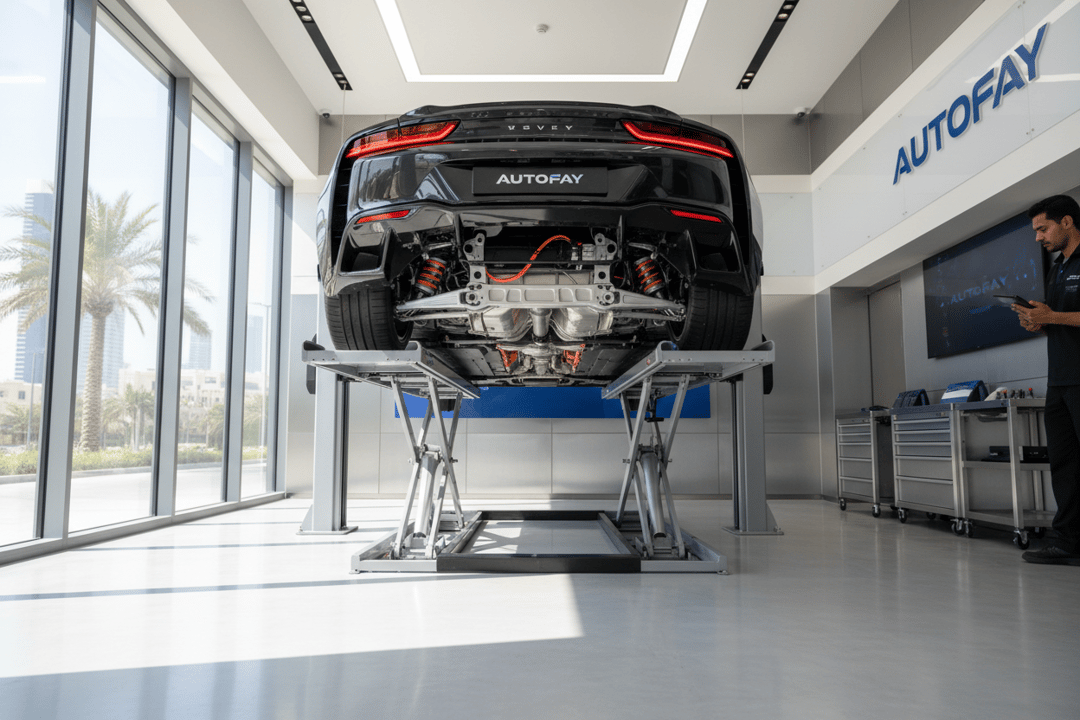
Engaging a experienced inspector ensures that 250+ critical checkpoints are analyzed across 25 distinct categories. This process provides an objective assessment of the vehicle’s health. Inspectors utilize an On-Board Diagnostics (OBD) scan to read engine, transmission, ABS, and airbag codes that might not trigger a dashboard warning light.
For a detailed analysis, professional packages offer varying levels of depth. A quick assessment for error codes is available for AED 99. For a more thorough review combining bodywork and computer diagnostics, the Body & Computer package costs AED 250. The most rigorous evaluation is the Comprehensive package at AED 299, which covers frame integrity, fluid conditions, and road testing.
| Inspection Package | Price (AED) | Coverage Details |
|---|---|---|
| Computer Diagnostic | 99 | OBD scan for engine/transmission/ABS/airbag codes |
| Body & Computer | 250 | Paint analysis, panel gaps, and computer diagnostics |
| Comprehensive | 399 | Full 410+ checkpoints including frame, fluids, and road test |
Red Flags to Avoid When Buying a Used Aviator
Purchasing a used luxury SUV requires vigilance. Certain symptoms are definitive indicators of a defective vehicle. One major red flag is excessive oil consumption between oil changes, which is a known trait of the twin-turbo EcoBoost engine when piston rings wear.
Another warning sign is soft brake pedal travel. If the pedal sinks significantly to the floor before the brakes engage, it indicates a vacuum leak or a hydraulic fluid leak in the master cylinder or brake lines. Finally, an illuminated "Check Engine" light that remains on after a diagnostic scan should be a deal-breaker unless the specific code, such as an emission sensor, is minor. Ignoring these signals can lead to unexpected breakdowns and high repair bills.
AutoFay inspects 410+ checkpoints with HD photos and PDF report. Book at autofay.ae or call +971542584458.



0 Comments
No comments yet. Be the first to share your thoughts!