


The used Land Rover Defender market in the UAE presents a unique challenge for buyers. These vehicles offer unmatched off-road capability and iconic design, yet they come with a complex mechanical history. Purchasing one without a thorough evaluation risks acquiring a vehicle burdened by costly hidden defects. A professional inspection bridges the gap between desire and ownership reality, separating a reliable daily driver from a money pit. Understanding the specific vulnerabilities of the Defender allows a buyer to negotiate with confidence.
The Ingenium Engine: Oil Leaks and Carbon Buildup
The a capable engine Ingenium four-cylinder and the a capable engine six-cylinder variants dominate the Defender market. Both engines are efficient but prone to specific maintenance issues, particularly in hot climates. Oil consumption is a frequently reported concern, often stemming from carbon buildup on intake valves. This condition forces the engine to consume oil to maintain proper combustion ratios.
Inspectors must pay close attention to the valve cover gaskets, which are notorious for leaking oil onto the hot exhaust manifold. A leak of this nature can lead to the melting of wiring harnesses and rapid degradation of the engine mounts. Furthermore, the cooling system requires scrutiny; the thermostat housing gaskets are another weak point where pressurized oil mixtures often leak. Addressing these leaks immediately prevents overheating and electrical fires, which are significantly more expensive to repair than the gaskets themselves.
Electrical Architecture and Sensor Failures
Modern Land Rovers are sophisticated computers on wheels. The Defender L663 generation utilizes an extensive network of sensors to manage the adaptive dynamics, terrain response, and infotainment systems. In the UAE’s fluctuating temperatures, electronic modules can fail prematurely. A common red flag is the check engine light illuminating for non-emissions related codes, such as P0300 (misfire) or P0606 (Control Module CPU Performance).
Inspectors check for error codes using an OBD scan to detect hidden faults in the engine, transmission, ABS, and airbag systems. Faulty sensors can trigger phantom warning lights that distract the driver and mask genuine mechanical issues. Additionally, the heated windscreen is a critical component for winter driving in the northern Emirates; if the defrost elements are damaged, visibility in cold weather becomes a safety hazard.
Chassis Integrity and Suspension Geometry
While the Defender is built on a box-section chassis, corrosion remains a threat, particularly in coastal areas like Dubai or Abu Dhabi where road salts and humidity accelerate degradation. Inspectors assess the frame rails, pillars, and floor pans for rust. However, mechanical failure is often more common than structural rust. The suspension system relies on complex bushings and ball joints to maintain stability over the rugged terrain the vehicle is designed to conquer.
Uneven tire wear patterns are a primary indicator of alignment or suspension issues. A thorough inspection involves a road test to listen for suspension clunks or rattles when driving over speed bumps. Worn shock absorbers reduce braking efficiency and handling stability, increasing stopping distances in emergency situations. Replacing the shock absorbers and control arms is a necessary investment to restore the vehicle's safety envelope.
Road Test and Drivetrain Dynamics
The drivetrain experience defines the Defender's character. In automatic transmission models, the eight-speed gearbox requires smooth shifting. A failing transmission will exhibit hesitation, rough upshifts, or delayed engagement when accelerating from a stop. This often indicates worn clutch packs or valve body issues, which are complex repairs.
During the road test, the vehicle’s steering dynamics indicate the health of the four-wheel-drive system. Play in the steering wheel when driving straight suggests worn tie rod ends or universal joints. Additionally, the transfer case must engage smoothly without whining noises. The transfer case fluid should be inspected for metal shavings or a burnt smell, which signals internal wear and imminent failure.
Professional Inspection Standards and Methodology
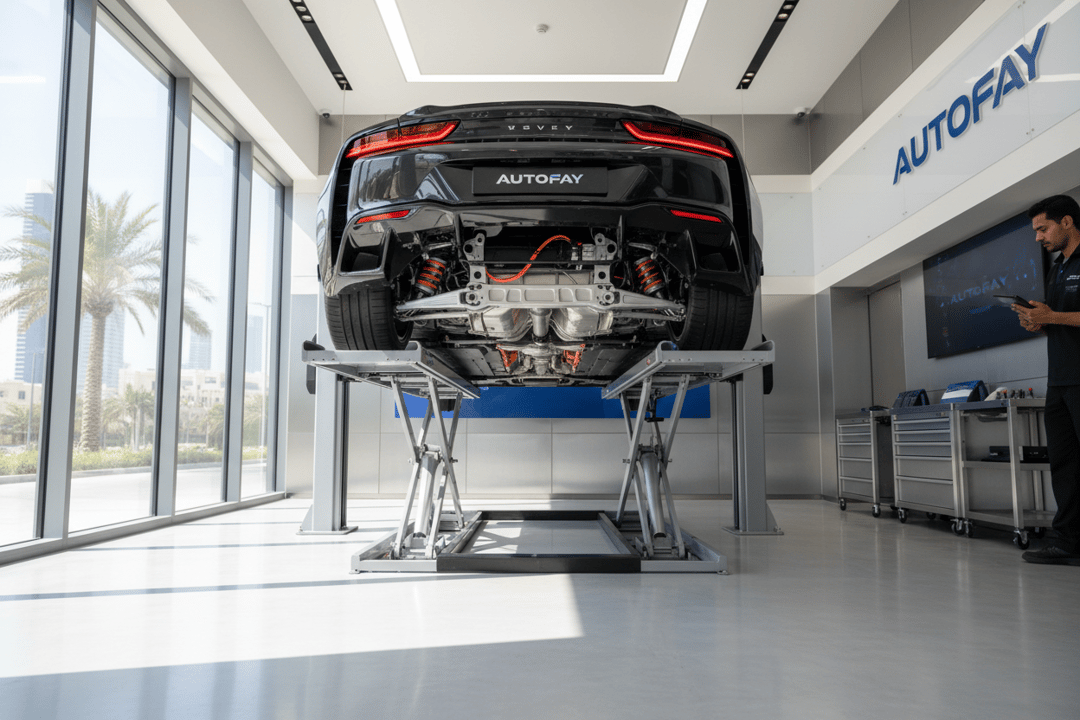
A professional inspector evaluates a vehicle systematically rather than relying on a visual scan. The process involves a detailed analysis of fluids, bodywork, and mechanical function. AutoFay provides a structured approach to this evaluation, utilizing a on-location inspection available across all seven Emirates. Inspectors perform a comprehensive check covering 410+ checkpoints across 25 distinct categories.
The inspection protocol begins with a computer diagnostic scan to retrieve manufacturer codes. Technicians then check the engine’s sound, mounts, and fluid conditions to ensure the powerplant is healthy. The bodywork is examined panel-by-panel to identify original paint versus repainted sections, which can hide accident damage. The condition of the brakes is assessed using pad percentage ratings, and tires are checked for manufacturing dates and tread depth.
| Category | Specific Inspection Points |
|---|---|
| Engine | Oil leaks, smoke color, timing chain sounds, coolant levels |
| Electrical | OBD codes, ABS sensors, infotainment glitches, battery health |
| Suspension | Shock absorbers, bushings, ball joints, alignment geometry |
| Body & Frame | Panel alignment, rust spots, accident damage history |
| Brakes & Tires | Pad thickness, rotor condition, tire tread depth, manufacturing year |
Investing in a professional service provides a tangible document outlining these findings. This documentation protects the buyer from unforeseen repairs and ensures the vehicle meets safety standards before registration transfer.
Red Flags and Negotiation Leverage
Identifying red flags allows a buyer to negotiate a lower price or walk away entirely. The most alarming sign is blue or white smoke from the exhaust. Blue smoke indicates burning oil, while white smoke suggests a blown head gasket or cracked cylinder head. Both conditions require significant engine replacement or overhauls.
Another critical indicator is the smell of burning oil or transmission fluid. A burning odor upon startup or during acceleration usually means fluids are leaking onto hot components. Finally, a history of repeated check engine light resets without addressing the underlying cause suggests the owner is hiding a major mechanical fault. Verifying the service history and requesting a detailed report helps uncover these discrepancies.
AutoFay inspects 410+ checkpoints with HD photos and PDF report. Book at autofay.ae or call +971542584458




0 Comments
No comments yet. Be the first to share your thoughts!