

The Kia Stinger represents a significant departure from the traditional SUV-focused strategy of Korean automakers, offering a rear-wheel-drive performance sedan that directly challenges European benchmarks. In the UAE market, where high ambient temperatures and aggressive highway driving place immense stress on vehicle components, this model requires rigorous scrutiny before acquisition. A professional pre-purchase inspection transcends a visual walk-around; it is a technical valuation of the vehicle’s longevity, safety, and mechanical integrity. Understanding the specific vulnerabilities of the Stinger allows buyers to differentiate between a well-maintained sports sedan and a money pit.
Transmission and Drivetrain Reliability
The 8-speed wet-clutch dual-clutch transmission (DCT) serves as the heart of the Stinger’s performance, yet it is the most susceptible component to wear and failure. Unlike traditional automatic gearboxes, a DCT relies on precise hydraulic pressure and clutch pack management, which can degrade under UAE traffic conditions. Inspectors listen for shuddering during acceleration or hesitation when shifting gears, signs that the transmission fluid has broken down or clutch plates are worn. If this component fails, the vehicle loses driveability entirely, necessitating a complete transmission rebuild or replacement.
Drivetrain noise during cornering often indicates a worn center differential or constant velocity (CV) joints. The Stinger’s high torque output exacerbates wear on these universal joints, leading to clicking sounds that worsen with steering input. A thorough inspection checks for metal shavings in the transmission fluid, which suggests internal gear damage that is not visible to the naked eye.
Engine Efficiency and Cooling Systems
The a capable engine twin-turbo V6 and a capable engine turbocharged four-cylinder engines are powerful, but they generate significant heat that the cooling system must manage effectively. Carbon buildup on intake valves is a common issue in turbocharged engines, particularly in climates like the UAE where stop-and-go traffic is frequent. This buildup restricts airflow, leading to reduced power and increased fuel consumption. Inspectors check for these deposits during a visual inspection of the intake manifold.
Furthermore, the radiator and coolant hoses are high-risk failure points. The Stinger is notorious for radiator hose cracking due to the extreme thermal cycling experienced in the region. A coolant leak can indicate a failing water pump or radiator cap, which can lead to engine overheating. Overheating in a high-performance engine causes catastrophic head gasket failure, warping cylinder heads, and the potential seizure of the engine block.
Electrical and Infotainment Systems
Modern performance sedans rely heavily on sophisticated electronic control units (ECUs) and infotainment interfaces. The Kia Stinger has faced criticism regarding software glitches, particularly affecting the infotainment touchscreen, which can freeze or fail to respond to inputs. While software updates can resolve some issues, recurring failures suggest a faulty head unit or loose wiring connections.
Electrical faults often manifest in the turn signal and brake light systems. A malfunctioning turn signal stalk can cause erratic blinking, while brake light failures are a critical safety hazard that can lead to rear-end collisions. Inspectors verify the integrity of these circuits to ensure they function correctly under all driving conditions.
Suspension and Chassis Integrity
As a sports sedan, the Stinger features a stiff suspension setup designed for handling precision. However, this stiffness accelerates the wear rate of suspension bushings and control arm components. Inspectors look for excessive play in the front and rear control arms, which can lead to poor alignment and tire wear. The rear anti-roll bars are also subject to stress, and damage here can result in a loose feeling during cornering.
Tire wear patterns provide critical clues about suspension health. Uneven wear on the inner or outer edges of the tires indicates improperly aligned suspension components or worn bushings. In the UAE, high-speed stability is paramount, and a compromised suspension setup can reduce the vehicle's ability to maintain a straight line during crosswinds or emergency maneuvers.
The AutoFay Inspection Methodology
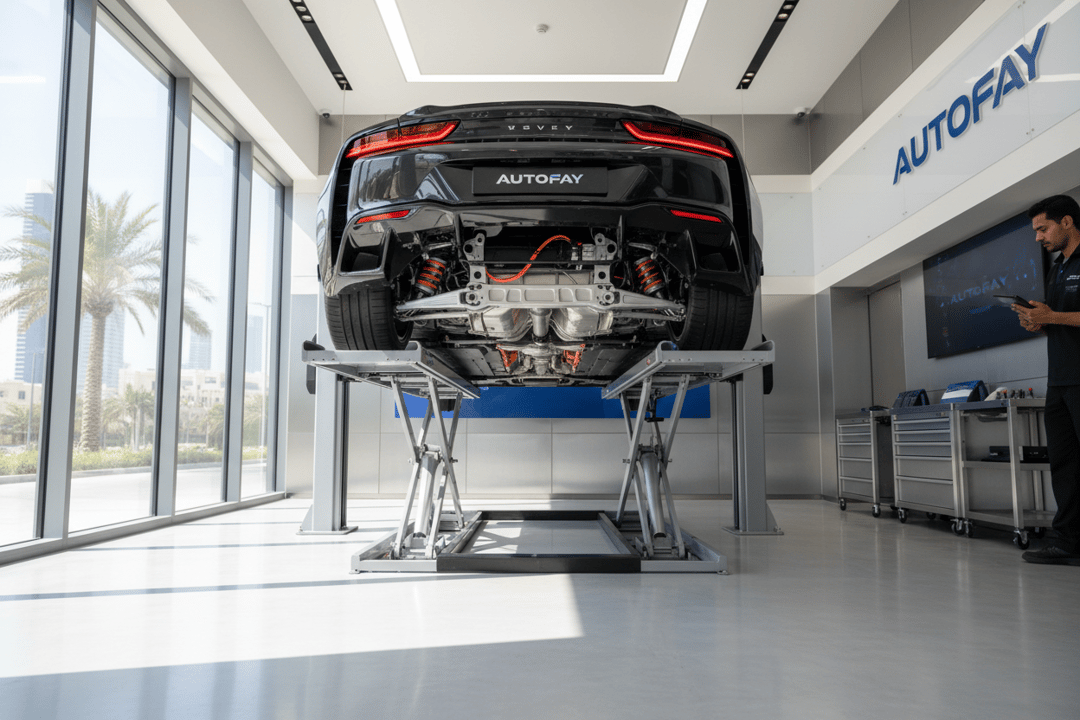
A professional inspection provides a transparent view of the vehicle's condition beyond surface aesthetics. AutoFay utilizes a comprehensive framework of 410+ checkpoints across 25 distinct categories to assess the vehicle's overall state. This structured approach ensures that no critical system is overlooked during the evaluation process.
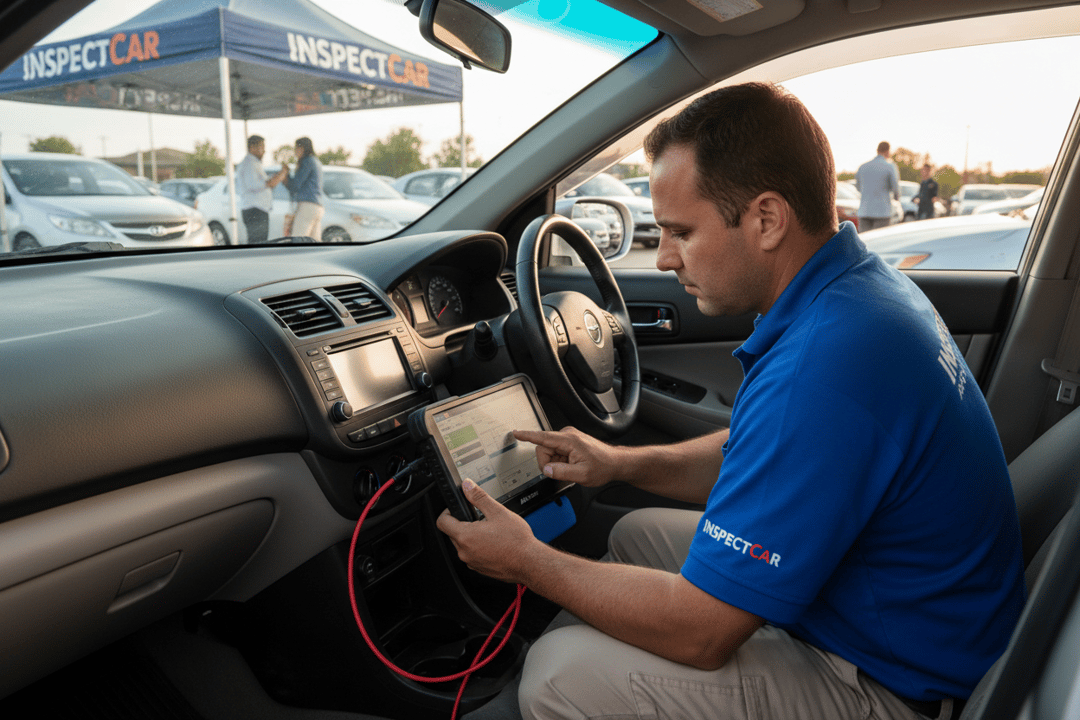
During a road test, inspectors evaluate acceleration, braking, and noise levels to ensure the drivetrain and brakes function as designed. The inspection includes an OBD scan to retrieve engine, transmission, ABS, and airbag codes, revealing faults that may not trigger a dashboard warning light. Fluid levels and conditions are also analyzed to detect contamination or leaks that could indicate internal engine or transmission damage.
Inspection Packages and Pricing Options
Investing in a professional inspection prevents costly surprises after the purchase. AutoFay offers tiered packages designed to address specific inspection needs, ensuring buyers pay only for the level of detail required for their purchase decision.
| Package | Service Included | Price (AED) |
|---|---|---|
| Computer Diagnostic | Engine, transmission, ABS, airbag code scans | 99 |
| Body & Computer | Panel-by-panel paint analysis, accident history check, and computer diagnostics | 250 |
| Comprehensive | Full mechanical and structural assessment, brakes, suspension, tires, fluids, and road test | 399 |
The Comprehensive package is recommended for high-performance vehicles like the Kia Stinger, as it covers structural integrity, frame alignment, and fluid conditions in detail.
Critical Red Flags to Identify
Buyers must remain vigilant for specific symptoms that indicate a vehicle has been neglected or abused. The presence of excessive blue or white smoke from the exhaust tailpipe usually points to burning oil (blue) or coolant (white), signaling major engine problems. A sweet smell inside the cabin or around the engine bay suggests a coolant leak that has compromised the heater core or radiator.
Another red flag is a "check engine" light that remains on despite recent repairs, indicating underlying sensor failures or emissions system issues. Additionally, a vehicle that requires frequent top-ups of engine oil or transmission fluid demonstrates poor internal seal maintenance. Suspicious "scratch-and-dent" repairs on rocker panels or bumper covers often hide frame damage or structural stress from accidents.
AutoFay inspects 410+ checkpoints with HD photos and PDF report. Book at autofay.ae or call +971542584458


0 Comments
No comments yet. Be the first to share your thoughts!