

The Kia Seltos has established itself as a dominant player in the compact SUV segment across the UAE, driven by its aggressive styling and perceived value. However, the intense desert environment and the daily rigors of city traffic in the Emirates expose specific weaknesses in this vehicle model. A vehicle that performs perfectly in cooler climates often reveals hidden defects when subjected to the UAE's relentless heat, abrasive dust, and stop-and-go traffic patterns. Buyers must approach the Seltos with a keen understanding of its common failure points to avoid expensive repairs. Knowledge of these issues transforms a potentially problematic purchase into a reliable daily driver.
Engine Performance Under Thermal Stress
The most critical component of any vehicle is its powertrain, and the Seltos engine is susceptible to thermal degradation in high temperatures. Continuous exposure to extreme heat accelerates the breakdown of engine oil, leading to increased internal friction and potential bearing wear. Inspectors frequently observe higher-than-normal oil consumption in Seltos models driven regularly in the desert, as the heat causes the oil to thin and evaporate more rapidly. A thorough inspection involves checking the dipstick for proper viscosity and looking for signs of oil sludge, which indicates the oil was not changed at the manufacturer's recommended intervals.
Internal combustion issues often manifest themselves through the color of the exhaust smoke. Clear or light gray smoke typically indicates normal combustion, while black smoke suggests fuel injector problems or a rich air-fuel mixture. Blue smoke is a definitive sign of burning oil, pointing to worn piston rings or valve seals. White smoke is particularly alarming as it indicates a blown head gasket or a cracked cylinder head, potentially caused by the engine overheating due to a malfunctioning cooling system.
- Oil Consumption: Verify the oil level is within the dipstick range during the inspection; significant drops indicate seal degradation exacerbated by heat.
- Timing Belt Integrity: This component must be replaced at the specified mileage, usually every 60,000 to 100,000 kilometers, regardless of its visual appearance.
- Cooling System Failure: Inspect the radiator and hoses for cracks or leaks, as overheating is the primary cause of catastrophic engine failure in this region.
Transmission Drivability and Hesitation
Transmission health is a major concern for Seltos buyers, particularly those considering models equipped with the dual-clutch or continuously variable transmission (CVT). In the UAE, stop-and-go traffic creates a specific failure mode known as "hesitation" or "shuddering." This occurs when the transmission struggles to engage gears smoothly due to heat build-up and pressure fluctuations in the clutch packs or belts. A vehicle that jerks forward when accelerating from a stop or fails to downshift smoothly is likely experiencing transmission electronic or mechanical issues.
For models with the dual-clutch transmission, the front subframe mounting points are known to be a weak link. Over time, the constant vibration of the clutch assembly can loosen or crack the mounting brackets. This often results in a noticeable clunking noise when the vehicle is in neutral but the engine is running, as the transmission shifts slightly against the engine mounts. Addressing this requires significant labor and parts replacement, making it a critical finding during the road test phase.
- Listen for whining or humming noises during acceleration, which suggests low transmission fluid or worn internal bearings.
- Check the transmission fluid color; a brown, burnt odor indicates the fluid has degraded under high thermal stress.
- Observe the dashboard warning lights; a persistent check engine light often correlates with transmission control module errors.
Electrical Architecture and Climate Control Systems
The electrical system in a modern Seltos is complex, and the harsh UAE climate accelerates the degradation of wiring insulation. High ambient temperatures can cause plastic connectors to become brittle, leading to short circuits or intermittent electrical faults. Problems with the infotainment system, power windows, or dashboard lights are common complaints, often stemming from heat-soaked electronic control units (ECUs). A malfunctioning ECU can trigger a cascade of warnings and affect the performance of other systems.
The air conditioning system is the second most critical system in a vehicle here, and the Seltos' AC compressor and condenser are frequent failure points. In dusty environments, the condenser fins clog with sand, reducing the efficiency of heat rejection and forcing the compressor to work harder. This increased load can lead to compressor clutch failure or refrigerant leaks. A complete AC service or replacement is a costly consequence of neglecting the cabin cooling system, as it directly impacts cabin temperature and driver comfort.
| Package | Price | Core Checks |
|---|---|---|
| Computer Diagnostic | AED 99 | OBD scan for engine, transmission, ABS, and airbag codes |
| Body & Computer | AED 250 | Panel-by-panel paint analysis, body damage, and computer diagnostics |
| Comprehensive | AED 299 | Full inspection including frame, suspension, fluids, tires, and road test |
Suspension, Brakes, and Chassis Integrity
Suspension components in the Seltos are designed to handle a certain amount of load, but overloading or aggressive driving takes a toll, especially when combined with road imperfections. Shock absorbers and struts generally last longer in mild climates, but the unforgiving nature of UAE roads shortens their lifespan significantly. Inspectors look for excessive bounce when the vehicle is stationary and excessive body roll during cornering, both signs of worn damping elements. Replacing a set of shocks and struts involves labor-intensive work that affects the safety and handling of the vehicle.
Brake systems degrade faster in the UAE due to the high speeds allowed on highways and the frequent hard braking required in city traffic. The brake pads are subject to extreme thermal cycling, which can cause warping of the rotors. Inspectors assess the remaining thickness of the brake pads using a gauge or visual inspection, rating them on a percentage scale. A pad thickness below 3 millimeters requires immediate replacement, as metal-on-metal contact will damage the brake calipers and rotors.
The Importance of a Professional Inspection
Relying solely on a visual inspection or a general test drive is insufficient for uncovering the hidden history of a used vehicle. The consequences of overlooking a minor issue, such as a leaking gasket or a faulty sensor, can escalate into a major mechanical failure shortly after purchase. A professional inspection service provides a forensic analysis of the vehicle's condition, identifying damages that are not visible to the untrained eye. This due diligence protects the buyer from inheriting expensive liabilities.
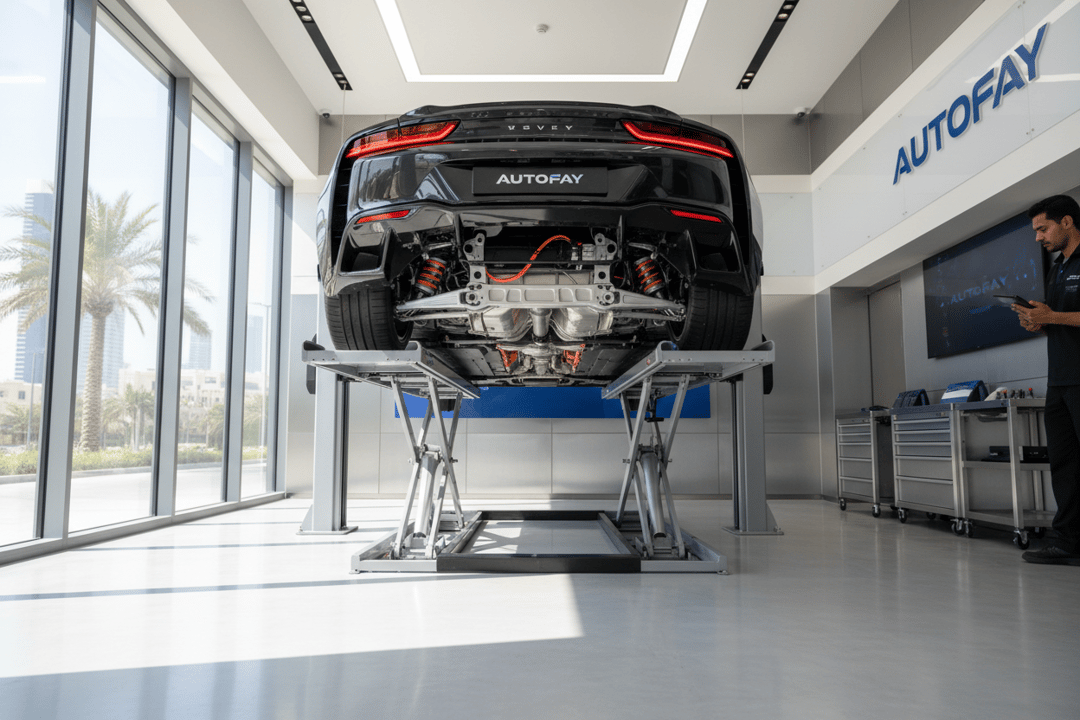
Professional inspectors utilize a rigorous checklist to evaluate every aspect of the vehicle's condition. They examine the structural integrity of the frame rails and pillars, ensuring the vehicle has not been in a collision that compromised its safety cage. They scrutinize the suspension components for rust and play, and they test the braking system to ensure stopping distances are within acceptable limits. This comprehensive approach allows buyers to make a transaction with full knowledge of the asset's true value and condition.
AutoFay inspects 410+ checkpoints with HD photos and PDF report. Book at autofay.ae or call +971542584458



0 Comments
No comments yet. Be the first to share your thoughts!