
The Jeep Grand Cherokee remains a dominant force in the UAE's used SUV market, prized for its blend of on-road luxury and off-road capability. However, this popularity often leads to a saturated inventory where finding a well-maintained example requires a keen eye and systematic verification. Purchasing a vehicle without a rigorous pre-purchase inspection introduces significant financial and safety risks. This guide outlines the mechanical realities of the Grand Cherokee, the specific parameters inspectors evaluate, and how to identify critical red flags before transfer of ownership.
Common Mechanical Issues Specific to the Grand Cherokee
Understanding the historical trouble spots of this model allows a buyer to anticipate potential failures. The most recurrent issues generally revolve around the transmission, electrical systems, and fuel delivery components.
Transmission and Drivetrain Concerns
The Grand Cherokee has utilized several transmission types over its production lifecycle, each with specific weaknesses. Older models equipped with the ZF 5-speed automatic transmission are notorious for valve body failures, which result in harsh shifting or hesitation during gear changes. More recent models with the 8-speed automatic transmission are generally more reliable but can still suffer from clutch pack wear under heavy load.
- Slipping Gears: If the engine revs but the vehicle does not accelerate proportionally, the transmission bands or clutches are likely worn.
- Delayed Engagement: A delay of more than one second when shifting from Park to Drive or Reverse indicates solenoid or valve body issues.
- Fluid Condition: Transmission fluid should be bright red and smell sweet. Dark, brown, or burnt-smelling fluid indicates overheating and internal component failure.
Electrical and Infotainment Glitches
Complexity breeds complexity, and the Grand Cherokee's UConnect infotainment system is a common point of failure. Software glitches can cause the navigation system to freeze, the touchscreen to become unresponsive, or the audio system to cut out intermittently. While often a software update issue, persistent electrical faults can drain the battery if the alternator charging system is malfunctioning.
Fuel System and Oil Consumption
Some Grand Cherokee models are known for higher oil consumption, particularly those with the a capable engine Hemi engine. If the dipstick requires frequent refills between oil changes, this indicates wear on piston rings or valve guides. Additionally, fuel pump failures are reported in certain model years, often manifesting as stalling during highway driving or difficulty starting the engine.
What Inspectors Check: The Critical Categories
A professional inspection goes beyond a quick visual scan; it involves a methodical examination of the vehicle's physical condition and operational integrity. The following categories represent the core focus areas of a professional inspection.
The Engine Bay: Sound, Leaks, and Mounts
Inspectors begin by assessing the engine's health through both sight and sound. A cold start is the optimal time to listen for ticking noises, which often indicate lifter failure or low oil pressure. Smoke from the exhaust is a definitive indicator of internal engine health: blue smoke signifies burning oil, black smoke indicates a rich fuel mixture, and white smoke typically points to a blown head gasket.
Under the hood, inspectors check for coolant leaks, which appear as green or orange crusty residue around the radiator or water pump. Engine mounts are another critical check; worn mounts cause excessive vibration felt in the steering wheel and seats, especially when idling or accelerating.
Chassis and Structural Integrity
The chassis is the foundation of the vehicle's safety. Inspectors will meticulously examine the door sills, rocker panels, and frame rails for rust, which accelerates rapidly in the UAE due to salt exposure. In the event of a collision, the "B-pillars" (the structural supports behind the front doors) are the most common failure points.
Inspectors look for mismatched paint, uneven panel gaps, or signs of welding that indicate previous damage. The floor pan must be checked for rust or structural distortion, as corrosion here compromises the vehicle's rollover protection.
Brakes and Suspension Systems
Brake performance is non-negotiable for safety. Inspectors measure the brake pad thickness against the minimum legal limit. A pad percentage rating below 30% requires immediate replacement to avoid rotor damage. The brake fluid should be clear; if it is dark and contaminated, it absorbs moisture and reduces braking efficiency.
Suspension components, including shock absorbers, control arms, and ball joints, must be inspected for play or leaks. Leaking shock absorbers result in a bouncy ride and increased stopping distance. Uneven tire wear patterns also reveal suspension alignment issues or incorrect tire pressure settings.
Tires and Fluids
Tires have a manufacturing date coded on the sidewall. Inspectors ensure the tires are not older than six years, as rubber degrades over time and becomes brittle, increasing the risk of a blowout. Fluids are analyzed for color and consistency; engine oil should be amber and clean, while power steering and brake fluids should be translucent.
The Critical Role of OBD Scanning
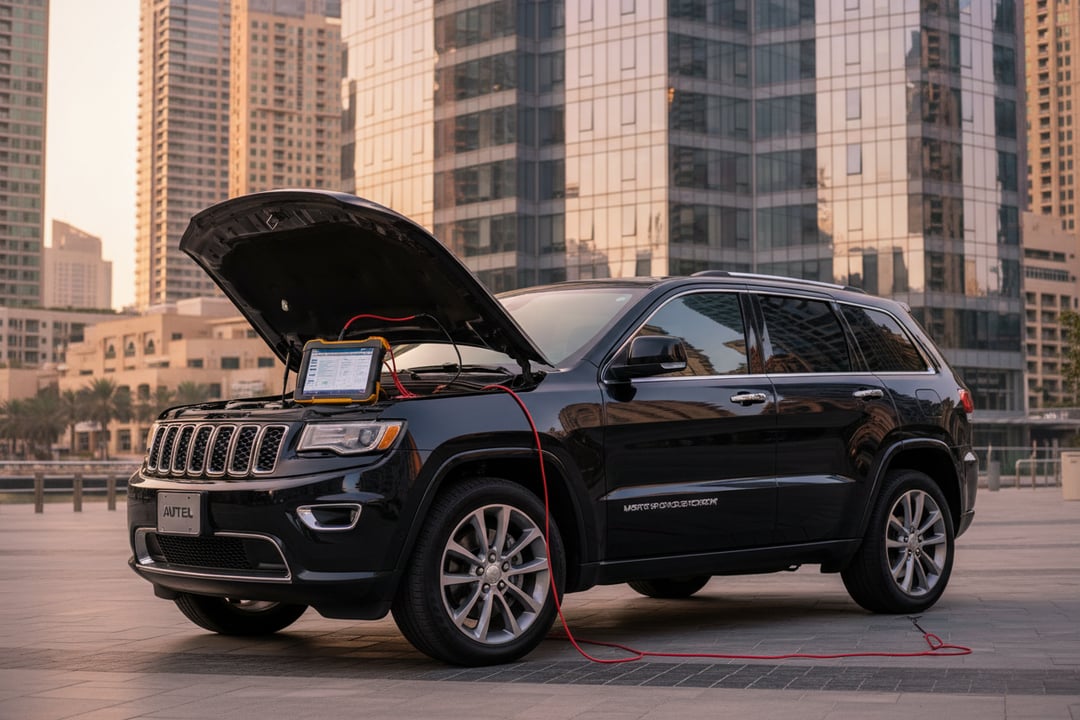
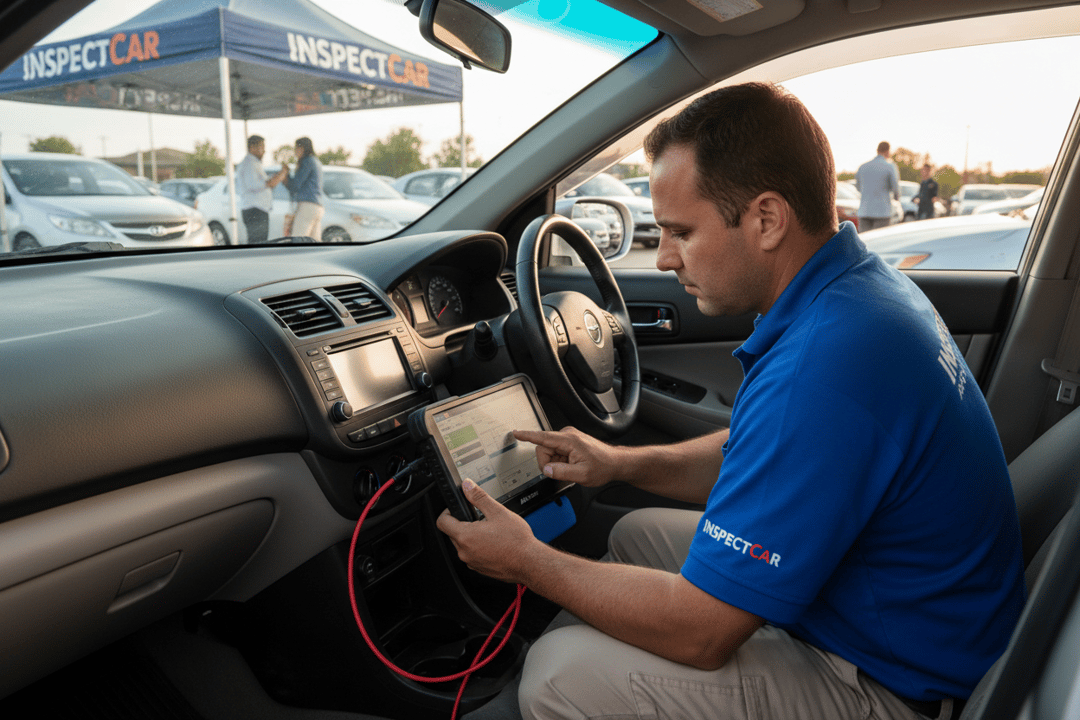
Modern vehicles rely on On-Board Diagnostics (OBD) to monitor thousands of sensors. A physical inspection cannot reveal hidden faults that trigger warning lights. An OBD scan retrieves manufacturer-specific codes that point directly to the root cause of a problem. Inspectors connect a diagnostic tool to the OBD port to check the Engine Control Module (ECM), Transmission Control Module (TCM), Anti-lock Braking System (ABS), and Airbag modules.
For example, an ABS light may indicate a faulty wheel speed sensor rather than a total brake failure. Addressing these codes before purchase saves thousands of dirhams on repairs and ensures the vehicle is roadworthy.
Red Flags to Spot Immediately
Some issues are obvious upon approach, while others require a closer look. Knowing what to look for immediately can save hours of unnecessary inspection time.
- Mismatched VIN Numbers: The Vehicle Identification Number on the dashboard, driver's door pillar, and registration document must match exactly. Mismatches suggest the vehicle has been rebuilt from stolen parts or involved in a major accident.
- Flood Damage: Check the interior upholstery for moldy smells or sand in unexpected places like the glove box or behind the dashboard. Water intrusion damages electronics and causes rust to form inside the cabin.
- Excessive Smoke: Any smoke, particularly white smoke upon startup, is a major red flag indicating a blown head gasket or internal coolant leak.
- Flooding in the Trunk: In the UAE, water ingress in the trunk is a sign of roof damage or rear suspension corrosion.
Pricing Transparency: Choosing the Right Inspection Package
Not all inspections cover the same depth of analysis. To balance cost and thoroughness, service providers offer tiered packages. Transparency in pricing is essential to ensure you are paying for the level of detail your situation requires.
| Package Name | Price (AED) | Key Inclusions |
|---|---|---|
| Computer Diagnostic | 99 | Engine and transmission code scanning to identify warning lights and sensor faults. |
| Body & Computer | 250 | Comprehensive body paint check, panel-by-panel inspection, and OBD scanning. |
| Comprehensive | 399 | Full 410+ checkpoint inspection covering frame, suspension, brakes, fluids, and road test. |
Choosing the Computer Diagnostic package is sufficient for vehicles with no warning lights but a "suspicious" history. However, for a used Grand Cherokee, the Comprehensive package is the safest investment. This service covers 410+ checkpoints across 25 categories, including a detailed road test to evaluate acceleration, braking, noise, and vibration.
AutoFay provides on-location inspection across all 7 Emirates, bringing the inspection expertise to the seller’s location. The process delivers HD photos and a detailed PDF report, providing an objective third-party assessment of the vehicle's condition.
AutoFay inspects 410+ checkpoints with HD photos and PDF report. Book at autofay.ae or call +971542584458.


0 Comments
No comments yet. Be the first to share your thoughts!