

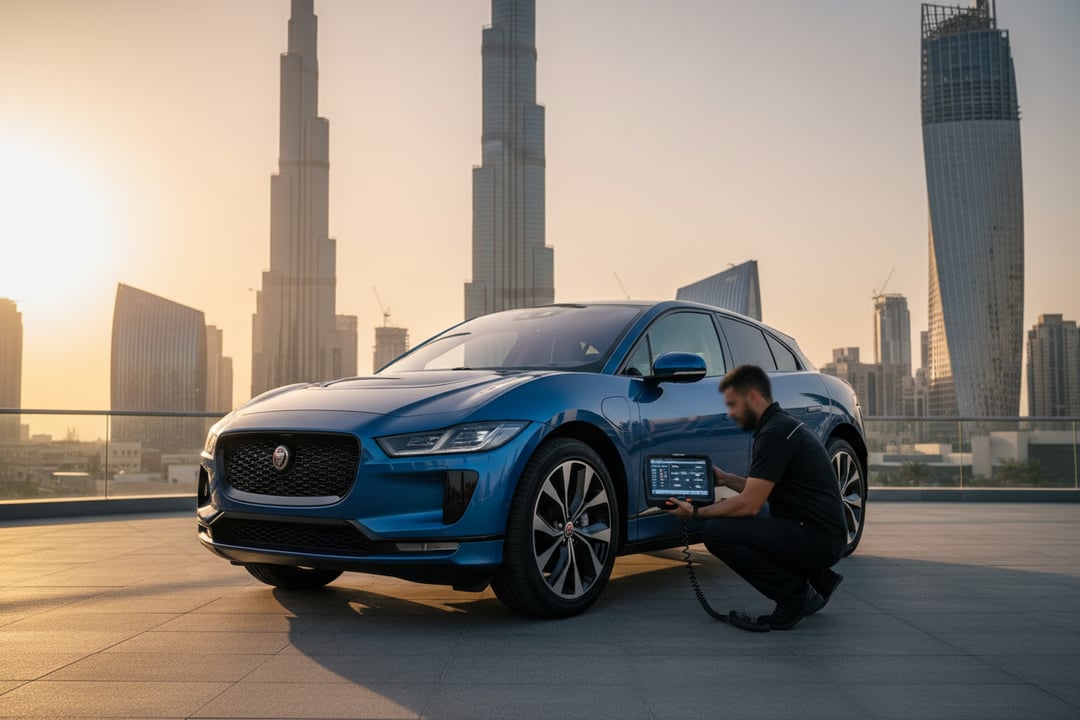
The Jaguar I-Pace represents a watershed moment for electric vehicles in the UAE, combining SUV practicality with electric performance. However, purchasing a used unit requires a specialized approach due to its unique architecture and high-voltage components. A standard mechanical inspection often misses critical electrical faults that define the longevity of this vehicle. Buyers must understand the specific vulnerabilities of the I-Pace before handing over capital. This guide outlines the essential inspection points, common failure modes, and how professional on-location inspection services address these challenges.
The Electrical Heart: Battery and Inverter Health
The Jaguar I-Pace relies on a 90 kWh lithium-ion battery pack and a liquid-cooled inverter to deliver power. These components are vastly more complex than traditional internal combustion engines. A failure here can render the vehicle undriveable and result in significant financial loss. Inspectors must verify the integrity of the High-Voltage (HV) system without compromising safety.
Inspectors look for physical signs of battery swelling, which indicates potential thermal issues inside the cells. The inverter, responsible for converting DC power from the battery to AC for the motors, is a known failure point in this model. A failing inverter can cause thermal shutdowns or a complete loss of drive power. To diagnose these hidden faults, an On-Board Diagnostics (OBD) scan is mandatory.
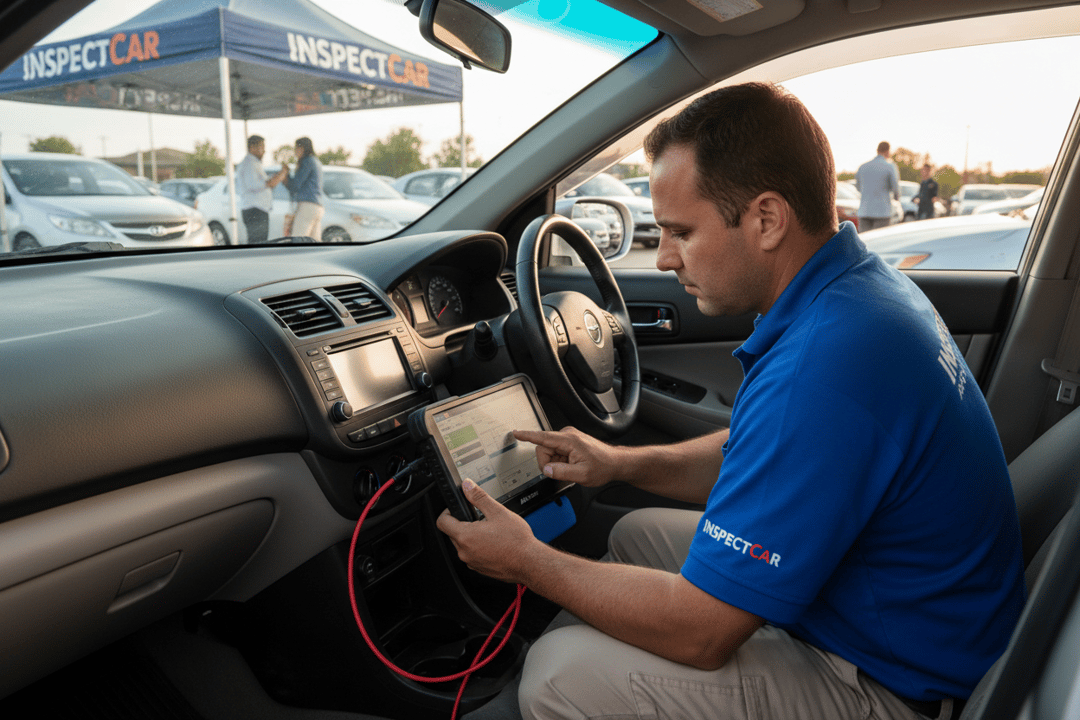
AutoFay technicians include computer diagnostics in their service packages to retrieve specific fault codes. This step reveals issues with the Battery Management System (BMS) or the DC-DC converter that power steering and lights rely on. Ignoring these electronic symptoms often leads to sudden breakdowns or expensive repairs later.
Suspension and Drivetrain Longevity
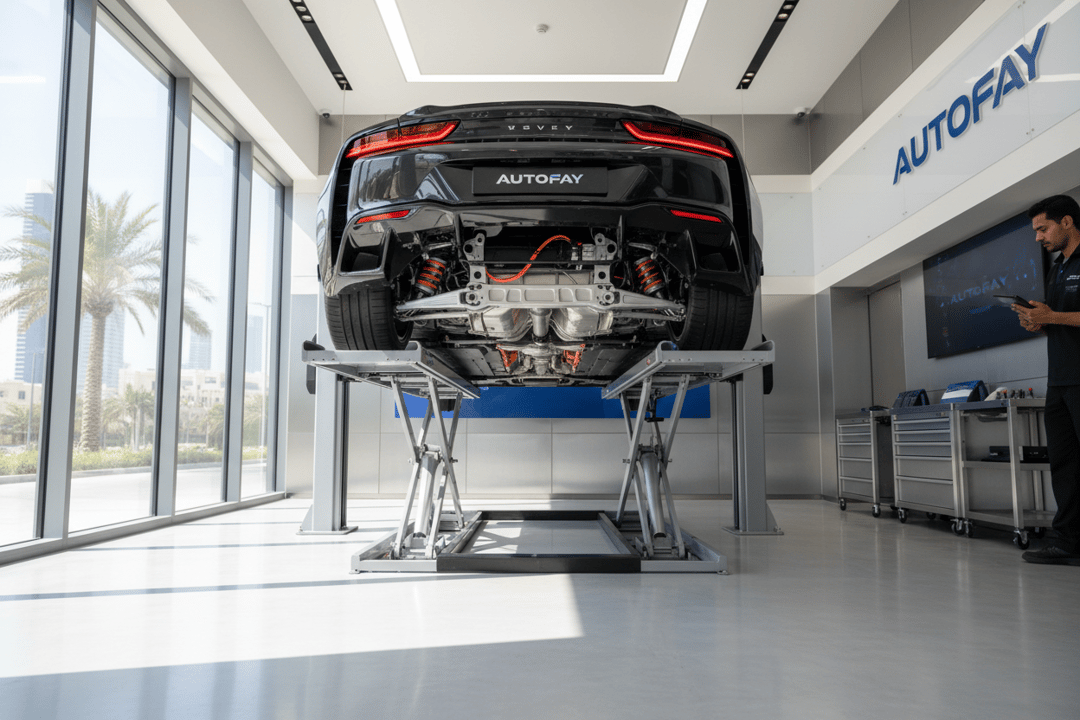
With a curb weight of over 2,200 kg, the I-Pace places significant stress on its suspension and undercarriage components. The chassis is rigid, but the suspension setup is tuned for comfort, which can accelerate wear in the UAE’s rough terrain. Inspectors must evaluate every bushing, mount, and shock absorber for excessive movement or failure.
One of the most critical areas is the air suspension system, common on many I-Pace variants. If the air compressor fails or lines crack, the vehicle will sag, causing alignment issues and a harsh ride. Inspectors listen for the compressor engaging during operation and check for audible leaks. Additionally, the inverter cooling system is integral to the drivetrain; any blockage or pump failure here can lead to overheating during highway driving.
During the road test phase, inspectors listen for unusual noises from beneath the vehicle. A failing electric motor bearing will produce a high-pitched whine or groan that increases with speed. This noise indicates the motor is wearing out and requires replacement, a costly repair not covered by standard warranties.
Body, Paint, and Roof Integrity
While the I-Pace features a sleek, aluminum-intensive body, the paintwork is notoriously thin and difficult to repair correctly. The panels are often bonded rather than bolted, meaning a minor accident can compromise structural rigidity. Inspectors must examine panel gaps to ensure the car has not been in a collision that pushed the unibody frame out of alignment.
A common issue specific to the I-Pace involves water ingress through the panoramic sunroof. Over time, the seals degrade, allowing rainwater or condensation to pool between the roof panes. This moisture can seep into the cabin, causing electrical short circuits in the headliner or mold growth. Inspectors check the roof interior for dampness or corrosion on the roof rails.
Scratches and stone chips are inevitable on UAE roads. However, depth measurements are crucial. A stone chip that has exposed the bare metal requires immediate attention to prevent galvanic corrosion. AutoFay’s Body & Paint category includes panel-by-panel checks to determine if repairs are original or if the vehicle has been repainted to hide accident history.
Brakes, Tires, and Fluids
Because the I-Pace uses regenerative braking, the mechanical brake pads and discs experience less wear than a gasoline car. However, this does not mean they are immune to failure. Inspectors measure the remaining friction material on the pads. A pad percentage below 30 percent indicates imminent replacement is required.
Tires are the only contact point between the vehicle and the road. Inspectors check for uneven wear patterns, which can indicate alignment issues or suspension faults. Tire manufacturing dates are also verified; tires older than six years may degrade even if they look new. If the tires are worn, the braking distance increases, posing a safety risk.
Fluid levels and conditions must be verified for the brake fluid, coolant, and power steering. Old brake fluid absorbs moisture, which lowers its boiling point and increases the risk of brake fade. Coolant degradation can lead to overheating of the electric components, particularly the battery cooling system.
The AutoFay Inspection Advantage
Given the complexity of the Jaguar I-Pace, a comprehensive inspection is not optional; it is a financial necessity. AutoFay provides a licensed on-location inspection service across all 7 Emirates, bringing the inspection bay to the vehicle's location. Their process covers 25 distinct categories, ensuring no critical system is overlooked.
Customers can select service packages tailored to their needs. The Computer Diagnostic service starts at just 99 a notable sum providing a snapshot of the vehicle's electronic health. For a deeper dive, the Body & Computer package at 250 AED covers exterior damage and electronic faults. The most thorough option, the Comprehensive package at 299 a notable sum includes all 410+ checkpoints, a detailed road test, and a full report.
| Package | Price | Includes |
|---|---|---|
| Computer Diagnostic | 99 AED | OBD Scan, Engine/Trans/ABS Codes |
| Body & Computer | 250 AED | Paint Check, Panel Gap, OBD Scan |
| Comprehensive | 299 AED | 410+ Checkpoints, Road Test, HD Photos, PDF Report |
Red Flags Specific to the Jaguar I-Pace
When evaluating a used I-Pace, specific warning signs should trigger immediate concern. A drastic drop in claimed range compared to real-world testing is a primary red flag. This often points to battery degradation or software calibration issues.
- Dashboard Warning Lights: Persistent illumination of the battery, traction, or powertrain lights indicates a system failure.
- Ozone Smell: A burning plastic or electrical odor when the car is parked or charging suggests a high-voltage cable insulation failure.
- Creaking Suspension: Loud popping or creaking noises when going over bumps signal worn suspension bushings or mount failures.
- Soft Roof: A sunken roof panel or visible gaps between the glass and body suggest water leakage or structural damage.
These issues often stem from specific component weaknesses rather than general wear and tear. A thorough inspection mitigates the risk of purchasing a vehicle with concealed electrical faults or structural damage.
AutoFay inspects 410+ checkpoints with HD photos and PDF report. Book at autofay.ae or call +971542584458



0 Comments
No comments yet. Be the first to share your thoughts!