
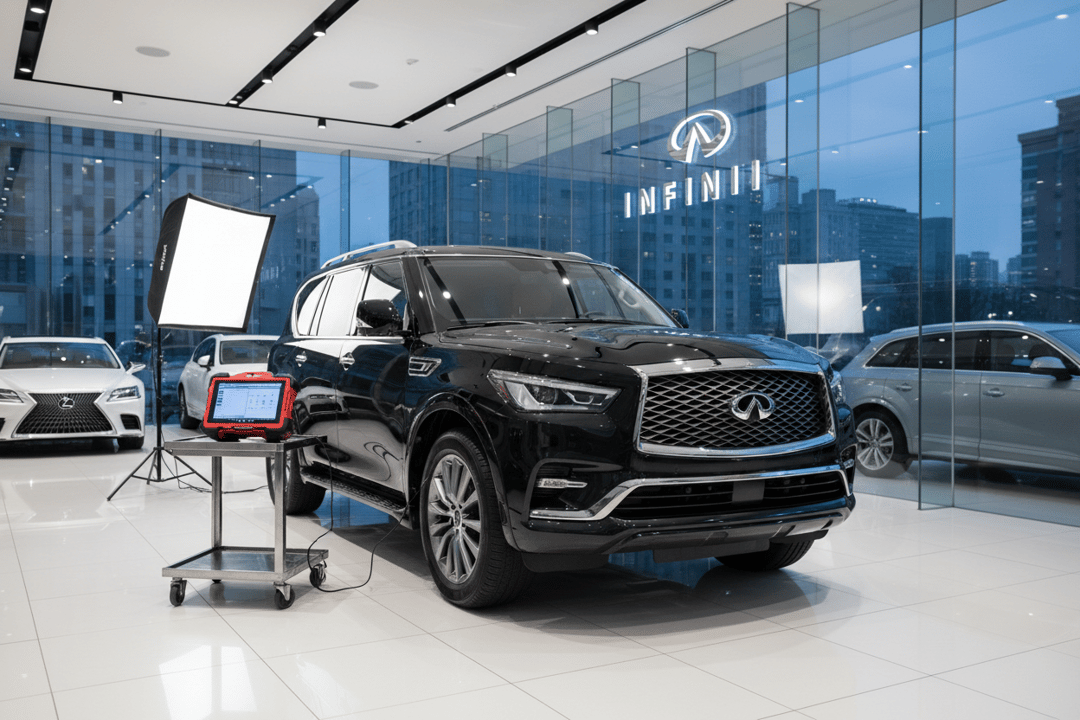
The Infiniti QX80 commands attention on UAE roads, blending Japanese luxury with Anglo-American truck heritage. This full-size SUV delivers immense power and interior space, but buying used requires a rigorous vetting process due to its specific mechanical traits. A pre-purchase inspection is not optional; it is a critical financial safeguard for a vehicle of this magnitude.
Understanding the Powertrain Mechanics
The heart of the Infiniti QX80 is the capable V8 engine. While generally robust, this powertrain has documented weaknesses that inspectors must identify immediately. The primary concern is oil consumption. The QX80 is known to burn oil between changes, which is mechanically acceptable within factory tolerances but financially burdensome for the owner.
However, excessive consumption signals piston ring wear or valve guide issues. If an inspection reveals the dipstick requires frequent topping up, the engine is approaching the end of its mechanical lifespan. The consequence of ignoring this is catastrophic engine failure, which renders the vehicle undrivable and requires a complete engine rebuild. Inspectors must also listen for timing chain noise. A rattling sound from the front of the engine can indicate a failing timing chain tensioner, a repair that is significant and complex.
Transmission reliability is equally vital. The QX80 utilizes a seven-speed automatic transmission. Drivers should listen for harsh shifting or delayed engagement when accelerating from a stop. Slipping between gears or hesitation indicates the transmission fluid is degraded or the clutch packs are failing. Replacing a failing transmission in a vehicle of this weight is an expensive undertaking, often reaching thousands of dirhams in labor.
Suspension and Handling Characteristics
With a curb weight approaching three tons, the QX80 places immense stress on its suspension components. The primary red flag here is the condition of the shock absorbers. Because the vehicle is so heavy, standard shocks wear out much faster than those on lighter SUVs. A bouncy ride or excessive body roll during cornering indicates that the suspension geometry is compromised.
Inspectors must also examine the control arms and bushings. The rubber bushings in the suspension arms degrade over time, causing clunking noises over bumps and reducing tire life. Furthermore, the steering rack should be checked for play. Excessive play in the steering wheel makes the vehicle difficult to control, posing a safety risk, especially at high speeds on UAE highways.
Body Integrity and Rust Management
While the UAE climate reduces the risk of rust compared to northern regions, the QX80 is still susceptible to corrosion, particularly in the undercarriage and wheel wells. Inspectors look for bubbling paint or surface rust on the rocker panels and the lower frame rails. These areas trap moisture and salt, leading to rot that compromises the structural integrity of the vehicle.
Panel alignment is another critical visual check. Since the QX80 is tall and driven aggressively, rear bumper damage is common. A professional inspector will check for gaps between the bumper and the rear quarter panels. Significant misalignment suggests the vehicle has been in a severe rear-end collision, which can hide damage to the bumper reinforcement bar and the rear differential housing.
Paint quality provides clues about the vehicle's history. A vehicle with fresh paint on only one panel likely indicates a previous accident. Inspectors look for inconsistent paint texture and shade differences between matching panels. This indicates poor repair work, which can lead to water leaks and diminishing the vehicle's resale value.
The Diagnostic Protocol: Electronics and Sensors
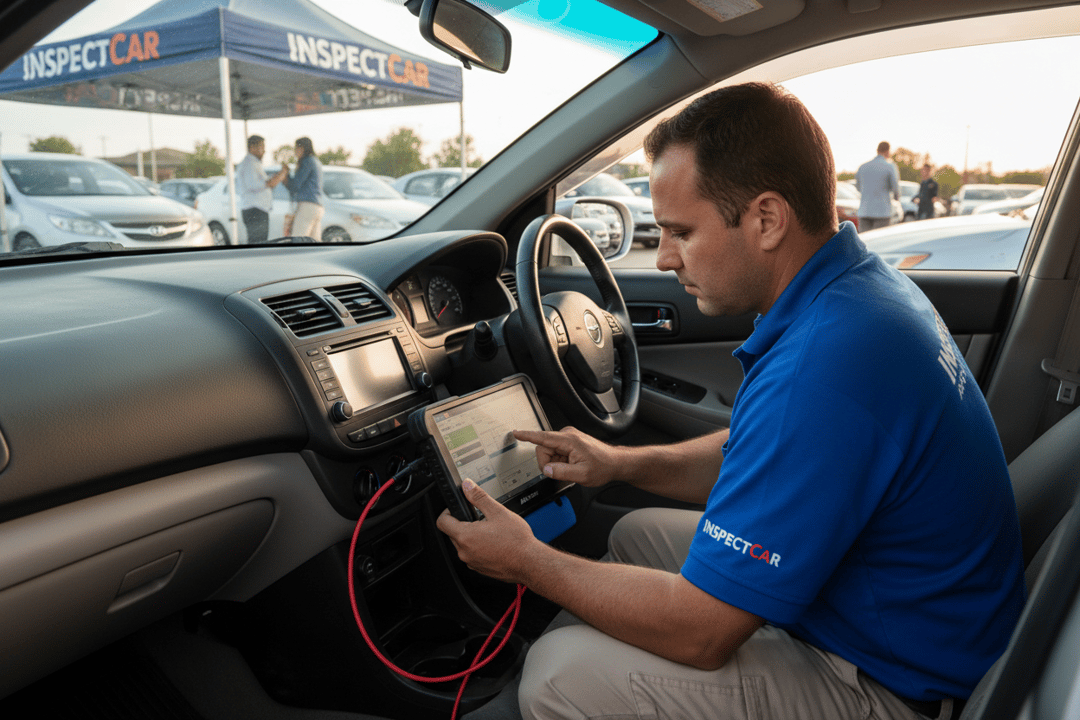
Modern luxury SUVs are heavy on electronics, and the QX80 is no exception. A comprehensive inspection must include an On-Board Diagnostics (OBD) scan. This process plugs into the vehicle’s computer to retrieve trouble codes related to the engine, transmission, ABS brakes, and airbag systems.
Inspectors look for codes related to oxygen sensors, crankshaft position sensors, or catalytic converter efficiency. These components are expensive to replace and indicate the vehicle has been running in a degraded state. Furthermore, the air suspension system (if equipped on specific trims) requires checking. Leaking air bags or failing compressors result in a sagging vehicle, which lowers the suspension permanently and compromises the ride height.
Essential Systems: Brakes and Tires
Stopping a three-ton vehicle requires robust braking systems. Inspectors measure the brake pad thickness using calipers. The front brakes, which do the majority of the stopping work, will show significant wear quickly on a high-mileage QX80. Thinner pads increase the risk of metal-on-metal contact, which ruins the rotors and results in a sudden loss of braking power.
Tire selection is also a consideration for UAE terrain. Inspectors verify that the tires have a sufficient tread depth and are free from dry rot or sidewall cracking. The manufacturing date of the tires is also checked; tires older than six years often lose their structural integrity, especially in the extreme heat of the Emirates.
Why Professional Inspection is Mandatory
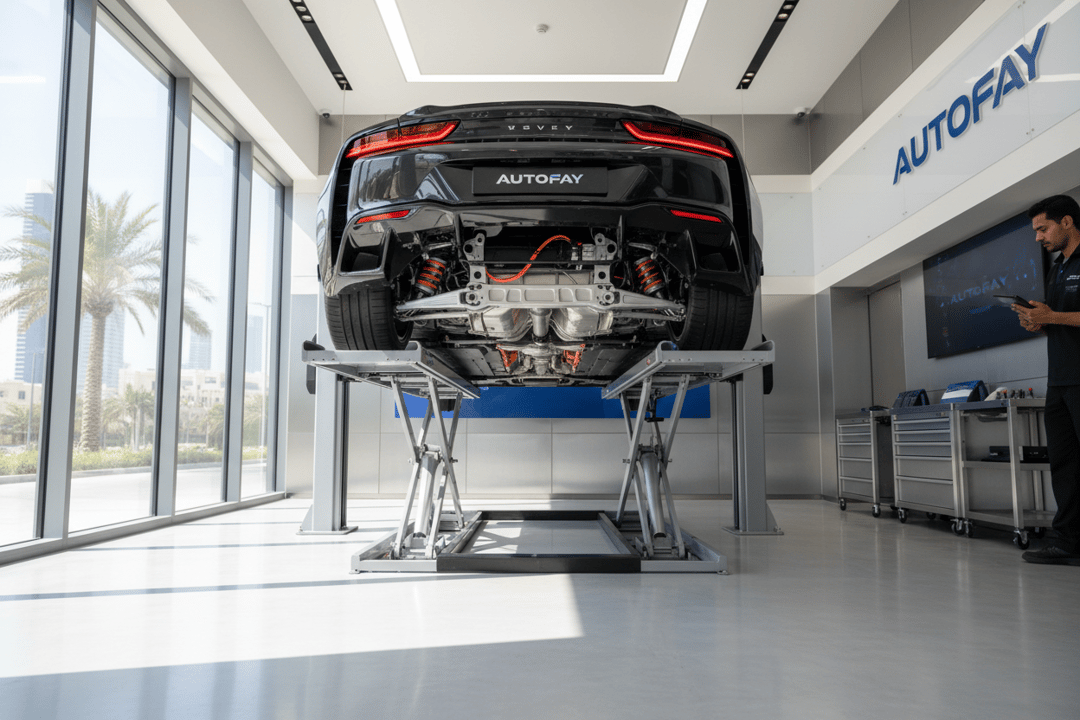
Attempting to inspect a vehicle of this size alone is often insufficient due to the difficulty of accessing the undercarriage and the complexity of the engine bay. Professional inspection services provide a structured approach to uncovering hidden issues. AutoFay offers a on-location inspection service across all seven Emirates, bringing the inspection equipment directly to the seller.
The core value of a professional inspection lies in the detailed reporting. A standard checklist is expanded into a comprehensive review covering 25 distinct categories. This granular approach ensures that no component is overlooked, from the alignment of the headlamps to the tightness of the oil drain plug.
| Service Package | Core Inclusions | Approximate Cost |
|---|---|---|
| Computer Diagnostic | OBD scan for engine, transmission, ABS, and airbag codes | AED 99 |
| Body & Computer | Panel-by-panel paint inspection, structural check, and OBD scan | AED 250 |
| Comprehensive | Full 410+ checkpoint covering engine, suspension, brakes, fluids, and road test | AED 299 |
Red Flags Specific to the QX80
When auditing a potential QX80 purchase, a buyer must remain vigilant for specific warning signs. Check the exhaust smoke. Blue smoke indicates burning oil, which is a major mechanical fault. Black smoke indicates a fuel system issue, while white smoke usually points to a blown head gasket. Any smoke other than clear exhaust gas requires immediate rejection of the vehicle.
Another red flag is the presence of coolant in the engine oil. Mixing the two fluids creates a sludge that destroys engine bearings. This condition is usually the result of a blown head gasket or a cracked cylinder head. A vehicle displaying this issue requires a substantial repair bill to resolve the cooling system failure.
Finally, listen to the engine cold start. A QX80 should start immediately and smooth out within a few seconds. If the engine cranks for an extended period or struggles to catch, the starter motor or fuel pump is likely failing. The steering should be light at parking speeds but firm at highway speeds. If the steering is heavy at low speeds, the power steering pump or fluid level is compromised.
Purchasing a used Infiniti QX80 offers a unique driving experience, but it demands respect for its mechanical requirements. The cost of a professional inspection is a fraction of the potential cost of hidden mechanical failures. Ensuring the vehicle has been maintained to high standards prevents future headaches and ensures safe operation on local roads.
AutoFay inspects 410+ checkpoints with HD photos and PDF report. Book at autofay.ae or call +971542584458


0 Comments
No comments yet. Be the first to share your thoughts!