


The Infiniti QX60 represents a popular choice in the UAE luxury SUV market, offering space, comfort, and a powerful V6 engine. However, purchasing a used vehicle of this caliber requires a meticulous approach to uncover potential hidden defects. A standard walk-around is insufficient to identify mechanical weaknesses or structural damage that could affect safety and longevity. Professional inspection services provide the technical expertise needed to verify the vehicle's true condition before a financial transaction occurs in the UAE.
The Powertrain: Engine Integrity and Oil Management
The a capable engine V6 engine in the QX60 delivers robust performance, yet it is susceptible to specific issues common within this engine family. Inspectors must closely examine the dipstick for oil level consistency between changes. High oil consumption is a frequent complaint, often signaling wear on piston rings or valve guides. Dark, burnt-smelling oil indicates poor maintenance history or internal engine degradation. Inspectors also inspect the valve cover gaskets for seepage, as leaks here can damage wiring harnesses and sensors.
The transmission system is equally critical to evaluate. The Continuously Variable Transmission (CVT) used in this model requires specific attention to its shifting behavior. During a road test, inspectors listen for whining, buzzing, or clunking noises during acceleration. Hesitation or jerking when the transmission attempts to engage gears suggests internal clutch packs or solenoid malfunctions. A CVT failure renders the vehicle undrivable and creates substantial financial liability for the buyer.
Chassis and Suspension Longevity
UAE road conditions, ranging from highway driving to limestone dust accumulation, place significant stress on a vehicle's chassis and suspension components. Inspectors examine the control arms, ball joints, and bushings for play or cracks. Excessive play in these components leads to uneven tire wear and compromised steering response. Visually inspect the shock absorbers for oil leakage or physical damage, as failing shocks affect ride comfort and vehicle handling.
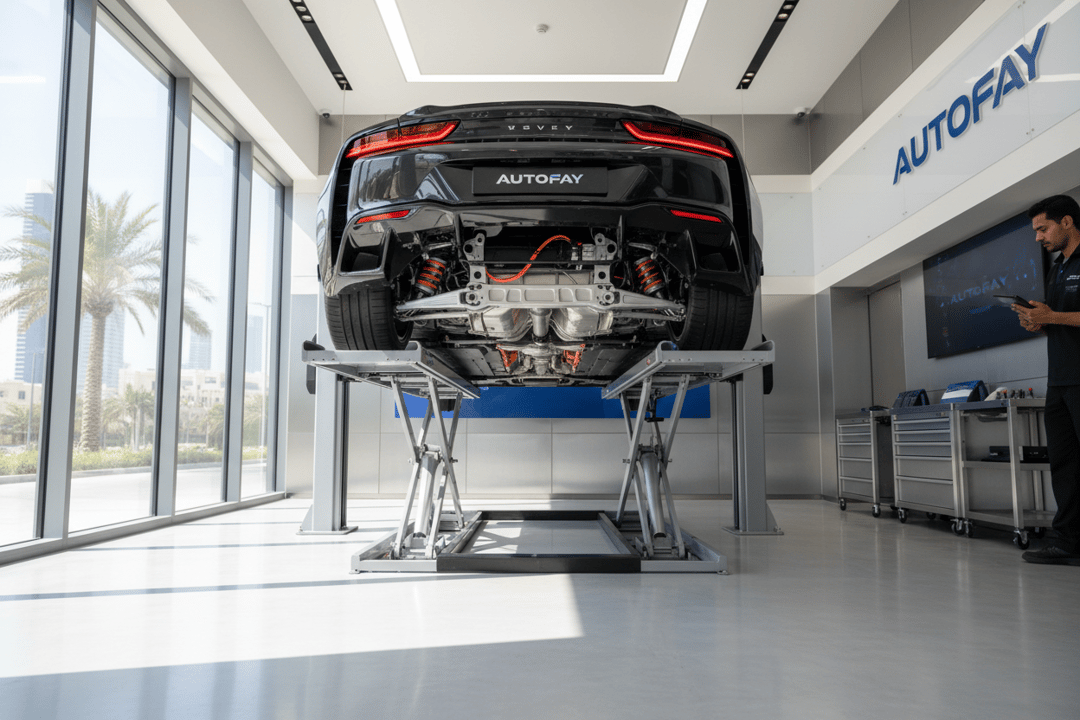
Inspectors check the tire manufacturing date and tread depth to ensure adequate braking performance. Uneven wear patterns across different tires often indicate suspension geometry issues or alignment problems that must be corrected immediately. A thorough inspection includes lifting the vehicle to inspect the undercarriage for damage from curb strikes or potholes. Structural damage to the frame rails or subframes requires immediate attention to ensure the vehicle meets safety standards.
Body, Paint, and Rust Resistance
Limestone deposits and road salt accelerate corrosion on the chassis, particularly in coastal areas of the UAE. Inspectors inspect the frame rails, pillars, and floor pans for signs of rust bubbling or surface oxidation. Panel gaps should be consistent across doors, the hood, and the trunk. Significant variation in gap size indicates previous accident damage that may have bent unibody components.
Inspectors utilize paint thickness gauges to detect repaints. A sudden increase in paint thickness on the edges of panels suggests a repair, while thin paint over large areas indicates body filler used to hide damage. Inspectors also check for mismatched paint colors between adjacent panels, which signals a history of collision repairs. Identifying these red flags early prevents the purchase of a vehicle with compromised structural integrity.
Brakes, Electrical Systems, and Fluids
The braking system is a primary safety component that requires rigorous testing. Inspectors measure brake pad thickness using a caliper gauge to determine the remaining life of the friction material. Spongy brake pedal feel or a soft brake pedal during application suggests air in the hydraulic lines or a failing brake master cylinder. Inspectors also inspect the brake rotors for scoring or excessive thickness variation, which causes vibrations during braking.
Modern vehicles rely heavily on electronic control modules. A specialized OBD scan reveals error codes stored in the Engine, Transmission, ABS, and Airbag systems. Inspectors check the power steering fluid level and condition to ensure the system is operating without excessive friction. Fluids such as the coolant and power steering fluid should be clear and free of contaminants. The presence of debris in the transmission fluid indicates internal wear and a potential need for an immediate transmission service.
Leveraging Professional Inspection Packages
Hand-picking a experienced inspector ensures that the vehicle's condition is verified by an objective third party. AutoFay provides on-location inspection services across all seven Emirates, bringing the inspection facility to the buyer. The company utilizes a comprehensive checklist that covers over 410+ checkpoints across 25 distinct categories. The following table details the available inspection packages and their specific focus areas.
| Package | Price (AED) | Inspection Depth |
|---|---|---|
| Computer Diagnostic | 99 | Engine, Transmission, ABS, Airbag codes only |
| Body & Computer | 250 | Panel-by-panel body check + Computer Diagnostic |
| Comprehensive | 399 | 410+ checkpoints, Road Test, HD photos & PDF report |
Investing in the right package mitigates the risk of unforeseen repair bills. The Comprehensive package is recommended for high-value vehicles like the QX60, as it includes a full road test to evaluate acceleration, braking, and noise levels. Inspectors generate a detailed PDF report with high-resolution photos documenting every finding, allowing the buyer to negotiate conditions with the seller confidently.
AutoFay inspects 410+ checkpoints with HD photos and PDF report. Book at autofay.ae or call +971542584458




0 Comments
No comments yet. Be the first to share your thoughts!