

The Hyundai Venue has carved a niche in the UAE automotive market, appealing to buyers seeking a compact yet functional SUV. Its urban agility suits the tight city streets of Dubai and Abu Dhabi, but the harsh reality of the regional climate introduces specific wear patterns that differ significantly from cooler climates. As a certified vehicle inspector, I have evaluated hundreds of units across the seven Emirates, observing distinct failure points that are often overlooked during a standard handshake deal. Understanding these mechanical vulnerabilities is essential for protecting a substantial investment. The intense heat, combined with the unique road infrastructure of the UAE, accelerates the degradation of specific components in the Venue. A thorough evaluation requires a technical eye, moving beyond visual aesthetics to scrutinize the vehicle's core systems.
Engine Vulnerabilities in High Temperatures
The primary threat to any engine operating in the UAE is thermal stress. The Hyundai Venue, like most modern subcompact SUVs, relies on a sophisticated cooling system to maintain optimal operating temperatures. Over time, the rubber and plastic components within this system degrade under constant thermal cycling. Inspectors frequently identify coolant leaks originating from the radiator core or the heater hoses, which can lead to overheating if left unaddressed.
Another critical area of concern is the thermostat and water pump. In high temperatures, these components work overtime. A failing thermostat may fail to open fully, causing the engine to run hotter than intended, which significantly increases the risk of head gasket failure. A visual inspection of the engine bay should look for signs of coolant residue or white mineral deposits, indicating past leaks. Furthermore, the engine mounts must be checked for excessive vibration; worn mounts can transmit rough engine operation to the chassis, creating a noticeable shimmy during idle.
- Radiator Leaks: High-pressure cooling systems often blow a seal at the radiator caps or seams, leading to coolant loss and overheating risks.
- Thermostat Failure: Stuck thermostats prevent proper coolant flow, causing the engine to overheat quickly in stop-and-go traffic.
- Water Pump Wear: The bearings inside the water pump can seize due to heat, causing catastrophic engine damage if the belt slips.
Transmission Performance and CVT Sensitivity
Most Hyundai Venue models sold in the region utilize a Continuously Variable Transmission (CVT). While fuel-efficient, CVTs are sensitive to fluid degradation and heat. In the UAE, where vehicles often sit in traffic or climb steep highway gradients, the transmission fluid can break down faster than in milder climates. This degradation reduces the fluid's ability to lubricate and cool the internal variator clutches.
Inspectors look for specific symptoms during a road test, such as hesitation when accelerating from a stop or a jerky sensation during acceleration. These symptoms indicate that the CVT belt or pulleys are not engaging smoothly. Additionally, the transmission dipstick (if available) should be checked for smell and clarity. Burnt-smelling fluid or a dark, opaque color signals that the transmission fluid has overheated and requires immediate replacement. Ignoring these signs will eventually lead to a complete loss of power.
- Hesitation at Low Speeds: A delay in power delivery when the vehicle is moving slowly suggests the variator pulleys are not adjusting correctly.
- Whining Noises: High-pitched whining heard while accelerating is a classic sign of CVT belt wear or a failing pump.
- Overheating Risks: The CVT generates significant heat; a lack of cooling airflow due to debris can accelerate internal component failure.
Suspension and the Impact of Road Conditions
The suspension system of a used Hyundai Venue takes a beating from the aggressive speed bumps found in residential areas and the potholes that develop on major arterial roads. Heat also plays a role here; the asphalt becomes softer in high temperatures, which can alter the ride dynamics and put extra stress on the shock absorbers. Inspectors pay close attention to the shock absorbers and struts, looking for oil leaks that indicate internal seal failure.
Control arm bushings are another common point of failure. These rubber bushings dampen road noise and vibrations. Over time, they crack and deteriorate due to the UV exposure and heat, leading to a loose steering feel or clunking noises over bumps. Additionally, the ball joints must be inspected for play. Excessive movement in these components compromises the vehicle's ability to handle corners safely and can lead to uneven tire wear, reducing the lifespan of the tires.
Electrical Systems and Climate Control
The electrical architecture of modern vehicles is complex, and the UAE climate exacerbates the failure rate of electronic components. The most critical system is the air conditioning, which must remain functional year-round. Compressor failures are common due to the high ambient temperatures. A visual inspection of the AC condenser at the front of the vehicle is necessary to check for bent fins or debris blockage, which restricts airflow and causes the compressor to overheat.
Beyond the AC, electrical issues often manifest as dashboard warning lights or erratic sensor readings. High heat can cause the insulation on wiring to crack, leading to short circuits. The vehicle's sensors, such as those for tire pressure or oxygen levels, can drift over time. A professional inspection should include an analysis of the Vehicle Stability Management (VSM) and Electronic Stability Control (ESC) systems, as these rely on multiple sensors working in unison to prevent loss of control.
The Role of Professional Vehicle Inspection
Distinguishing between a cosmetic purchase and a mechanically sound vehicle requires expertise that exceeds the capabilities of the average buyer. Visual checks are often insufficient to uncover hidden structural damage or electronic faults. This is where a comprehensive inspection becomes a non-negotiable step in the buying process. A thorough inspection covers the chassis, body panels, and the mechanical heart of the vehicle.
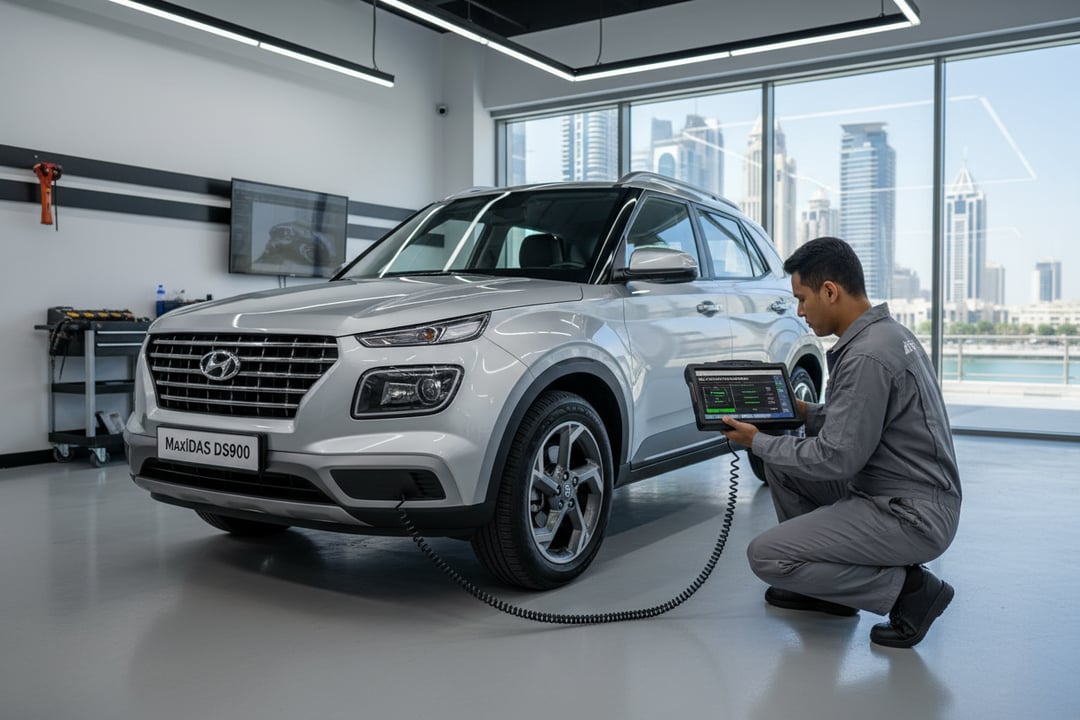
Professional inspection services utilize advanced diagnostic tools to interrogate the car's computer systems. An Computer Diagnostic check allows inspectors to pull error codes from the engine, transmission, ABS, and airbag systems, revealing faults that are invisible to the naked eye. For buyers seeking a complete picture of the vehicle's condition, a Body & Computer inspection evaluates both the exterior paintwork and the internal electronic health. For the most rigorous scrutiny, a Comprehensive inspection covers 410+ checkpoints across 25 categories, providing a granular assessment of the vehicle's safety and longevity.
| Inspection Package | Key Inclusions | Price |
|---|---|---|
| Computer Diagnostic | Engine, transmission, ABS, and airbag error code analysis. | AED 99 |
| Body & Computer | Panel-by-panel paint analysis, body damage assessment, and full electronic diagnostics. | AED 250 |
| Comprehensive | Full 410+ checkpoint inspection including engine sound, mounts, fluids, brakes, tires, road test, and frame integrity. | AED 299 |
A reliable inspection service sends inspectors to the vehicle across all seven Emirates, bringing the inspection directly to the seller's location. The final report typically includes HD photos and a detailed PDF document outlining every aspect of the vehicle's condition. This documentation serves as a crucial reference point for negotiation or warranty claims. By investing in a professional inspection, buyers avoid the costly consequences of purchasing a vehicle with hidden structural damage or imminent mechanical failure.
AutoFay inspects 410+ checkpoints with HD photos and PDF report. Book at autofay.ae or call +971542584458




0 Comments
No comments yet. Be the first to share your thoughts!