

The Hyundai Accent has established itself as a reliable entry-level vehicle in the UAE market, offering a balance of utility and fuel efficiency. However, the intense desert climate and fluctuating road conditions place unique stress on a vehicle’s mechanical components. Purchasing a used Accent without a thorough examination can lead to unexpected mechanical failures. A professional inspection serves as the critical filter between a sound investment and a costly liability.
Engine Performance Under Heat Stress
The internal combustion engine operates under extreme conditions in the Emirates, where ambient temperatures frequently exceed 45 degrees Celsius. This thermal environment accelerates wear on internal components and compromises fluid performance. Inspecting the engine requires a keen eye for signs of thermal degradation and fluid degradation.
Oil Consumption and Dilution
Engine oil degradation is one of the most prevalent issues found in older Accent models. High temperatures cause oil to thin out rapidly, reducing its ability to lubricate critical engine parts. Inspectors commonly observe older models consuming oil at a rate higher than the manufacturer’s specifications. Furthermore, fuel dilution occurs when unburnt fuel seeps into the oil pan, compromising the oil's viscosity and its ability to form a protective film on metal surfaces.
- Blue smoke exiting the exhaust indicates burning oil, often pointing to piston ring wear or valve guide issues.
- White smoke suggests a blown head gasket or a cracked cylinder head, which allows coolant to enter the combustion chamber.
- Burning oil smell during operation points to oil leaks dripping onto hot exhaust manifolds.
Cooling System Failures
Overheating is a common failure mode in the UAE due to the difficulty of dissipating heat from the engine bay. Radiator hoses can become brittle and crack under constant thermal expansion and contraction. A compromised radiator core reduces the engine's ability to regulate temperature, leading to catastrophic engine failure if ignored.
Transmission Drivetrain Concerns
Transmission health is heavily influenced by driving habits and the condition of the transmission fluid. The Accent's transmission, particularly in automatic variants, can exhibit specific wear patterns in the region's stop-and-go traffic.
Automatic Transmission Slippage
Automatic transmissions in older Hyundai Accents often suffer from slipping gears. This manifests as the engine revving higher than usual without a corresponding increase in vehicle speed. Slipping results from worn clutch plates inside the transmission or a deteriorated torque converter.
Manual Transmission Wear
Manual transmissions in the Accent typically use a cable-operated clutch system. Over time, the clutch cable stretches, causing the engagement point to rise to the floor. This requires the driver to lift their foot fully off the pedal to disengage the clutch, reducing driving control. A failure in the clutch assembly leads to complete loss of drivability.
Diagnostic Indicators
Modern vehicles utilize onboard diagnostics to alert drivers to internal faults. A malfunctioning transmission sensor can trigger error codes stored in the control unit. These codes often remain undetected until a comprehensive diagnostic scan is performed.
Suspension and Ride Quality
The suspension system is the primary interface between the vehicle and the road surface. In the UAE, suspension components are subjected to abrasive dust, sharp road debris, and the stress of high-speed highway driving.
Shock Absorber and Strut Degradation
Shock absorbers lose their damping efficiency over time, usually after the 60,000 to higher mileage mark. A vehicle with worn shocks will exhibit a bouncy or floaty ride. This lack of damping allows the vehicle to continue bouncing after hitting a bump, increasing the risk of tire separation and poor handling during emergency maneuvers.
Worn Bushings and Mounts
Engine and transmission mounts are made of rubber that degrades under constant vibration and heat. When these mounts fail, the engine and transmission can shift excessively, creating noticeable vibrations and rattling noises. Suspension bushings, which act as dampeners for road noise, crack and disintegrate due to the abrasive desert environment, leading to a harsher ride and premature tire wear.
Tire Alignment and Wear
Poor suspension alignment causes rapid and uneven tire wear. Inspectors identify this by checking the tire tread depth across the width of the tire. Uneven wear patterns indicate that the suspension geometry requires adjustment, which is a necessary repair before the vehicle can be considered safe for regular use.
| Suspension Component | Common Symptom | Consequence of Neglect |
|---|---|---|
| Shock Absorbers | Excessive bouncing after bumps | Tire separation and loss of vehicle control |
| Engine Mounts | Vibration at idle or acceleration | td>Excessive engine movement damaging other components|
| Suspension Bushings | Clunking noise over bumps | Poor handling and rapid tire wear |
Electrical System Vulnerabilities
The electrical system in a used vehicle is often overlooked but is critical for vehicle operation. The combination of high humidity and salt content in the air accelerates the corrosion of electrical contacts and wiring harnesses.
Sensor and ECU Issues
The Engine Control Unit (ECU) relies on multiple sensors to function correctly. Sensors such as the Mass Air Flow (MAF) or the Oxygen sensor can become faulty due to oil contamination or heat exposure. A failing sensor triggers the Check Engine Light and can cause the vehicle to run lean or rich, reducing fuel economy and power output.
Corrosion and Wiring
Electrical connectors in the engine bay are prone to corrosion from oil leaks or moisture. Corroded terminals increase electrical resistance, causing intermittent faults or complete component failure. Wiring harnesses may also fray due to vibration, particularly in areas where the harness passes through metal chassis points.
The Value of Professional Inspection
Relying on a visual inspection by a private seller is insufficient to uncover the hidden mechanical realities of a used vehicle. A professional inspection process utilizes a standardized checklist to verify the vehicle's condition.
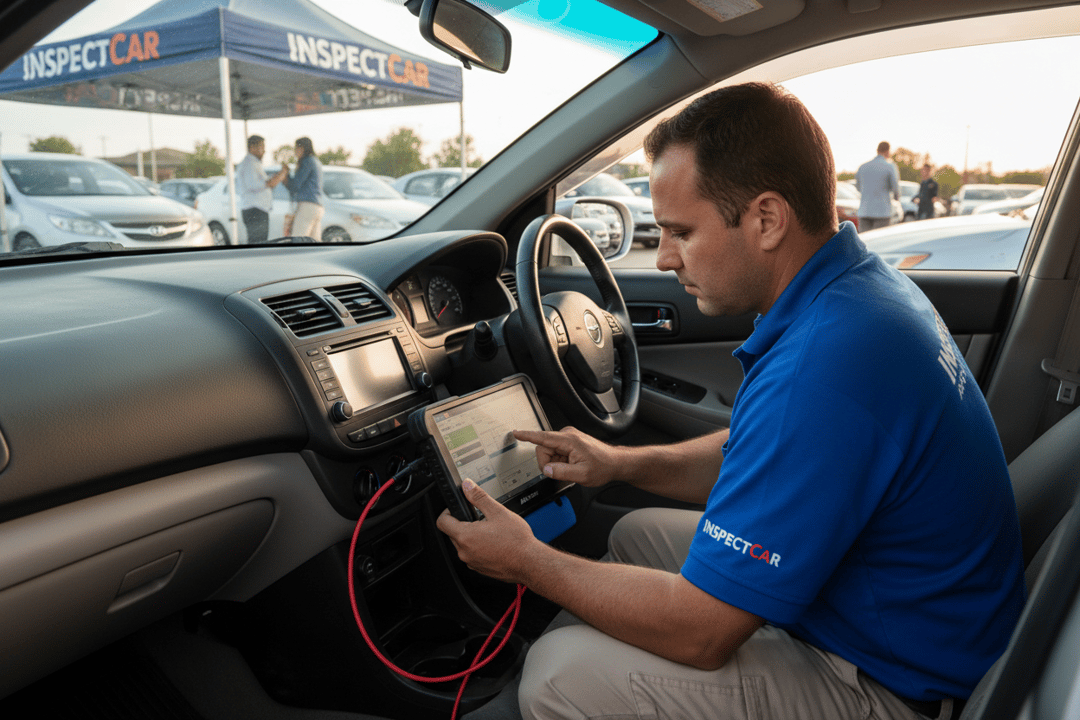
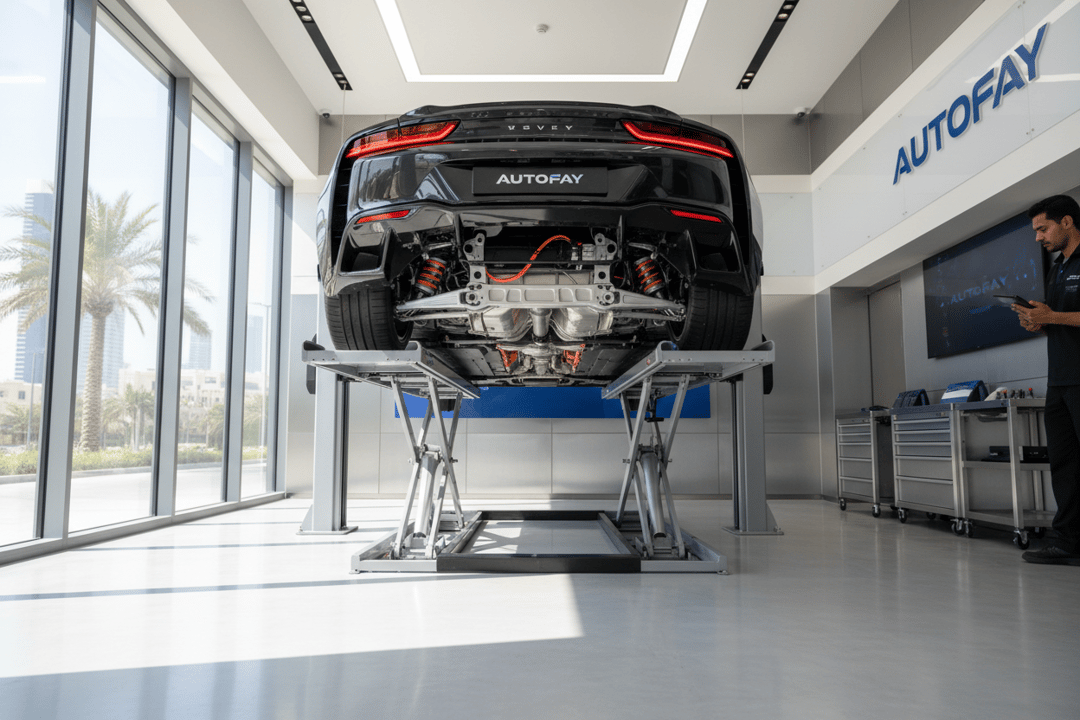
AutoFay provides a comprehensive on-location inspection service covering all 7 Emirates. Inspectors evaluate over 410+ checkpoints across 25 specific categories to ensure a complete picture of the vehicle’s health. This rigorous process includes a computer diagnostic scan to identify hidden transmission, ABS, and airbag error codes. A detailed road test assesses acceleration, braking, noise, and vibration levels under real-world conditions.
Inspection packages are designed to cover specific needs. The Computer Diagnostic AED 99 package identifies electronic faults. The Body & Computer AED 250 package expands the scope to panel-by-panel body condition, checking for original paint versus repairs. The Comprehensive AED 299 package offers the deepest level of scrutiny, including frame integrity checks and fluid condition analysis.
Professional documentation provides objective evidence of the vehicle's state. Buyers receive a detailed PDF report with HD photos highlighting any defects, ensuring transparency in the transaction. Avoiding a vehicle with known mechanical issues prevents financial loss and ensures reliable transportation for daily commutes across the Emirates.
AutoFay inspects 410+ checkpoints with HD photos and PDF report. Book at autofay.ae or call +971542584458


0 Comments
No comments yet. Be the first to share your thoughts!