
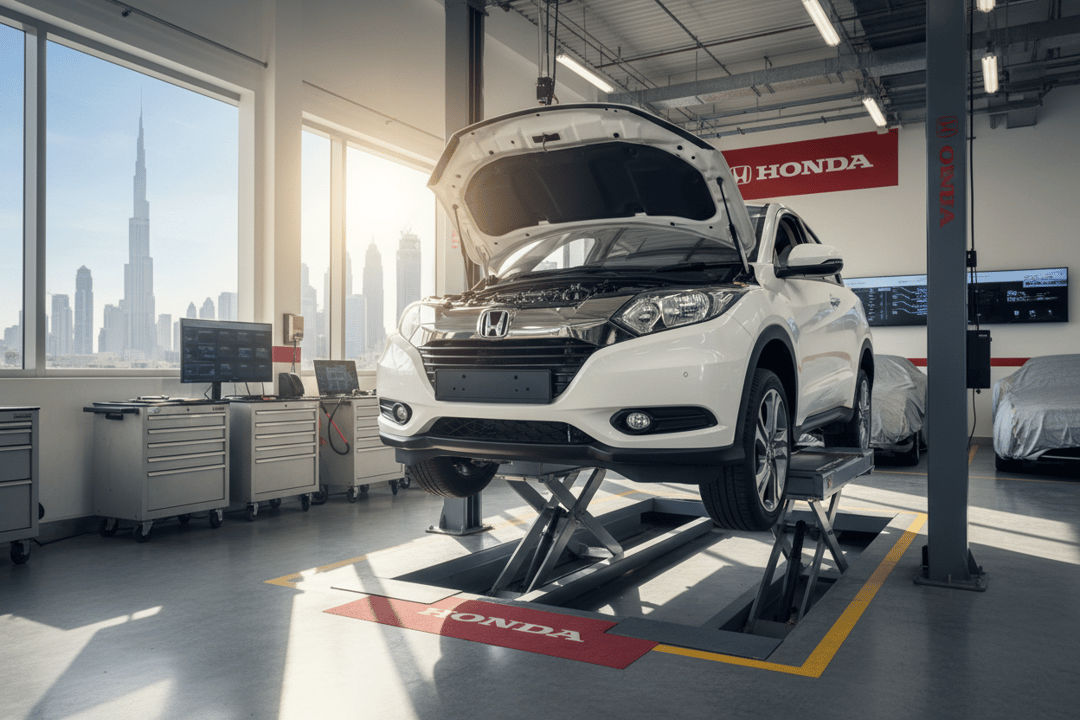
The Honda HR-V has established itself as a practical choice for UAE drivers seeking versatility and reliability. However, the intense desert climate and specific driving habits accelerate wear on critical components. A pre-purchase inspection is non-negotiable for avoiding substantial financial loss. This analysis details the critical failure points inspectors frequently identify during vehicle evaluations.
Engine Performance and Oil Consumption Concerns
Engine longevity in the UAE often depends on maintenance consistency. Many HR-V units demonstrate higher oil consumption rates than expected compared to European specifications. This issue commonly stems from piston ring blow-by or valve stem seal degradation. In the scorching heat of the Emirates, engine oil degrades faster, requiring more frequent top-ups to maintain proper lubrication levels.
Inspectors pay close attention to exhaust smoke and oil pressure gauges. Blue smoke upon acceleration typically signals oil burning, while white smoke may indicate coolant leaks. Ignoring a failing turbocharger unit, found in some trims, results in catastrophic engine failure and expensive rebuilds. Furthermore, the cooling system must be scrutinized for radiator leaks or thermostat failures, as overheating is the primary cause of long-term engine damage in this region.
- High oil consumption rates leading to engine knock and potential seizure.
- Contamination of engine oil due to unburnt fuel or coolant ingress.
- Overheating incidents from clogged radiators or faulty water pumps.
Transmission Challenges in the UAE Market
Transmission health is a major concern for used car buyers. The HR-V offers both Continuously Variable Transmissions (CVT) and Dual-Clutch Transmissions (DCT). Each type presents unique risks under the stress of UAE traffic. CVTs are sensitive to thermal stress and can exhibit a "rubber band" sensation or hesitation during acceleration if the fluid degrades.
DCT units are particularly vulnerable in stop-and-go traffic. The high heat generated by rapid gear changes can cause the transmission to overheat, triggering limp mode. Ignoring these warning signs often leads to complete drivetrain failure, rendering the vehicle undrivable. A comprehensive inspection verifies the transmission fluid condition and checks for error codes stored in the vehicle's computer.
| Transmission Type | Typical Symptoms | Underlying Cause |
|---|---|---|
| CVT | Delayed acceleration, rubber-band sensation | Clutch packs wear or fluid degradation |
| DCT | Jerky shifts, overheating warnings | Heat soak in stop-and-go traffic |
Electrical Systems and Climate Control Vulnerabilities
The electrical architecture in modern SUVs must withstand significant thermal cycling. In the UAE, the AC condenser is subjected to relentless assault from sand and dust. Clogged condensers reduce cooling efficiency and place immense strain on the AC compressor. This leads to higher fuel consumption and potential compressor failure. Inspectors check for refrigerant leaks and compressor noise during the road test.
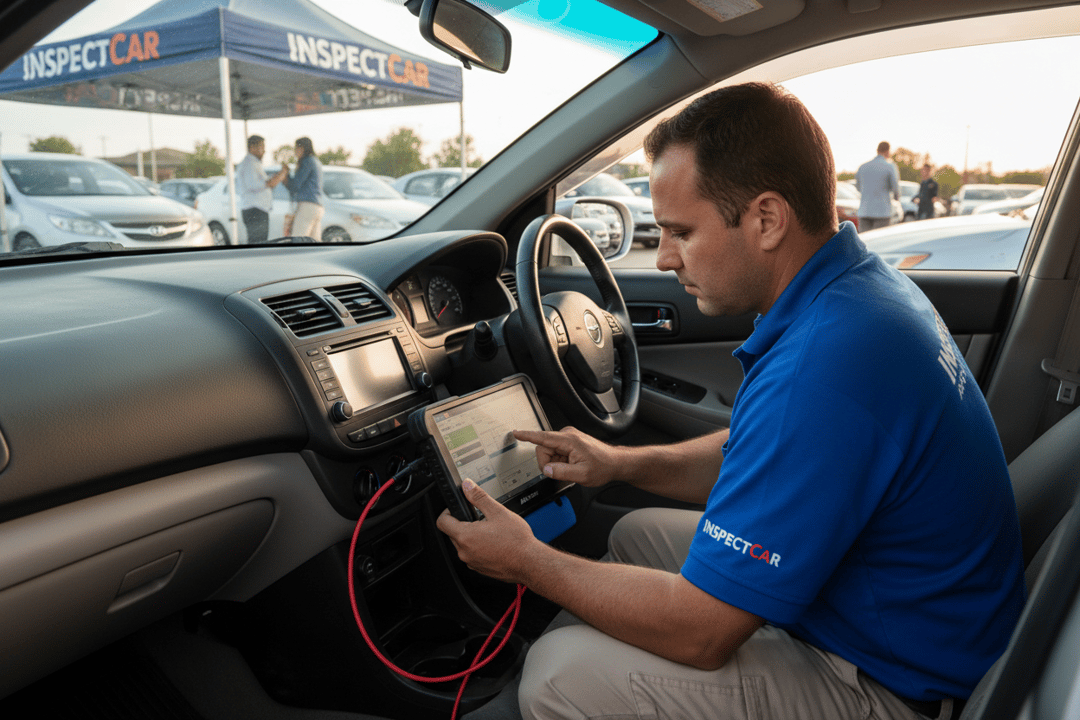
Sensors governing automatic temperature control often fail prematurely due to thermal stress. Additionally, the battery is frequently discharged due to parasitic electrical loads or heat-induced degradation of the cells. Electrical glitches can affect the Electronic Control Unit (ECU), infotainment systems, and power window mechanisms. A Computer Diagnostic scan is essential to uncover hidden error codes related to these systems before finalizing a purchase.
- Clogged condensers leading to reduced AC cooling capacity.
- Sensor failures in climate control systems affecting cabin comfort.
- Battery drain issues caused by high ambient temperatures.
Suspension Wear and Structural Integrity
Suspension components endure extreme stress from uneven road surfaces in older districts and highway driving. Struts and shocks degrade faster in hot climates, leading to a softer ride and poor handling. Inspectors look for fluid leaks on shock absorbers and test the rebound damping. Worn suspension components affect braking distances and tire wear patterns.
Structural integrity is also a priority. Rust is less common than in maritime climates but can occur on brake lines and chassis rails. Inspectors utilize frame measurement tools to ensure the vehicle has not been involved in accidents that compromised its safety cage. Undetected accident damage can lead to alignment issues, tire blowouts, and compromised passenger safety in the event of a collision.
The Role of Professional Inspection
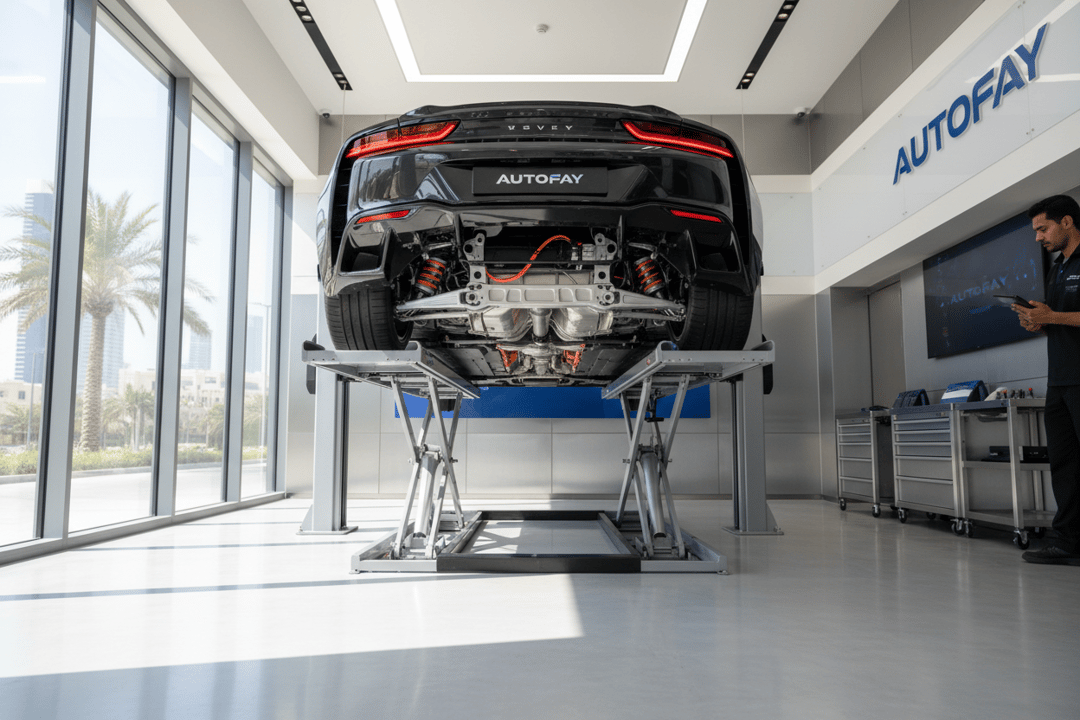
DIY visual inspections are insufficient for complex modern vehicles. A professional inspection provides a detailed report covering 410+ checkpoints across 25 categories. This process ensures no hidden defect goes unnoticed. Services such as those offered by AutoFay include comprehensive checks that utilize computer diagnostics to scan the engine, transmission, ABS, and airbag systems for error codes.
- Visual Inspection: Panel-by-panel analysis to determine originality versus repairs.
- Technical Check: Road test to verify acceleration, braking, and noise levels.
- Fluid Analysis: Checking brake pad percentage rating and fluid condition.
For a thorough evaluation, the Comprehensive package for AED 299 provides the most detailed findings, including HD photos and a PDF report. Alternatively, the Body & Computer package for AED 250 focuses on structural safety and electronic faults. On-location inspection services are available across all seven Emirates. AutoFay inspects 410+ checkpoints with HD photos and PDF report. Book at autofay.ae or call +971542584458.


0 Comments
No comments yet. Be the first to share your thoughts!