

The Honda CR-V has long established itself as a benchmark in the compact SUV segment, offering a blend of practicality, cargo space, and resale value that appeals to the UAE market. However, importing or purchasing a used vehicle in a desert climate requires a deeper level of scrutiny than in temperate regions. The extreme heat, abrasive dust, and rapid temperature fluctuations take a cumulative toll on mechanical and electrical components. A standard visual inspection is often insufficient to uncover these latent issues, which can escalate into costly repairs if left unaddressed. Understanding the specific vulnerabilities of the CR-V allows buyers to identify potential red flags before signing the transfer of ownership papers.
Engine Performance and Oil Consumption
The heart of the Honda CR-V is its engine, typically a capable four-cylinder unit known for its efficiency, though it is not immune to aging. In the UAE environment, the engine operates under constant thermal stress, which accelerates the degradation of internal seals and gaskets. One of the most common grievances reported by owners is excessive oil consumption. This occurs when the Positive Crankcase Ventilation (PCV) valve clogs or when valve cover gaskets fail to maintain a proper seal. As oil leaks past these seals, it contaminates the spark plugs and creates blue smoke from the exhaust during acceleration. This condition not only reduces engine performance but poses a fire risk if oil drips onto the hot exhaust manifold.
Inspectors must listen for unusual noises, such as ticking or knocking, which can indicate worn piston rings or lifters. The condition of the engine mounts is equally critical; worn mounts allow excessive engine vibration to transfer into the cabin and the chassis. During a road test, a driver should monitor the RPM gauge for instability, which suggests the fuel injection system is struggling to compensate for vacuum leaks caused by heat-expanded rubber hoses.
Transmission and Drivetrain Reliability
The transmission system in a used CR-V is often the first casualty of high-mileage driving in the region. The automatic transmission relies on precise hydraulic pressure to shift gears smoothly; this pressure is generated by the transmission fluid. In the UAE's high ambient temperatures, transmission fluid degrades much faster than in cooler climates, losing its viscosity and lubricating properties. A vehicle with a history of stop-and-go traffic in city centers will likely show signs of transmission wear earlier than one driven on highways.
Purchasing a vehicle with a slipping transmission requires immediate attention, as the internal clutches are wearing down. This is detected during acceleration when the engine revs climb without a corresponding increase in vehicle speed. Furthermore, the transmission mount acts as a shock absorber for engine vibrations; if this mount fails, it subjects the transmission internals to unnecessary stress. Inspectors should check for fluid leaks beneath the vehicle, as red or brown puddles indicate a failure in the transmission cooler lines or pan gasket, leading to a loss of hydraulic fluid.
Electrical System Vulnerabilities
The electrical architecture of the CR-V is robust, but the electrical system bears the brunt of the air conditioning demands in the UAE. When the climate control system engages, the A/C compressor places a heavy load on the alternator and the battery. Over time, the intense heat causes battery plates to corrode and reduces the chemical reaction rate within the cells. A weak battery will struggle to start the vehicle in the morning and will fail to provide sufficient power to the electrical control unit (ECU), leading to erratic sensor readings.
- AC System Overload: A failing radiator or condenser reduces the efficiency of the air conditioning, forcing the engine to work harder to maintain cabin temperature.
- Circuit Board Degradation: Moisture ingress, often caused by condensation, can short out sensors and wiring harnesses located under the dashboard.
- Dashboard Warning Lights: The "Check Engine" light is the primary indicator of electrical faults, ranging from oxygen sensor failures to misfires.
Modern vehicles rely on the On-Board Diagnostics (OBD) system to communicate these faults. A simple visual inspection cannot diagnose these issues; however, a computer diagnostic scan is essential to retrieve stored fault codes and assess the health of the engine and transmission control modules.
Suspension and Undercarriage Health
The suspension system is the vehicle's interface with the road, and in the UAE, it is subjected to abrasive sand and harsh road imperfections. Rubber bushings, which isolate vibration, harden and crack in high temperatures. Once cracked, these bushings allow metal-to-metal contact, resulting in clunking noises during cornering or over speed bumps. This degradation leads to increased body roll, compromising the vehicle's stability during lane changes—a critical safety factor on highways.
Struts and shock absorbers lose their damping capacity over time. In a desert climate, this wear is accelerated because the suspension components are continuously exposed to salt and dust particles. A worn suspension setup does not just result in a rough ride; it reduces tire life by causing uneven wear patterns and increases stopping distances due to poor tire contact with the road surface. Inspectors must also examine the frame rails for any signs of corrosion, particularly at the pinch weld points where the suspension mounts to the chassis.
The Importance of a Professional Inspection
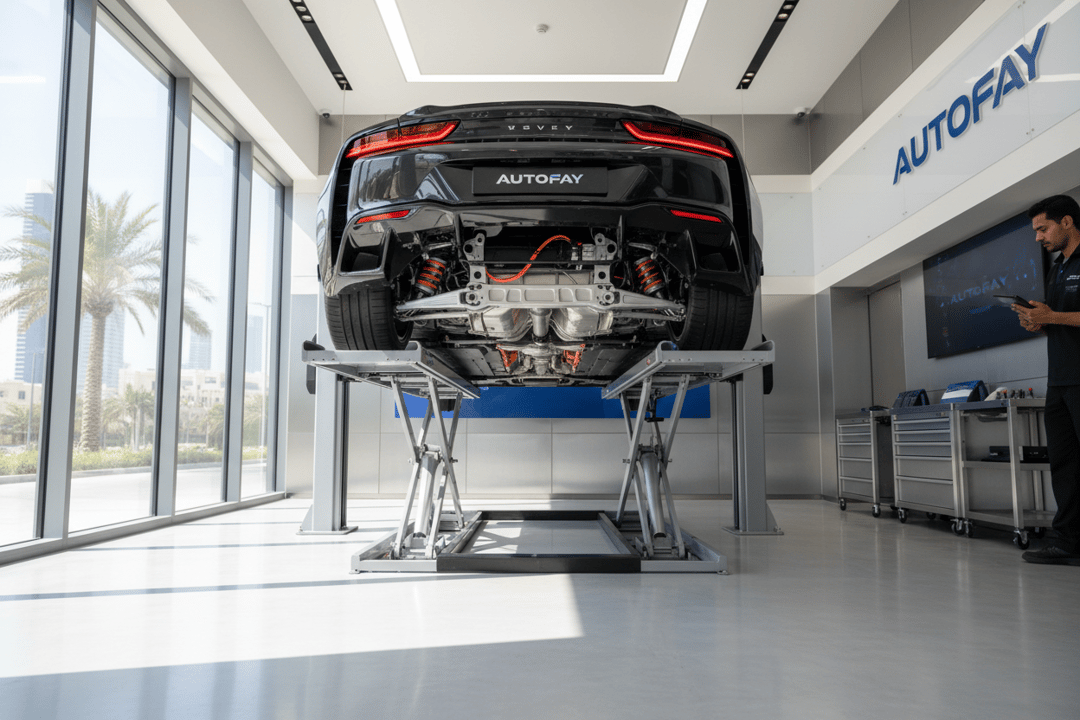
Relying on a seller's word or a cursory visual glance often leads to unforeseen expenditures. A professional inspection service provides a detailed breakdown of the vehicle's condition, moving beyond surface-level aesthetics to identify mechanical failures. The inspection process covers 410+ checkpoints across 25 distinct categories, ensuring no component is overlooked.
For a standard diagnostic check, the "Computer Diagnostic" package is available for AED 99. This service connects to the vehicle's OBD port to read engine, transmission, ABS, and airbag codes, revealing hidden faults that a mechanic might miss without advanced tools. For a more thorough assessment that includes body integrity and computer systems, the "Body & Computer" package costs AED 250. The most comprehensive option, priced at AED 299, provides a full evaluation of the frame, floor pan, engine condition, fluids, brakes, tires, and a complete road test to verify acceleration, braking, noise, and vibration levels.
Inspection Packages Overview
| Package | Price | Key Focus Areas | Service Type |
|---|---|---|---|
| Computer Diagnostic | AED 99 | Engine, Transmission, ABS, Airbag codes | OBD Scan & Analysis |
| Body & Computer | AED 250 | >Pan check, panel-by-panel paint analysis, electronicsVisual & Digital Inspection | |
| Comprehensive | AED 299 | >Frame, suspension, brakes, tires, fluids, road testFull Mechanical & Structural Check |
Inspectors also document the vehicle's history through HD photos and a detailed PDF report, which serves as a legal record of the vehicle's condition at the time of inspection. This documentation is crucial when disputes arise regarding pre-existing damage.
Engaging a professional service eliminates the guesswork involved in purchasing a used vehicle. By identifying issues with the engine, transmission, electrical systems, and suspension early, buyers can negotiate repairs or walk away from a potentially problematic investment. The high cost of ownership in the UAE necessitates a vehicle that is mechanically sound and capable of enduring the local environment without frequent breakdowns.
AutoFay inspects 410+ checkpoints with HD photos and PDF report. Book at autofay.ae or call +971542584458




0 Comments
No comments yet. Be the first to share your thoughts!