


The Honda Accord has long been a benchmark for reliable mid-size sedans, but purchasing a pre-owned unit in the UAE requires a discerning eye. The region’s extreme heat, saline air, and heavy traffic patterns accelerate wear on critical components in ways that differ significantly from temperate climates. A vehicle that appears pristine on the surface may conceal underlying mechanical fatigue that compromises safety and long-term ownership value. Professional inspection is the only reliable method to uncover these hidden defects before a financial loss occurs.
Engine Health: Oil Consumption and Thermal Stress
The most common mechanical concern found in used Honda Accords in the UAE involves oil consumption and internal engine degradation. The K-series engines found in many Accord generations are generally robust, but they are susceptible to carbon buildup on intake valves and piston rings due to the extended periods of idling often experienced in city traffic. Over time, this leads to the engine burning oil, which manifests as blue smoke from the exhaust upon acceleration. Ignoring this symptom results in accelerated wear on piston rings and valve seals, potentially leading to catastrophic engine failure if the oil level drops below the minimum mark.
Inspectors must verify the oil condition during a test drive. Dark, gritty oil containing metal shavings indicates internal wear that is not visible externally. Additionally, the physical inspection should focus on the engine mounts; these rubber isolators degrade rapidly in high temperatures. If the engine mounts are shot, the entire drivetrain will vibrate excessively, transmitting noise into the cabin and causing premature failure of accessory belts and hoses.
- Blue smoke on startup: Indicates burning oil due to worn piston rings or valve seals.
- Oil dipstick reading: Low levels with no visible leaks suggest internal consumption.
- Engine mounts: Cracked or hardened rubber allows excessive vibration during idle.
Transmission: Shifting Hesitation and Fluid Degradation
Transmission reliability is paramount for the driving experience of an Accord, yet it is frequently compromised by heat and fluid neglect. The 6-speed automatic transmissions in these vehicles are generally durable, but the ATF (Automatic Transmission Fluid) breaks down under the thermal stress of the UAE summer. When fluid becomes oxidized or contaminated, the transmission struggles to shift gears smoothly, often resulting in a "slip" during acceleration or delayed engagement from a stop. These symptoms suggest internal clutch wear or solenoid failure, which compromise the vehicle’s ability to accelerate safely and efficiently.
Transmission fluid should be bright red and smell sweet; a burnt smell and a dark brown or black color indicate severe neglect. If the fluid has never been changed, the transmission may exhibit erratic shifting, putting unnecessary strain on internal clutches. Even a minor transmission fault can render the vehicle undrivable, turning a purchase into a significant liability. To verify the health of the transmission, a comprehensive OBD scan is essential to detect stored fault codes that might not be immediately apparent during a visual inspection.
Suspension and Climate Impact on Ride Quality
The suspension system of a used Honda Accord takes a beating from the harsh road conditions prevalent across the UAE, compounded by the aggressive thermal cycling of the climate. The suspension bushings, which connect control arms and sway bars to the chassis, are typically made of rubber. Prolonged exposure to temperatures exceeding 45°C causes this rubber to harden and crack. Once the bushings fail, the suspension components move independently, leading to clunking noises over speed bumps and a loose, unstable feeling behind the wheel.
Shock absorbers and struts also suffer from heat-related fatigue. As the oil inside the dampeners thins out due to heat, the ability of the suspension to absorb road imperfections diminishes. This results in a bouncy ride and reduced braking performance, as the vehicle does not settle quickly enough before the next impact. Inspectors should look for leaking fluid on shock absorbers and check for uneven tire wear patterns, which are direct indicators of an unbalanced or failing suspension system.
Electrical Issues and Climate Control Systems
The electrical architecture of modern Accords involves a complex network of sensors and modules that are sensitive to voltage fluctuations and heat. The most critical electrical component in the UAE is the air conditioning system. The AC compressor and condenser work overtime to lower cabin temperatures, leading to a higher failure rate for these parts. A failing compressor can seize up, causing the engine to overheat rapidly and potentially damaging the serpentine belt. Furthermore, water pumps and radiators can clog with sediment over time, reducing cooling efficiency and risking engine overheating in heavy traffic.
Dashboard warning lights often illuminate due to failing sensors rather than a catastrophic system failure. For example, a bad knock sensor or oxygen sensor can trigger the Check Engine Light, but ignoring these alerts allows the vehicle to run in "limp mode," restricting power and fuel efficiency. Electrical gremlins can also affect the vehicle’s immobilizer system, causing starting difficulties. Identifying these issues requires specialized diagnostic equipment to read manufacturer-specific codes that standard code readers might miss.
Comprehensive Inspection through AutoFay
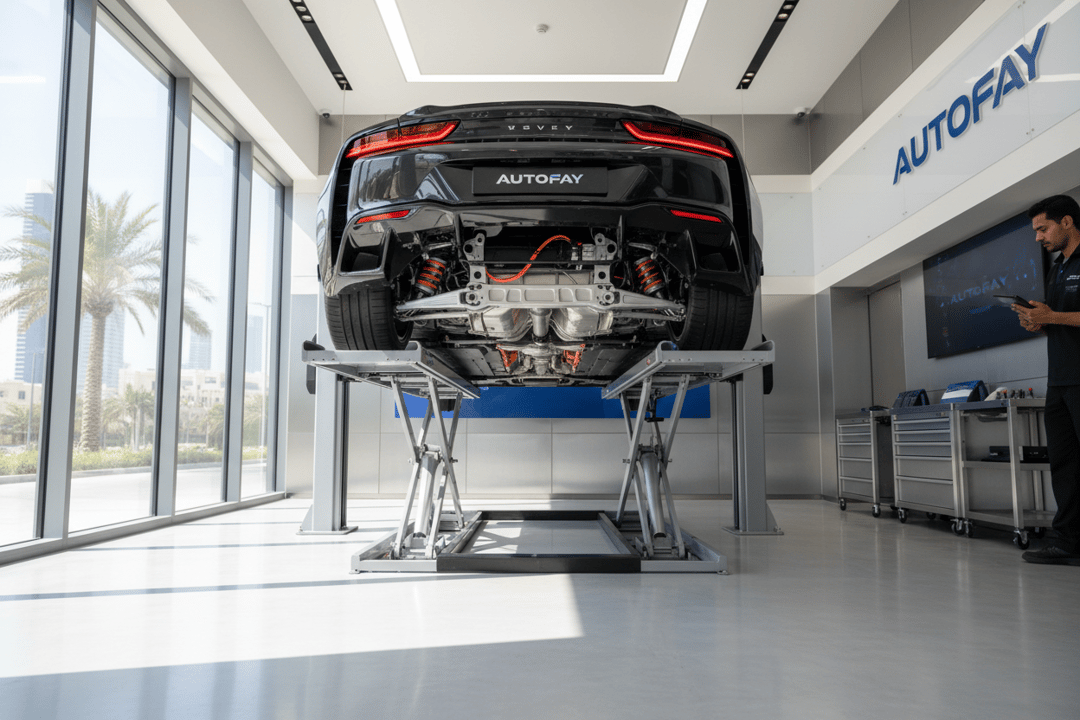
Detecting these specific issues—engine oil consumption, transmission fluid condition, suspension bushing integrity, and electrical system health—requires a systematic approach that goes beyond a casual visual walk-around. A thorough inspection covers 410+ checkpoints across 25 distinct categories, ensuring that every potential failure point is documented. Professionals utilize high-definition photography and detailed PDF reports to provide a transparent record of the vehicle’s condition.
For a focused review of the electrical system and engine codes, the Computer Diagnostic service is available for AED 99. This package scans the onboard computer for faults in the engine, transmission, ABS, and airbag systems, revealing hidden errors that could lead to future breakdowns. If the vehicle requires a broader assessment of the chassis, brakes, and structural integrity, the Body & Computer package at AED 250 provides a detailed evaluation of panel alignment, paint condition, and frame straightness.
| Inspection Category | Common Accord Issue | Recommended AutoFay Check |
|---|---|---|
| Engine | Oil consumption & carbon buildup | Fluids & Engine Check |
| Transmission | Delayed shifting & fluid degradation | OBD Scan (Engine/Transmission) |
| Suspension | Cracked rubber bushings & heat fatigue | Road Test & Suspension Check |
| Electrical | AC failure & sensor errors | Computer Diagnostic AED 99 |
| Chassis | Panel misalignment & frame stress | Body & Computer AED 250 |
Investing in a professional on-location inspection service across all 7 Emirates ensures that the specific challenges of the local environment are accounted for. The Comprehensive package at AED 299 offers the deepest level of scrutiny, combining the diagnostic scan with a physical inspection of the body, frame, brakes, and tires. This detailed analysis bridges the gap between the seller’s description and the vehicle’s actual mechanical reality.
AutoFay inspects 410+ checkpoints with HD photos and PDF report. Book at autofay.ae or call +971542584458




0 Comments
No comments yet. Be the first to share your thoughts!