

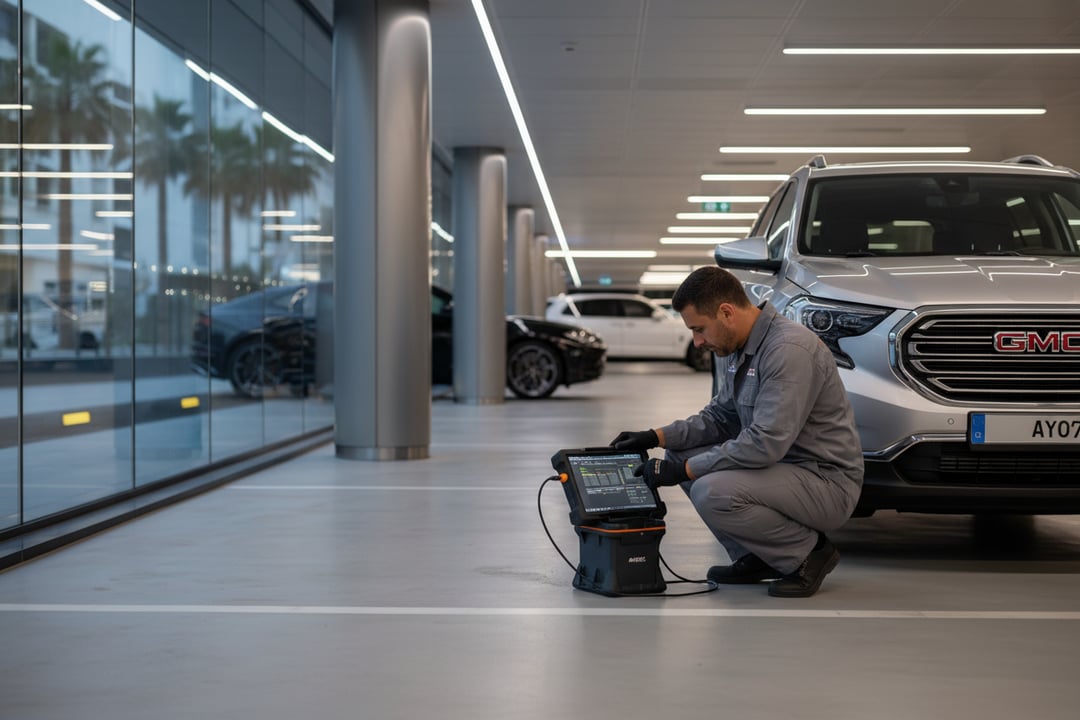
The GMC Terrain has established itself as a capable contender in the compact SUV segment, offering a blend of comfort and utility. However, purchasing a used vehicle in the UAE market requires a rigorous approach due to extreme temperatures and diverse road conditions. A professional pre-purchase inspection is not merely a suggestion; it is a mandatory step to uncover hidden defects. This guide outlines the critical areas inspectors scrutinize when evaluating a used GMC Terrain, focusing on common failure points and what buyers should specifically watch for.
Common Mechanical Weaknesses to Monitor
Inspectors frequently flag specific mechanical issues when evaluating GMC Terrain units. One of the most prevalent concerns is excessive engine oil consumption, particularly in models equipped with the capable turbocharged engine. Owners often report low oil levels between service intervals, which can lead to catastrophic engine damage if not addressed immediately. Buyers must verify the oil history; a vehicle that requires top-ups frequently suggests internal wear or piston ring issues.
Another area of concern involves the turbocharger and its intercooler piping. Heat stress from UAE summers can degrade gaskets and hoses, leading to vacuum leaks or oil leaks. A thorough inspection checks for any signs of oil residue around the turbocharger housing or loose clamps on the intercooler, which indicate past maintenance or impending failure. Additionally, transmission hesitation or delayed engagement when shifting from Park to Drive or during acceleration is a common complaint. A slipping transmission ultimately leads to the complete replacement of the drivetrain unit, a costly outcome that a professional inspection aims to prevent.
The Engine Bay: Under the Hood Examination
A detailed inspection of the engine bay provides immediate insight into the vehicle's maintenance history and current health. Inspectors look for signs of coolant leaks, which are often obscured by heat shields and plastic covers. A leaking head gasket, indicated by white smoke from the exhaust or sweet-smelling vapor, can cause the engine to overheat rapidly. Overheating incidents, if severe, can warp cylinder heads, leading to permanent engine failure.
- Engine Mounts: Worn engine and transmission mounts result in excessive vibration felt in the steering wheel and floorboard. This not only causes driver discomfort but also accelerates damage to other engine components.
- Exhaust System: Inspectors check the exhaust for holes or rust. A failing catalytic converter often produces a rattling noise and restricts exhaust flow, reducing engine power and efficiency.
- Fluid Condition: Engine oil should appear amber and clean, while transmission fluid should be bright pink or red. Dark, black, or gritty fluids indicate neglect and the need for immediate service.
Brakes, Suspension, and Safety Systems
The braking system is critical for safety, especially in stop-and-go traffic found in UAE cities. Inspectors measure the brake pad thickness; pads thinner than 3mm require immediate replacement to prevent damage to the rotors. Worn brakes compromise stopping distances, posing a significant risk on highways and during sudden braking scenarios. Furthermore, the brake fluid should be free of moisture and contaminants, as wet brake fluid reduces the boiling point and leads to brake fade under heavy use.
Suspension components, including shocks and struts, endure significant stress from the UAE's road infrastructure and temperature fluctuations. A vehicle with worn suspension will exhibit body roll during cornering, nose dive during braking, and a bumpy ride over speed bumps. Beyond comfort, worn shocks fail to control tire movement, leading to uneven tire wear and compromised handling stability. Inspectors also inspect the tie rods and ball joints for play, as loose steering linkage can result in a complete loss of vehicle control.
Bodywork, Rust, and Accident History
UAE coastal areas present a challenge with salt air, which accelerates corrosion in hidden areas of the GMC Terrain. Inspectors meticulously examine the wheel arches, the bottom of the doors, and the frame rails for signs of rust. Surface rust is manageable, but structural rust compromises the integrity of the vehicle's safety cage. Any corrosion that has punched through the metal sheet requires attention to prevent further deterioration.
Panel gaps and paint consistency are key indicators of accident history. A significant misalignment between the hood, trunk, and doors suggests prior collision damage that may not have been repaired correctly. Inspectors use paint thickness gauges to detect repaints; an uneven increase in paint thickness over the original factory surface indicates a failed repair job. Additionally, checking the VIN plates and registration plate frames for misalignment can reveal whether the front bumper was replaced after a front-end impact.
Diagnostic Scans and Electrical Systems
Modern GMC Terrains rely heavily on electronic control units to manage engine performance, transmission shifting, and safety features. A computerized diagnostic scan is essential to retrieve stored trouble codes from the On-Board Diagnostics (OBD) system. Even if the "Check Engine" light is currently off, hidden error codes may be stored in the computer memory.
The diagnostic service is available at various levels depending on the inspection depth required. A basic computer diagnostic scan is available for AED 99, which reads engine, transmission, ABS, and airbag codes. For a more detailed analysis, the Body & Computer package at AED 250 includes a visual inspection alongside the electronic scan. The most thorough option is the Comprehensive package at AED 299, which integrates the diagnostic scan with a physical road test and a full 25-category inspection.
| Inspection Package | Price | Includes |
|---|---|---|
| Computer Diagnostic | AED 99 | Engine, Transmission, ABS, Airbag Code Scan |
| Body & Computer | AED 250 | Paint & Panel Check + OBD Scan |
| Comprehensive | AED 299 | Full 25-Categories Check + Road Test + HD Photos |
Red Flags: What to Avoid
Several distinct warning signs should trigger immediate rejection of a potential purchase. A burning smell emanating from the engine bay often indicates an oil leak burning off the exhaust system or a failing clutch. Smoke from the exhaust is the most obvious red flag; blue smoke indicates burning oil, white smoke indicates coolant mixing with fuel, and black smoke indicates a rich fuel mixture.
Another major red flag is a failing airbag system. If the airbag warning light illuminates on the dashboard, the Supplemental Restraint System (SRS) may be disabled or deployed. Replacing an airbag module and deploying the bag is an expensive repair, and an undeployed bag in a collision may not function correctly when needed. Additionally, mismatched tire sizes or uneven tread wear patterns can indicate a suspension or alignment issue that has been neglected.
Investing in a comprehensive pre-purchase inspection ensures the vehicle meets safety standards and mechanical reliability. Professional inspectors provide a detailed report with HD photos and specific findings, allowing buyers to make objective decisions. Do not rely on a verbal walkthrough; demand a documented evaluation.
AutoFay inspects 410+ checkpoints with HD photos and PDF report. Book at autofay.ae or call +971542584458




0 Comments
No comments yet. Be the first to share your thoughts!