

The GMC Acadia remains a popular choice for families in the UAE due to its spacious interior and capability. However, the used market contains units with hidden history, particularly regarding the capable V6 engine and the eight-speed transmission. A professional inspection bridges the gap between a visual appraisal and a mechanical reality, identifying issues that compromise safety and longevity. Relying solely on a private seller's description often leads to unexpected repair bills after purchase. This guide details the specific components inspectors evaluate and the warning signs to watch for when purchasing a pre-owned Acadia.
Understanding the Third-Generation Acadia (2017–2020)
The third-generation Acadia, primarily sold in the UAE between 2017 and 2020, introduced the capable LFX V6 engine and an 8-speed transmission. This configuration offers power but introduces specific wear patterns common to high-mileage use. Buyers must understand that the V6 is robust but prone to oil consumption if not maintained strictly. The transmission shift points can also become erratic over time, affecting ride comfort. Inspecting a vehicle of this vintage requires a focus on fluid condition and carbon buildup within the combustion chamber.
The infotainment system in these models is a known weak point. Owners frequently report screen freezing, loss of Bluetooth connectivity, and failing navigation modules. These issues often require software updates or component replacement, which can be costly if handled after the warranty expires. Furthermore, the rear suspension geometry on older models may exhibit increased body roll during cornering, necessitating a check for worn bushings or ball joints.
Engine and Transmission Inspection Checklist
The engine bay of the Acadia requires a thorough examination to assess the health of the V6 and cooling systems. Inspectors look for signs of oil seepage around the valve cover gaskets and the PCV valve, as these are common failure points. A ticking noise originating from the top of the engine often indicates lifter chatter, which can worsen if the oil viscosity is incorrect or the oil has degraded. Smoke during startup reveals the burning of engine oil or coolant, signaling internal damage.
- Check for oil leaks on the valve covers, camshafts, and drain plugs.
- Listen for lifter ticking or piston slap during a cold start.
- Inspect the PCV valve and hoses for brittleness or disconnection.
- Analyze exhaust smoke color: white indicates coolant, blue indicates oil, black indicates fuel.
- Check the transmission fluid level and consistency for a burnt smell or debris.
The eight-speed automatic transmission is sensitive to harsh shifting. Inspectors evaluate the gear engagement, looking for hesitation when accelerating from a stop or unexpected downshifts. A transmission that slips or hesitates often requires a fluid and filter change, which may temporarily resolve the issue but signals impending mechanical failure. The rear differential also requires attention, as leaks here can lead to a complete axle failure if left unaddressed.
Electrical Systems and Infotainment
Electrical gremlins plague many third-generation GMCs, making diagnostic coding essential. The instrument cluster may display erroneous warnings for the tire pressure monitoring system (TPMS) or airbags due to sensor calibration loss. The infotainment touchscreen often becomes unresponsive or pixelated over time, rendering navigation and audio controls useless. These failures are typically software-related but can point to underlying hardware degradation.
Inspectors must verify the functionality of all accessory electronics, including the power liftgate, heated seats, and rearview camera. A faulty rearview camera is a safety hazard that requires immediate repair. Additionally, the electronic stability control (ESC) module is critical for handling; a malfunction here can disable safety features during emergency maneuvers. Connecting an OBD scanner is mandatory to retrieve stored diagnostic trouble codes (DTCs) that the dashboard may not explicitly display.
Suspension, Steering, and Drivetrain
Steering and suspension components dictate the safety and comfort of the vehicle. A test drive reveals whether the steering wheel pulls to one side, indicating a misalignment or a failing tie rod end. Clunking noises over bumps suggest worn control arm bushings or ball joints. The Acadia’s rear suspension relies heavily on these components to support the vehicle's weight, making them high-wear items.
- Check for uneven tire wear patterns, which indicate alignment issues or worn suspension parts.
- Inspect CV boots for tears, as damaged boots allow dirt to enter and destroy the axle joint.
- Test the braking system for squealing, grinding, or a soft pedal feel.
- Check brake pad thickness against the manufacturer’s minimum limit.
- Listen for rear differential whining or humming during acceleration.
The braking system requires immediate attention if the calipers are sticking or the pads are worn below 3mm. A soft brake pedal usually indicates air in the hydraulic lines or a failing master cylinder. The tires should be checked for their manufacturing date to ensure they were not stored improperly or used for extended periods. Worn tires reduce traction, especially in wet UAE conditions, increasing the risk of hydroplaning.
Body, Frame, and Accident History
While rust is less prevalent in the UAE than in northern climates, metal fatigue and accident damage remain significant risks. Inspectors examine panel gaps between doors, the hood, and the trunk to detect previous collisions. Uneven gaps suggest the vehicle was involved in a crash or poorly repaired. The frame rails and pillars must be inspected for bends or repairs using substandard materials.
Paint consistency is a critical indicator of history. Inspectors use a coating thickness gauge to detect repaints on bumpers, doors, or the roof. Excessive overspray on weather stripping or glass indicates a repair job performed without proper masking. A vehicle with a history of frame damage may handle poorly and have compromised safety ratings. Inspecting the airbag system involves checking the passenger airbag status indicator for recalls or deployment history.
How AutoFay Inspects the GMC Acadia
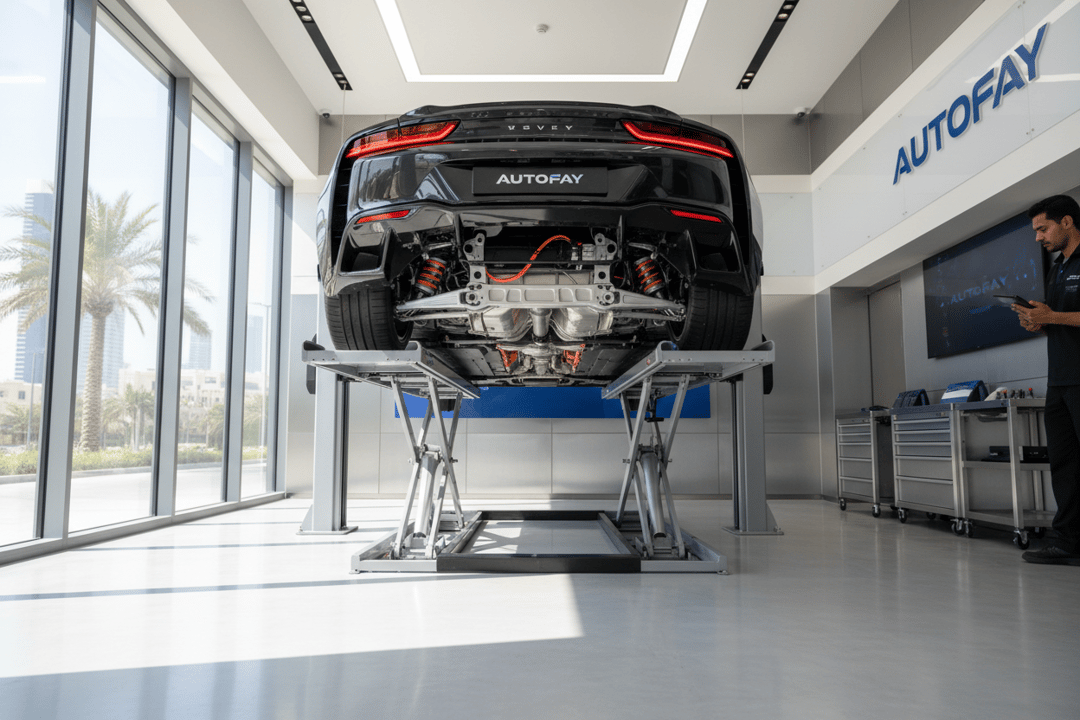
AutoFay provides a structured verification process designed to uncover hidden defects in used vehicles. Our inspections cover 410+ checkpoints across 25 technical categories to ensure a comprehensive assessment. We utilize on-location inspections across all 7 Emirates, bringing the inspection directly to the buyer. Our experts perform a panel-by-panel analysis of the body and paint, distinguishing between original factory finishes and questionable repairs. We also inspect the structural integrity of the frame, rails, and floor pan to ensure the vehicle has not been compromised.
A mechanical inspection reveals the true condition of the drivetrain. We listen for abnormal engine noises and inspect mounts for fluid leaks. An OBD scan retrieves codes for the engine, transmission, ABS, and airbag systems to identify dormant faults. We evaluate brake pad percentage ratings and inspect tire manufacturing dates for wear consistency. Finally, a comprehensive road test assesses acceleration, braking, noise, and vibration to ensure the vehicle drives as intended.
| Package | Key Features | Price |
|---|---|---|
| Computer Diagnostic | Engine, Transmission, ABS, Airbag codes | AED 99 |
| Body & Computer | Panels, Paint checks, Fluids, OBD Scan | AED 250 |
| Comprehensive | 25 Categories, Road Test, Frame check, HD Photos | AED 299 |
Neglecting these modern electrical components can render the vehicle undrivable. The cost of replacing a failing instrument cluster or infotainment module far exceeds the price of a diagnostic check. Suspension failures lead to unsafe handling conditions, especially during high-speed highway driving in the UAE. Engine issues, particularly oil consumption and transmission slippage, result in catastrophic mechanical failure if ignored.
AutoFay inspects 410+ checkpoints with HD photos and PDF report. Book at autofay.ae or call +971542584458



0 Comments
No comments yet. Be the first to share your thoughts!