

The Genesis G80 challenges the established hierarchy of the executive sedan market with its potent engines, sophisticated interior, and competitive pricing. Purchasing a pre-owned G80 in the UAE demands a specialized approach, as the harsh desert climate and road conditions exacerbate certain mechanical weaknesses. Unlike standard passenger cars, the G80 integrates complex electronics and high-performance components that require rigorous verification before ownership transfer. A thorough inspection serves as the final gatekeeper for asset protection, ensuring the vehicle meets the manufacturer’s original standards.
Digital Architecture and Electrical Systems
Genesis vehicles rely on a sophisticated digital ecosystem where software dictates physical functions. A pre-purchase inspection must prioritize the stability of the infotainment system and the responsiveness of the instrument cluster. Owners frequently report instances of screen freezing or unresponsiveness, particularly after prolonged periods of inactivity. Inspectors must verify that the navigation, connectivity, and driver assistance interfaces function without lag. Failure of the electronic control units can result in the complete unavailability of auxiliary systems, rendering the vehicle difficult to operate.
Electrical issues extend beyond the cabin to vehicle safety functions. Inspectors check the operation of electric tailgates, seat memory functions, and steering wheel controls. A malfunction in the central locking system can render the vehicle inaccessible. Addressing electrical faults early prevents the cascading failure of interconnected modules.
Engine Performance and Fluid Analysis
The a capable engine twin-turbocharged V6 and the a capable engine V8 engines define the G80’s performance profile. These powerplants are robust but require strict attention to maintenance intervals. Inspectors listen for unusual noises during the engine start-up cycle, specifically listening for ticking sounds that indicate hydraulic lifter failure. High operating temperatures in the UAE environment accelerate oil breakdown, making fluid analysis critical.
Blue smoke from the exhaust tailpipe signals severe turbocharger seal wear or piston ring degradation. This condition leads to immediate engine oil depletion, necessitating frequent top-ups and potentially catastrophic engine failure if ignored. Black smoke indicates excessive fuel consumption or a malfunctioning fuel injection system. Inspectors review the vehicle’s service history to ensure the timing chain has been replaced if the mileage exceeds the manufacturer’s recommended interval, as original timing chains are prone to failure in high-performance applications.
Transmission and Drivetrain Dynamics
The eight-speed automatic transmission in the G80 is designed for smooth, quick shifts. However, the torque converter can suffer from wear if the vehicle is frequently driven in stop-and-go traffic rather than on open highways. Inspectors evaluate the transmission during a road test, looking for hesitation, jerking motions, or delayed engagement when the vehicle shifts from park to drive.
Slipping between gears during acceleration or a feeling of "searching" for the correct gear indicates valve body wear or clutch pack degradation. This condition leads to a significant drop in fuel efficiency and a reduction in the vehicle’s ability to pass safety inspections. The drivetrain must transmit power to the wheels without excessive vibration or noise, which would point to worn universal joints or differential issues.
Suspension, Brakes, and Tire Integrity
The G80’s adaptive suspension system is engineered to absorb impact, but the UAE road infrastructure—characterized by speed bumps and uneven surfaces—places significant stress on these components. Inspectors evaluate the suspension by checking for clunking noises over bumps and verifying that the ride height remains consistent across all four corners. Worn control arms or ball joints alter the vehicle’s alignment, leading to rapid tire wear and compromised handling stability.
Brake performance is non-negotiable for safety. Inspectors measure the remaining thickness of the brake pads using digital calipers to ensure they meet the minimum legal and safety standards. Worn rotors will cause pulsation in the brake pedal during braking, which requires immediate replacement to prevent steering vibration. Tires must be inspected for manufacturing age and uniform wear patterns. Tires older than six years lose elasticity and are prone to blowouts, regardless of tread depth.
Body Structure, Paint, and Rust Assessment
Body integrity is the first line of defense against collision damage, even if the vehicle has never been in a wreck. Inspectors analyze panel gaps between the hood, trunk, and doors to ensure they are uniform. Significant gaps suggest a previous collision that compromised the structural mounting points or required panel replacement. The paint finish is checked for color consistency and texture. A high-gloss finish on a section of the vehicle, or the presence of orange peel texture, indicates a repaint.
Frame and unibody damage can occur even without visible exterior deformation. Inspectors use measuring tools to verify the straightness of the frame rails, B-pillars, and floor pans. A bent frame alters the vehicle’s alignment and steering geometry, leading to unsafe driving conditions. While rust is uncommon in the arid interior of the UAE, coastal regions like Dubai and Sharjah present a risk of galvanic corrosion, particularly in the wheel arches and underbody chassis.
| Inspection Category | Common Issue | Consequence |
|---|---|---|
| OBD Scan | Transmission or ABS fault codes stored | Malfunctioning safety systems and transmission shifting faults |
| Fluids | Dark, gritty motor oil | Accelerated engine wear and sludge buildup |
| Electronics | Non-responsive infotainment screen | Loss of navigation, connectivity, and entertainment systems |
| Suspension | Worn control arm bushings | Unstable handling and premature tire wear |
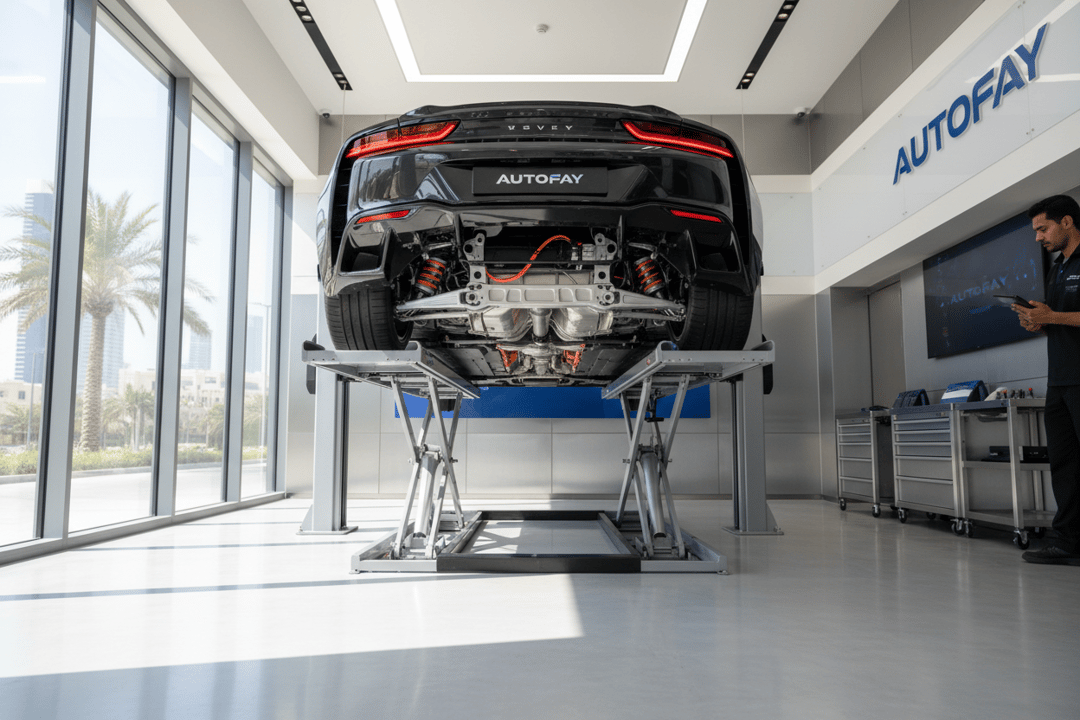
Professional inspection companies use a standardized checklist to ensure every aspect of the vehicle is evaluated with objectivity. A comprehensive inspection covers the engine bay, undercarriage, and interior cabin. The inspection report provides a digital footprint of the vehicle's condition at the moment of assessment.
AutoFay inspects 410+ checkpoints with HD photos and PDF report. Book at autofay.ae or call +971542584458



0 Comments
No comments yet. Be the first to share your thoughts!