

The Geely Emgrand presents a compelling value proposition in the UAE used car market, offering a spacious B-segment sedan at a competitive price point. However, as an experienced inspector, I have reviewed countless units of this model, and they frequently exhibit specific wear patterns associated with high mileage or harsh driving conditions. A pre-purchase inspection is not merely a suggestion; it is a mandatory step to uncover hidden structural damage or mechanical failures that a visual inspection alone cannot reveal. This guide outlines the critical checkpoints inspectors prioritize when evaluating a used Geely Emgrand, ensuring buyers understand the specific risks associated with this chassis.
Engine & Transmission Diagnostics: The Critical Heart
The Geely Emgrand typically utilizes a capable naturally aspirated engine (JLH-3G18) paired with a manual or automatic transmission. On the inspection ramp, the engine bay must be examined for the presence of oil leaks, which are common due to aging rubber seals and gaskets. Inspectors look for wet spots around the valve cover, oil filter housing, and the front crankshaft seal. A small seepage is often acceptable, but pooling oil indicates a seal replacement is imminent.
Timing System Integrity
On older Emgrand models, the timing chain tensioner is a component of concern. If the timing chain stretches or the tensioner fails, the chain can jump a tooth, leading to catastrophic engine damage. During the inspection, the inspector listens for persistent ticking noises above the engine block and checks for any error codes related to camshaft or crankshaft timing discrepancies. If the timing system is ignored, the engine will fail to run or sustain significant internal damage.
Transmission Shifting Behavior
For automatic transmission variants, the shift quality is a primary diagnostic indicator. Inspectors perform a road test to verify that gear changes are smooth and do not occur abruptly. A common issue is "hunting" where the transmission shifts in and out of gears between 40 and highway speeds. This behavior suggests worn internal clutches or solenoid issues. Transmission failure renders the vehicle undrivable and represents a major financial burden.
Body & Paint Integrity: Past Accident History
Body panel alignment is the most immediate visual cue regarding the vehicle's accident history. Inspectors measure the gap between the hood, trunk lid, and doors using a gap gauge. Significant deviations—such as a hood gap wider than 2mm or uneven gaps between doors and fenders—suggest that a previous collision was repaired with force rather than precision. This indicates that the structural integrity of the vehicle may have been compromised.
Color Matching & Clear Coat
Repainted panels are often visible under strong lighting. Inspectors check for color variation between the original paint and any replacement panels, specifically looking for orange peel effects or a lack of orange peel in the clear coat. A high-quality repaint should have a wet, glossy finish identical to the original panels. If the clear coat is peeling or chipping, the paint is unprotected, leading to rust formation on the underlying metal.
Panel-by-Panel Analysis
A thorough inspection covers every panel, searching for misaligned trim pieces, scratches that go down to the metal, or bubbles beneath the paint. These imperfections hide corrosion or poor repair work. Ensuring every panel is original requires a detailed visual sweep, often aided by a flashlight to catch reflections in crevices.
Suspension, Steering, & Structural Health
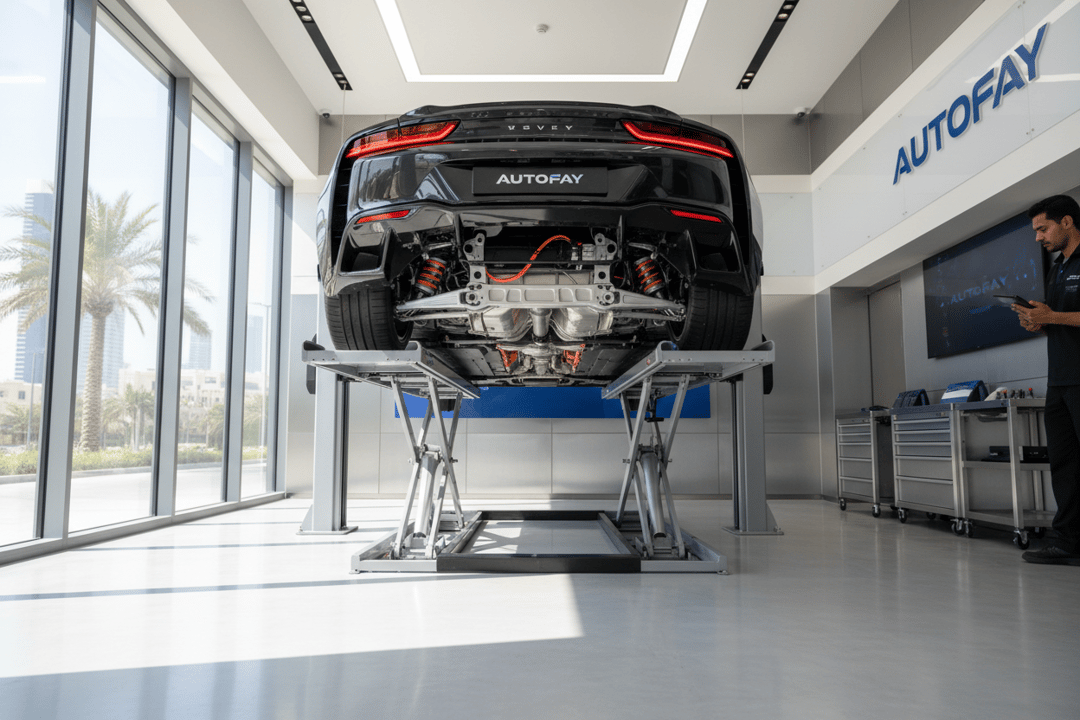
The suspension system on the Emgrand is subjected to extreme stress due to the UAE’s road quality and temperature extremes. Inspectors raise the vehicle to inspect the shock absorbers for fluid leakage, which indicates that the dampers are no longer functioning effectively. Leaking shocks cause a rough ride and accelerated tire wear. Furthermore, inspect the control arms and bushings for tears or cracks; worn bushings allow excessive body roll and steering play.
Frame Rail Condition
The unibody structure is the safety envelope of the vehicle. Inspectors check the frame rails and firewall for signs of welding repair. A weld that appears uneven, too thick, or has uneven rust patterns suggests a repair after a collision. A compromised frame can affect alignment, handling, and crumple zone performance in a future impact.
Steering & Alignment
Turn the steering wheel while the vehicle is stationary to check for excessive play or looseness. Upon driving, the steering wheel should remain centered without constant correction. If the vehicle pulls to the left or right, the alignment is off, which may be caused by worn suspension components or, in severe cases, a bent frame.
Braking System & Safety Equipment
The braking system is the most critical safety feature. Inspectors measure the brake pad thickness using a caliper gauge. On the Emgrand, pads generally wear faster than the rotors; however, pads thinner than 3mm should be replaced immediately. If rotors are worn thin or have deep scored grooves, replacing them is necessary to prevent brake fade or vibration.
ABS & Safety Modules
Modern vehicles rely on electronic stability control and anti-lock braking systems. Inspectors connect a diagnostic scanner to read for ABS, airbag, and electronic stability control codes. Any stored error codes in these systems indicate a previous malfunction that may have triggered a warning light. A faulty ABS module can leave the driver without braking assistance during emergency maneuvers.
AutoFay Inspection Packages & Methodology
Given the complexity of modern vehicle diagnostics, relying on a generic visual inspection is insufficient. Professional services provide a standardized approach to uncovering vehicle truth. The services offered provide varying levels of depth to suit different budgets and vehicle ages.
| Inspection Package | Key Features | Price |
|---|---|---|
| Computer Diagnostic | OBD scan for engine, transmission, ABS, and airbag codes. Visual check of fluids and major leaks. | AED 99 |
| Body & Computer | Includes the diagnostic scan plus a detailed visual inspection of the bodywork, paint condition, and undercarriage for accident damage. | AED 250 |
| Comprehensive | The full spectrum of inspection, including the road test, suspension check, frame integrity, tire condition, and a full report with HD photos. | AED 299 |
Tires, Fluids, and Road Test
Tires on a used car must be evaluated for their manufacturing date, not just tread depth. Tires older than six years, regardless of tread, degrade chemically and can blow out at high speeds. Inspectors record the tire condition as part of the 25 categories of checks. Fluids must be checked for color and smell; low brake fluid indicates a leak or worn pads, while dark brown or black engine oil suggests the vehicle has not been serviced regularly.
The road test is the final verification step. Inspectors verify acceleration, braking performance, and listening for abnormal noises from the engine, transmission, or wheel bearings. Vibration through the steering wheel or floorboard typically points to tire imbalance or wheel bearing failure.
AutoFay inspects 410+ checkpoints with HD photos and PDF report. Book at autofay.ae or call +971542584458



0 Comments
No comments yet. Be the first to share your thoughts!