
The Ford F-150 holds a commanding position in the UAE’s pickup truck market, renowned for its towing capacity, ruggedness, and passenger comfort. However, purchasing a used F-150 requires a discerning eye, as high mileage and the harsh desert environment can expose specific weaknesses in the chassis and powertrain. A pre-purchase inspection is not a luxury; it is a necessity to avoid inheriting expensive mechanical failures. This guide outlines the critical areas an inspector examines to ensure the vehicle’s integrity before a final transaction is finalized.
Engine and Transmission Health
The heart of the F-150 is where most long-term reliability issues in the UAE manifest. Inspectors focus heavily on the engine bay to identify signs of neglect or abuse. The capable EcoBoost and capable V8 engines are powerful, but they rely on precise engineering that deteriorates under stress.
Critical areas of inspection include the valve cover gaskets, which are prone to oil seepage over time. Oil residue on the exhaust manifold can indicate a leak that, if left unaddressed, risks fire hazards and engine damage. Inspectors check the engine mounts to ensure the engine remains stable; excessive movement leads to misalignment of belts and pulleys.
- Blue Smoke: Indicates burning oil, pointing to piston ring wear or valve seal failure.
- White Smoke: Suggests a blown head gasket, which allows coolant to enter the combustion chamber.
- Excessive Noise: A ticking sound at startup often points to timing chain tensioner wear, requiring immediate replacement.
The transmission is equally scrutinized. The 10-speed automatic transmission in modern models requires specific fluid levels and temperature monitoring. A mechanic listens for harsh shifting or delayed engagement, which may indicate clutch pack degradation. Ignoring these symptoms leads to a complete transmission failure, rendering the vehicle undrivable.
Suspension and Steering Dynamics
Modern F-150 models utilize an independent front suspension system, which offers a smoother ride but introduces more points of failure compared to older solid-axle designs. The intense heat in the UAE climate accelerates the degradation of rubber bushings and grease seals in the suspension components.
Inspectors perform a physical visual inspection of the front and rear control arms. Worn bushings cause the steering wheel to vibrate or drift to one side while driving, making the vehicle difficult to control. They also check the ball joints and tie rods for play, which can lead to loss of steering control. A professional inspection includes a road test to identify vibrations specifically felt through the steering column at highway speeds.
Body, Paint, and Structural Integrity
Body condition reveals the vehicle's history, including accidents and climate exposure. In the UAE, vehicles are subjected to abrasive sand and salt from coastal areas. Inspectors look for mismatched paint colors, which indicate previous panel repairs.
The most critical check is the frame rails. Rust creeping through the frame is a silent killer that compromises the structural safety of the truck. Inspectors use a magnet to check for body filler in the doors and fenders, which often hides rust repairs. They also check the firewall for signs of welding or misalignment, which could signal a major collision.
Electrical Systems and Infotainment
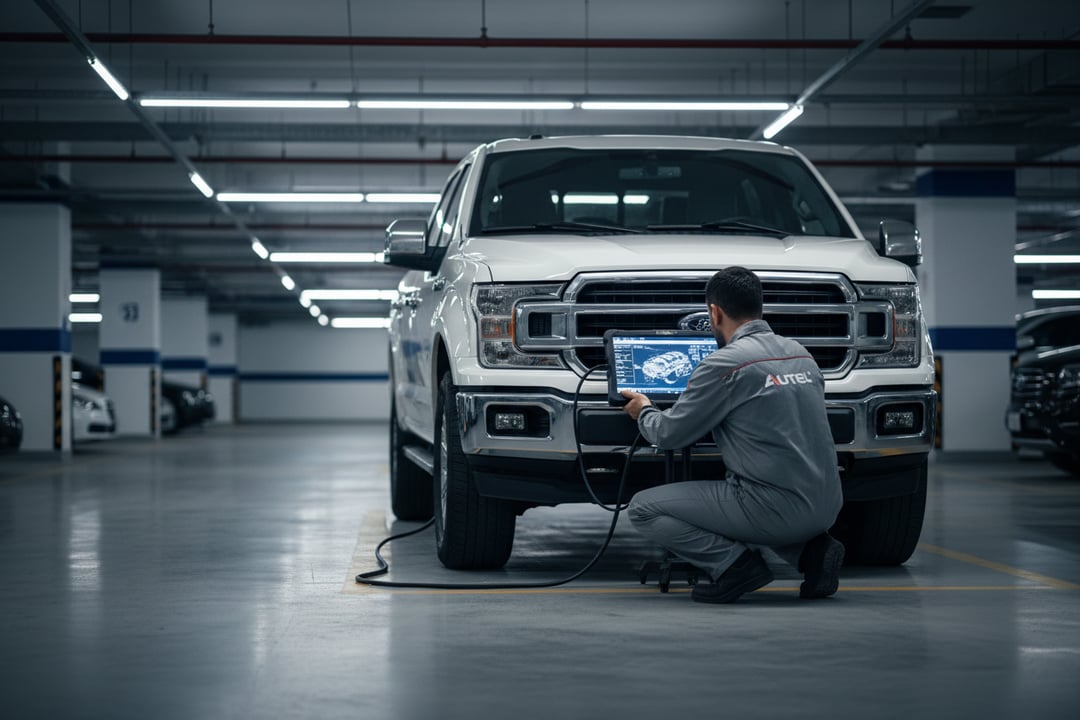
Electronic glitches are common in high-mileage vehicles, particularly with the digital dashboard and infotainment systems. The F-150 relies heavily on sensors for its safety features. Inspectors scan the OBD (On-Board Diagnostics) system to retrieve manufacturer-specific codes that generic scanners might miss.
Key electrical components to verify include the Tire Pressure Monitoring System (TPMS) sensors. These are often stolen or damaged, and replacing them requires recalibration. The battery health is also assessed; extreme heat accelerates battery degradation, leading to unexpected starting failures.
Brakes, Tires, and Road Safety
Stopping power is non-negotiable for a heavy pickup truck. Inspectors measure the remaining thickness of brake pads and rotors. A pad thickness below 3mm significantly increases stopping distance and necessitates an immediate brake job to avoid damaging the calipers and rotors.
Tires are the only contact point between the vehicle and the road. Inspectors check the tire manufacturing date (DOT code) to ensure they are not aged rubber. Tires older than six years may crack or fail unexpectedly, especially in high-speed braking scenarios. The braking system is also tested during the road test to ensure the pedal feels firm and does not sink to the floorboard.
The Professional Inspection Process
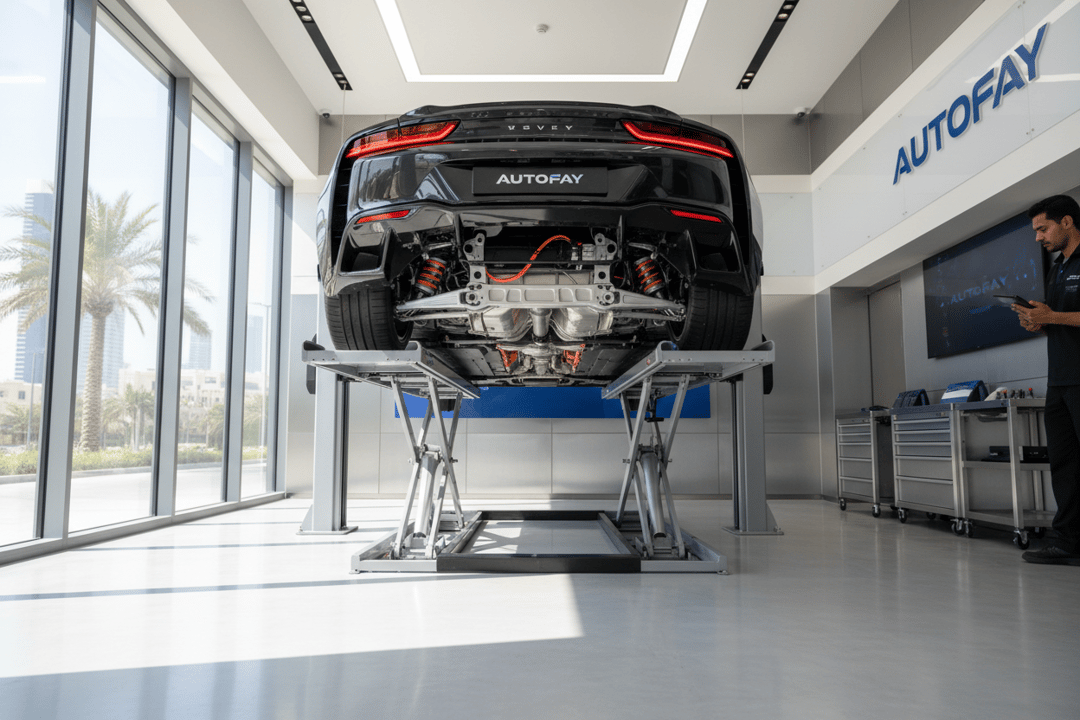
Relying on a visual inspection alone is insufficient for a vehicle of this value. A professional inspection covers 410+ checkpoints across 25 distinct categories. This comprehensive approach ensures every system, from the engine to the spare tire, is documented.
Inspection packages are designed to suit different needs while maintaining affordability. Services include detailed HD photography for evidence, a PDF report for negotiation leverage, and a on-location inspections covering all 7 Emirates.
| Inspection Package | Key Inclusions | Price |
|---|---|---|
| Computer Diagnostic | OBD scan for engine, transmission, ABS, and airbag codes. | AED 99 |
| Body & Computer | Paint thickness measurement, panel-by-panel inspection, and OBD scan. | AED 250 |
| Comprehensive | Full 410+ checkpoint, frame inspection, brakes, suspension, road test, and HD photos. | AED 299 |
AutoFay inspects 410+ checkpoints with HD photos and PDF report. Book at autofay.ae or call +971542584458


0 Comments
No comments yet. Be the first to share your thoughts!