
The Dodge Charger holds a distinct place in the UAE automotive landscape as a symbol of raw American muscle. However, purchasing a used Charger requires a rigorous vetting process due to the vehicle’s aging platform and specific vulnerabilities in the local climate. The Charger utilizes the LD platform, first introduced in 2006, which is now over a decade old in many used units circulating the market. This chassis was not originally designed for the corrosive salt air prevalent along the UAE coast.
The Dodge Charger: A High-Performance Risk in the UAE Market
Inspectors must approach the Charger not just as a performance car, but as a potential liability if maintenance has been neglected. The vehicle's weight, significantly increased by the V8 engine and heavy construction, puts immense stress on suspension components and braking systems. Furthermore, the electrical architecture in these models is complex, relying on numerous sensors that can fail over time without proper care.
When evaluating a used Charger, the primary goal is to separate the well-maintained enthusiast cars from the neglected daily drivers. High mileage often correlates with the degradation of the Multi-Displacement System (MDS), which deactivates cylinders to save fuel. In the UAE’s extreme heat, this system can fail, leading to immediate loss of power and increased fuel consumption.
Common Mechanical Weaknesses to Expect
Engine failure is the most significant risk when purchasing a used Charger. The capable Hemi V8 is the most common engine found in the UAE market, but it is prone to oil consumption and timing chain issues. The cylinder deactivation system is a common point of failure; once it fails, the engine runs rough and loses efficiency. Ignoring this issue will eventually lead to catastrophic engine damage, requiring a complete engine rebuild.
The capable SRT variant is less common but more expensive to repair. Inspectors should listen specifically for rod knock or lifter tick, which indicates internal wear that cannot be repaired without disassembling the engine. The 8-speed automatic transmission (A8) is also a concern; it often exhibits harsh shifting when cold. If the transmission fluid has never been changed, the transmission may fail completely, resulting in a repair bill that exceeds the vehicle's value.
What Inspectors Check: The Engine and Drivetrain
A professional inspection focuses on the health of the powertrain to ensure longevity. Inspectors examine the engine mounts because the heavy V8 creates significant vibration; worn mounts transmit this noise and vibration into the cabin and the chassis, leading to accelerated wear on other components.
- Oil Leaks: Valve cover gaskets and rear main seals are common leak points. Puddles under the car indicate the vehicle has been burning oil or leaking fluids for some time.
- Cooling System: Head gasket failure is a known issue on high-mileage Chargers. Inspectors check the coolant reservoir for oil contamination and the radiator for cracks or degradation.
- Driveline: Inspectors verify that the rear differential is not leaking and that driveshaft U-joints do not have excessive play.
Structural Integrity: Frame and Rust
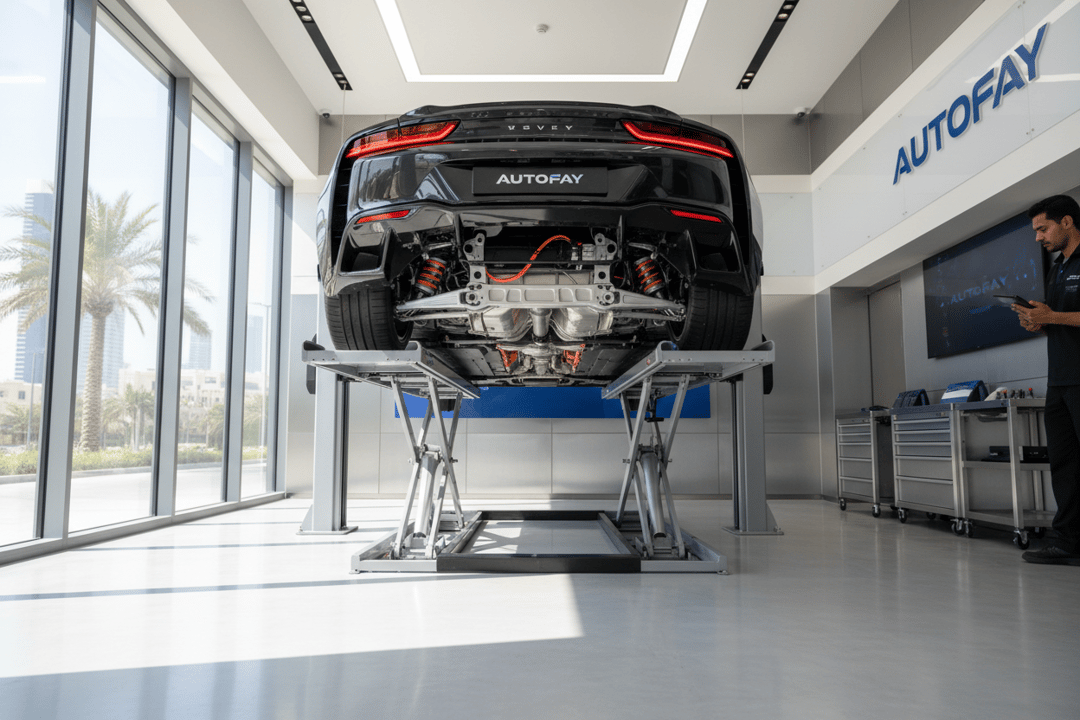
Rust is the silent killer of older vehicles in the UAE. The Charger’s frame rails, particularly around the wheel wells and the firewall, are susceptible to salt corrosion. Even if a car looks clean, the undercarriage tells the true story. A damaged frame compromises the structural safety of the vehicle in the event of a collision.
Inspectors use a pin gauge to measure the thickness of the frame rails. If the metal has thinned significantly, the structural rigidity is compromised. Pillars (B and C posts) and rocker panels are inspected for bubbling paint, which indicates rust starting from the inside out. Repairing a rusted frame is structurally impossible and renders the vehicle unsafe for the road.
Electrical and ECU Diagnostics
Modern Dodge Chargers are essentially computers on wheels. The Body Control Module (BCM) and the Engine Control Module (ECM) control everything from windows to fuel injection. A simple sensor failure can trigger the "Check Engine" light and cause the car to enter "limp mode," severely limiting speed and power.
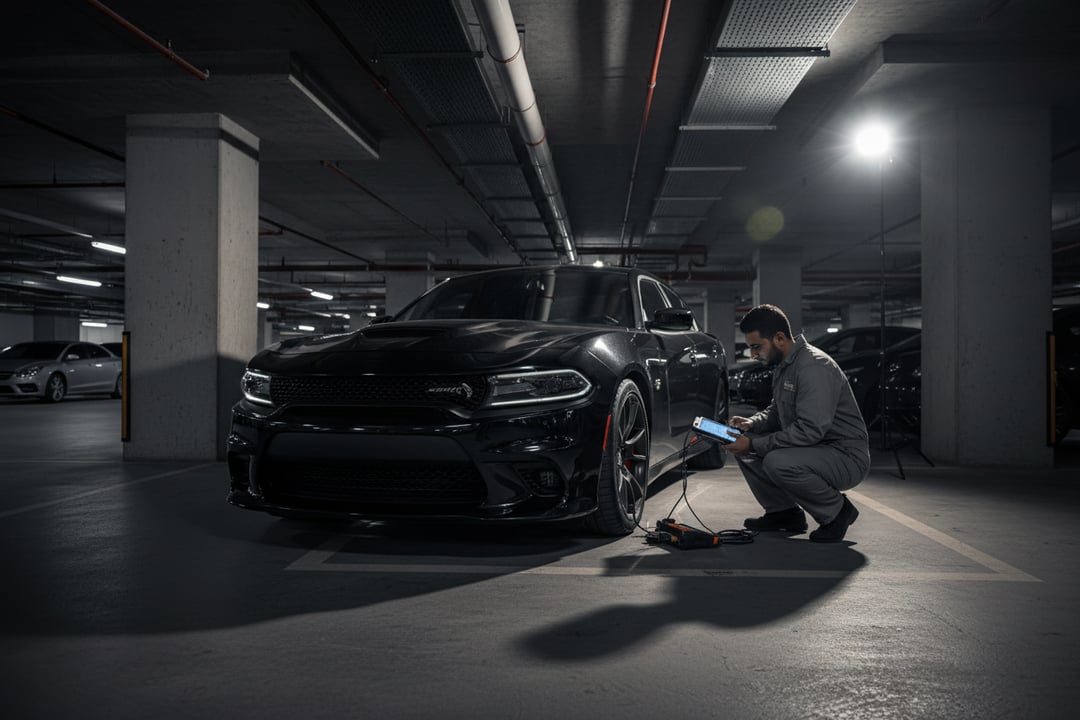
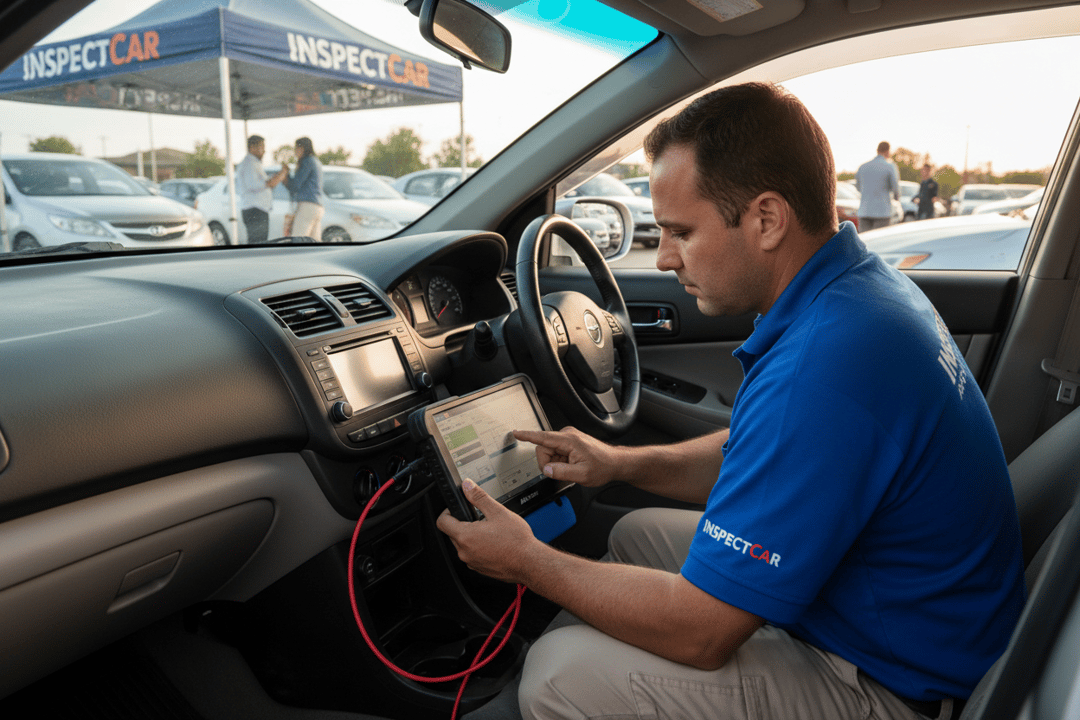
Before purchasing, a full OBD scan is mandatory. This process retrieves codes that the car’s computer has stored regarding malfunctions in the engine, transmission, ABS, and airbag systems. Common issues include the crankshaft position sensor failing, which will cause the engine to stall immediately while driving. Furthermore, the SRS (Supplemental Restraint System) airbag modules are expensive to replace; an inspector checks the airbag light to ensure the system is active and not in a previous accident.
For a detailed electrical health check, AutoFay offers a specialized service. The Computer Diagnostic AED 99 package provides a snapshot of the vehicle’s electronic health, reading active and stored codes across all systems. For a more thorough analysis, the Body & Computer AED 250 package combines physical damage assessment with deep electronic diagnostics.
Suspension, Brakes, and Tires
The Charger’s suspension is designed to handle heavy loads, but the components fatigue quickly under daily UAE traffic conditions. The shocks and struts are often the first to fail, leading to a "floaty" ride and poor handling in high-speed maneuvers. Inspectors check for leaking shocks and excessive body roll when turning.
Brakes on performance vehicles endure high stress. Inspectors rate brake pad percentage; pads thinner than 50% require immediate replacement. Worn brake pads can damage the rotors, leading to a pulsing sensation when braking and higher repair costs. The brake fluid is also checked for moisture content, which reduces braking efficiency and can damage the ABS module over time.
Tires are often overlooked, yet they are critical for safety. Inspectors verify the manufacturing date of the tires. In the UAE, tires older than five years degrade rapidly due to UV exposure and heat. Inspectors also check for uneven wear patterns, which can indicate alignment issues or worn suspension components.
| Inspection Package | Price | Key Focus Areas |
|---|---|---|
| Computer Diagnostic | AED 99 | Engine, Transmission, ABS, Airbag codes, Dashboard warnings. |
| Body & Computer | AED 250 | Panels, paint quality, dents, plus the Computer Diagnostic points. |
| Comprehensive | AED 299 | 410+ checkpoints including frame integrity, fluids, road test, and suspension. |
The road test is the final critical step. Inspectors monitor for vibrations, strange noises, and hesitation during acceleration. A vehicle with a failing drivetrain will often exhibit a shudder under load or a whining noise from the differential.
Buying a used Dodge Charger in the UAE demands attention to detail and mechanical expertise. Relying on a professional inspection minimizes the risk of buying a vehicle with hidden structural or mechanical defects. A thorough inspection provides the transparency needed to proceed with confidence.
AutoFay inspects 410+ checkpoints with HD photos and PDF report. Book at autofay.ae or call +971542584458


0 Comments
No comments yet. Be the first to share your thoughts!