

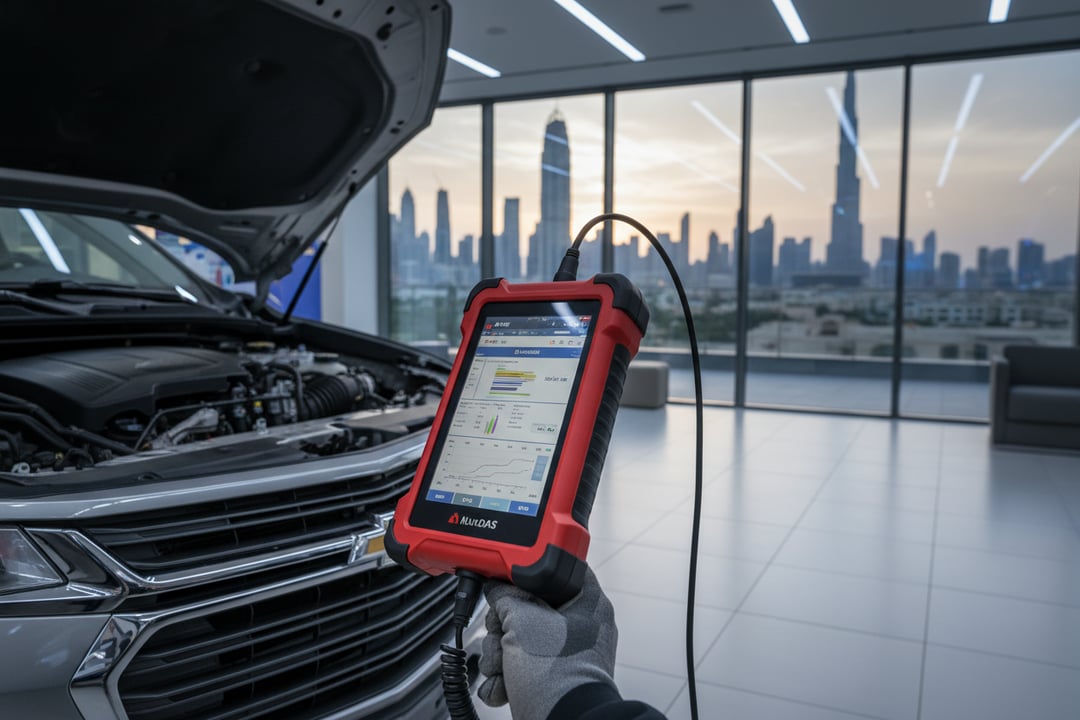
The Chevrolet Traverse represents a substantial investment in the UAE used SUV market, valued for its three-row seating and V6 power. However, this seven-passenger vehicle carries significant weight—literally and mechanically. Because the Traverse is a heavy SUV, mechanical wear accelerates differently than in smaller sedans, and specific model years are prone to certain transmission and cooling system faults. A visual walkaround will not reveal the hidden degradation of critical components. A professional inspection must analyze the vehicle's history and physical state to determine true value.
Core Mechanical Systems and Engine Health
The heart of the Traverse is the a capable engine V6 engine, which provides ample torque but requires specific maintenance protocols. Inspectors scrutinize the engine bay for signs of oil consumption, a common complaint among older Traverse models. If the engine holds low oil levels between changes without burning it visibly, it suggests piston ring wear or valve seal failure. Neglecting oil consumption leads to increased friction, overheating, and eventually catastrophic engine seizure, rendering the vehicle undrivable.
Transmission behavior is equally critical. The Traverse utilizes a six-speed automatic transmission that can exhibit harsh shifting as it ages. Inspectors check for hesitation when accelerating from a stop or delayed engagement when shifting from Park to Drive. If the transmission fluid is burnt or smells acrid, the internal clutch packs are likely worn. Ignoring a harsh transmission leads to complete drivetrain failure, which is a major expense to avoid when purchasing a used vehicle.
- Engine Oil Condition: Inspectors check for metallic flakes or sludge in the dipstick, indicating internal wear.
- VVT Actuators: A rattling noise near the front of the engine often points to variable valve timing actuator failure.
- Crucial Note: The Traverse is notorious for its coolant temperature sensor placement; a faulty sensor can trigger the check engine light without an actual cooling system issue.
Body Integrity and Panel Alignment
Bodywork on the Traverse is often compromised by impact stress due to the vehicle's high center of gravity. Inspectors perform a panel-by-panel inspection to detect gaps between doors, fenders, and the hood. Uneven gaps suggest previous frame damage or poor quality collision repairs. A laser measuring kit is required to verify that the structural pillars and frame rails remain within factory specifications.
Paint consistency is another major indicator of history. If the hood or trunk has been repainted, the paint thickness gauge will reveal a buildup of layers compared to the factory finish. Coastal areas in the UAE introduce salt corrosion, which attacks the rocker panels and frame rails. Inspectors look for bubbling paint or rust formations in these low-lying areas, as corrosion compromises the structural integrity of the entire chassis.
Suspension and Steering Elements
Suspension components bear the brunt of the Traverse's weight, especially in the rear where heavy loads are frequently carried. Inspectors use a strut compression tool to check the rebound and compression forces of the shocks and struts. Worn shocks fail to control body movement, leading to a "floaty" ride and increased stopping distance. In the UAE’s rough terrain, failing ball joints and control arm bushings can break, causing loss of vehicle control.
Tire wear patterns provide immediate clues about suspension health. Cupping, where the tire tread develops scalloped dips, indicates worn shocks or struts. Feathering—where the edge of the tread is smooth on one side and sharp on the other—suggests misaligned wheel bearings or tie rods. Replacing suspension parts is a necessary maintenance cost, but discovering these issues late in the vehicle's life diminishes its resale value and safety profile.
The Necessity of OBD Diagnostics
Sophisticated electronics control modern drivetrains, and a visual inspection cannot detect electronic faults. An On-Board Diagnostics (OBD) scan is essential to retrieve manufacturer-specific trouble codes. The Traverse relies on multiple sensors to manage transmission shifting and engine performance; a faulty sensor can trigger a limp mode, significantly reducing the vehicle's power and fuel economy.
A comprehensive scan targets not only the engine but also the transmission, ABS brakes, and airbag modules. For instance, a history of airbag deployment requires checking all four sensors and seat modules to ensure the system is ready for the next impact. Without a full computer history, a buyer risks purchasing a vehicle that will immediately require expensive electronic repairs.
| Inspection Package | Service Scope | Key Value |
|---|---|---|
| Computer Diagnostic | OBD Scan (Engine, Trans, ABS, Airbag) | Identifies active and stored fault codes |
| Body & Computer | Diagnostic + 45-Point Visual Body Check | Unveils accident damage and electronic faults |
| Comprehensive | Diagnostic + 410+ Checkpoints | Full mechanical, structural, and road test analysis |
Fluids and Cooling System Integrity
The cooling system is the most vulnerable part of the Traverse engine. Due to the engine's design, coolant leaks often occur at the intake manifold gaskets or the heater core. Inspectors check the coolant reservoir for oil residue, which indicates a blown head gasket. This is a significant failure that can warp the cylinder head and cost thousands to repair.
Power steering fluid should be bright pink or clear. If it is dark and foamy, air has entered the system, indicating a leak or a failing pump. Brake fluid absorbs moisture over time, causing corrosion in the ABS module. If the fluid is dark brown or black, the brake system components are compromised, and a fluid flush is required immediately to ensure stopping power.
Why Professional Inspection Saves Money
Relying solely on a seller's word or a quick drive-around is insufficient for a vehicle of this size and complexity. The consequences of missing a hidden problem can be financial ruin. A leaky rear main seal might seem minor initially, but it can destroy the clutch or transmission flywheel over time. A cracked exhaust manifold can damage oxygen sensors and mufflers.
Hiring a experienced inspector provides an objective third-party assessment. A professional identifies the difference between normal wear and genuine damage. By utilizing a on-location inspection, the vehicle is inspected in its natural environment, ensuring the results reflect how it behaves on UAE roads. This rigorous process eliminates the risk of buying a lemon.
AutoFay inspects 410+ checkpoints with HD photos and PDF report. Book at autofay.ae or call +971542584458




0 Comments
No comments yet. Be the first to share your thoughts!