


The used vehicle market in the United Arab Emirates presents unique challenges for prospective buyers. High ambient temperatures, desert dust, and aggressive driving habits accelerate wear on mechanical components. The BMW X1 is a popular choice in this region, offering a compact luxury SUV experience. However, specific mechanical and electrical systems in this vehicle are prone to failure under these harsh conditions. Understanding these vulnerabilities is critical before purchasing. A thorough inspection reveals hidden defects that may not be visible during a casual viewing.
The Engine: Heat Stress and Oil Consumption
The internal combustion engine in a pre-owned BMW X1 faces constant thermal stress in the UAE climate. Temperatures often exceed 45 degrees Celsius, causing fluids to degrade faster and seals to expand and contract more frequently. One of the most prevalent issues is excessive oil consumption. While some oil burn-off is normal in high-performance engines, significant consumption indicates worn piston rings or valve stem seals. If oil levels drop too low, the engine lacks necessary lubrication, leading to increased friction and potential seizure.
Turbocharger failure is another critical concern. The turbocharger operates at extreme temperatures; when combined with the intense heat of the Arabian summer, the bearings inside the unit can wear out rapidly. A failing turbo often produces a distinct whistling or hissing sound during acceleration. This issue, if left unaddressed, can result in complete turbo failure, which is a costly repair. A proper inspection includes listening to the engine while the vehicle is running to identify abnormal noises that suggest turbo or bearing wear.
Oil leaks are common due to the high operating temperatures. Gaskets and seals can harden and crack, allowing oil to seep out. In a hot environment, leaked oil can be washed onto hot exhaust components, creating a fire hazard and a burning smell. Inspectors look for fresh oil puddles or a dark, wet residue around the valve cover and oil filter housing during a standard walk-around inspection.
Transmission: DSG Wear in Stop-and-Go Traffic
Many BMW X1 models are equipped with a dual-clutch transmission, specifically the 8-speed or 7-speed DSG. This transmission offers rapid gear changes but is sensitive to heat and load. In the UAE, traffic congestion in cities like Dubai and Abu Dhabi forces the transmission to shift constantly between gears. This repetitive shifting places significant stress on the clutch packs and hydraulic actuators. Over time, the transmission fluid can degrade, reducing its ability to cool the system and lubricate the internal components effectively.
Drivers may notice symptoms such as hesitation when accelerating, jerky gear changes, or the transmission failing to downshift when entering a highway on-ramp. In severe cases, the vehicle may go into "limp mode," restricting engine power to prevent damage. A Computer Diagnostic is the first step in identifying transmission faults. Modern OBD scanners can retrieve specific error codes related to the transmission control module, alerting the buyer to potential solenoid or valve body failures before they become catastrophic.
Ignoring transmission issues leads to repair bills that far exceed the value of the vehicle. A fluid flush is a recommended maintenance item, but if internal clutches are worn, the transmission may require a complete rebuild or replacement. Therefore, a road test is essential to verify smooth gear transitions and proper response time under load.
Electrical Systems: Humidity and Sensor Sensitivity
The electrical architecture of the BMW X1 is complex, relying on various sensors to manage engine performance, braking, and safety systems. The UAE climate introduces two specific challenges: extreme heat and high humidity. Heat can cause electrical connections to expand and contract, potentially leading to micro-fractures in soldering or corrosion on terminals. Humidity, particularly during the coastal months, can lead to condensation inside headlight assemblies and sensor housings.
Headlight condensation is a frequent complaint among X1 owners. While a small amount of fog is normal, persistent water droplets indicate a seal failure. This moisture can damage the internal reflectors and lenses, reducing light output and creating a safety hazard. Furthermore, high humidity can short-circuit sensors such as the Mass Air Flow (MAF) sensor or the oxygen (O2) sensors. These sensors monitor air and fuel mixtures; if they fail, the engine management computer will adjust the air-fuel ratio poorly, resulting in reduced fuel economy and increased emissions.
Another common electrical issue involves the vehicle's electronic stability control and parking sensors. Faulty sensors can trigger false warning lights on the dashboard, confusing the driver. A comprehensive inspection will scan the vehicle's onboard computer to retrieve specific fault codes related to the ABS, airbag system, and transmission. Identifying these codes early prevents unexpected warning lights and ensures the safety features are functioning correctly.
Suspension and Cooling System Vulnerabilities
The suspension system in the X1 must support SUV weight while absorbing the harsh texture of UAE roads. The rubber bushings and mounts are particularly susceptible to degradation from UV exposure and high temperatures. Over time, these bushings become hard and crack, leading to increased road noise and vibration inside the cabin. The driver may perceive this as a lack of ride comfort or a feeling of "looseness" over bumps. Replacing suspension bushings is a tedious process but necessary for a comfortable and safe ride.
The cooling system is the engine's lifeline, especially in the desert heat. The radiator and hoses are under immense pressure. High temperatures cause rubber hoses to deteriorate, leading to cracks and potential leaks. A leaking radiator coolant hose can result in overheating, which can warp the engine cylinder head or cause a blown head gasket. These repairs are extensive and expensive. An inspection of the radiator cap, hoses, and coolant reservoir level checks the integrity of this critical safety system.
The Role of Professional Inspection: AutoFay Methodology
Given the complexity of the BMW X1 and the unforgiving nature of the UAE environment, a professional inspection is non-negotiable. Visual inspection alone cannot detect internal engine wear or electronic faults. A experienced inspector uses specific tools and a standardized checklist to evaluate the vehicle's condition. This process ensures that the buyer understands the true mechanical state of the car.
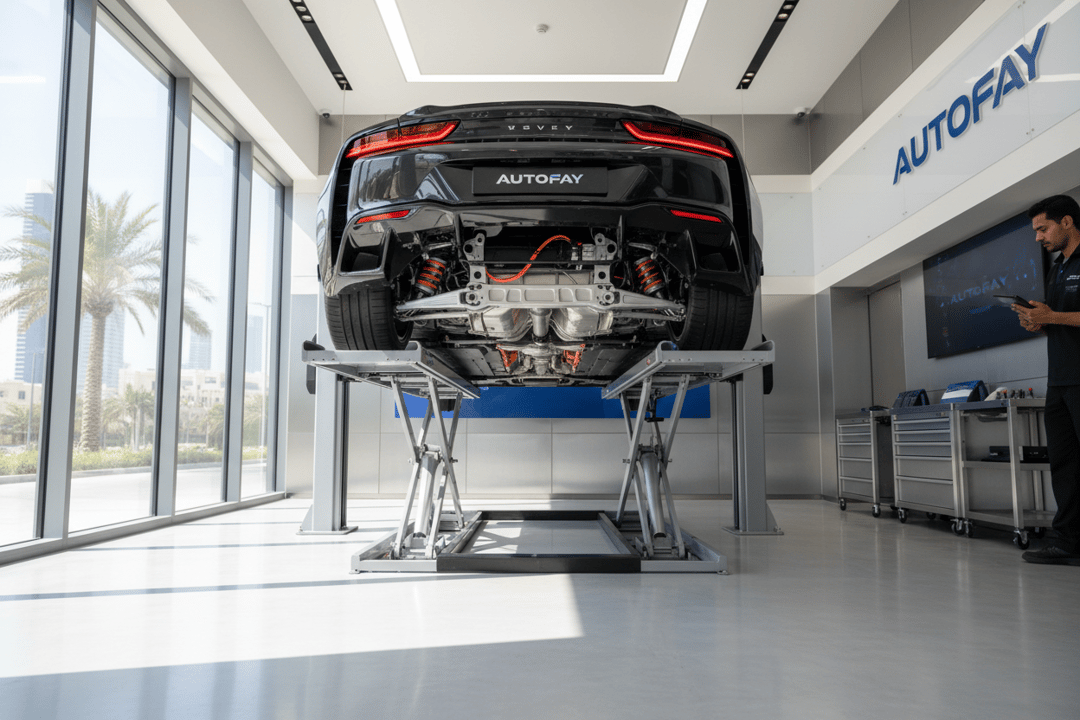
AutoFay provides a rigorous evaluation framework designed to uncover these hidden issues. Our inspection process covers 410+ checkpoints across 25 distinct categories. We do not just look for surface damage; we analyze the vehicle’s history and mechanical health.
The inspection process involves several critical steps. First, the vehicle undergoes a Computer Diagnostic for AED 99. This scan reads the engine, transmission, ABS, and airbag systems to identify any stored error codes or malfunctions. This step is vital for diagnosing electronic gremlins that are invisible to the naked eye.
Following the scan, a Road Test evaluates the vehicle's dynamic performance. Inspectors listen for knocking noises, test acceleration and braking, and check for vibrations. This confirms that the engine and transmission are operating smoothly under real-world conditions. Finally, a detailed inspection of the body and frame is conducted. We analyze the paint condition panel-by-panel to determine if the vehicle has been involved in accidents. We inspect the frame rails, pillars, and floor pan to ensure the structural integrity of the chassis has not been compromised.
| Package | Price | Key Inclusions |
|---|---|---|
| Computer Diagnostic | AED 99 | OBD scan for Engine, Transmission, ABS, and Airbag codes |
| Body & Computer | AED 250 | Panel-by-panel paint analysis, body damage check, and OBD scan |
| Comprehensive | AED 299 | Full 410+ checkpoint inspection including frame, engine, brakes, fluids, and road test |
Fluids are another critical area of evaluation. We check the level and condition of the engine oil, coolant, and brake fluid. Old or contaminated fluids indicate poor maintenance history, which can lead to mechanical failure. The inspection concludes with a review of tires to ensure they meet safety standards and have sufficient tread depth for driving in wet or sandy conditions.
Buying a used BMW X1 in the UAE requires diligence. The combination of high temperatures and heavy usage creates a perfect storm for specific component failures. By utilizing a professional inspection service, buyers can avoid unexpected repair costs and ensure the vehicle is safe and reliable. We provide HD photos and a detailed PDF report to document every finding, allowing for a transparent transaction.
AutoFay inspects 410+ checkpoints with HD photos and PDF report. Book at autofay.ae or call +971542584458




0 Comments
No comments yet. Be the first to share your thoughts!