


The BMW M5 represents the pinnacle of executive performance, blending luxury with track-ready capability. In the UAE market, these vehicles are frequently traded, often accumulating high mileage under intense environmental conditions. Purchasing a second-hand M5 demands a rigorous evaluation of its mechanical and electrical components. The following analysis details critical failure points inspectors must scrutinize to ensure the vehicle retains its performance integrity.
The Engine: Twin-Turbo Stress Factors
The BMW S63 twin-turbo V8 is a robust powerplant, yet it possesses specific vulnerabilities exacerbated by maintenance neglect. Inspectors must prioritize the condition of the valve cover gaskets, which commonly degrade over time. A leaking gasket results in external oil seepage, creating a fire hazard and potentially leading to oil starvation if not addressed immediately.
- Carbon Buildup: Carbon deposits accumulate on intake valves due to direct injection technology. This restricts airflow and reduces combustion efficiency, causing a noticeable drop in throttle response and fuel economy.
- Oil Consumption: High-performance engines consume oil to manage thermal expansion. Excessive consumption, however, indicates potential issues with the valve stem seals or piston rings, requiring significant engine disassembly to rectify.
- Vanos Solenoids: The variable valve timing system relies on precise hydraulic pressure. Failure here results in rough idling, hesitation under acceleration, and a loss of power.
Fluid condition is the first indicator of engine health. Inspectors use a dipstick to check for sludge or metal shavings. The M5 demands high-octane fuel and frequent oil changes; history of neglect leads to accelerated wear on internal bearings and camshafts.
Transmission and Drivetrain Longevity
BMW pairs the M5's engine with the renowned ZF 8-speed automatic transmission, a gearbox engineered for durability. However, electronic faults can render this precision component inoperable. A transmission fluid change is necessary every 40,000 to 60,000 miles; failure to adhere to this schedule results in the fluid breaking down and losing its ability to cool and lubricate the intricate valve bodies.
- Valve Body Failure: The valve body controls hydraulic pressure. Worn solenoids cause erratic shifting, including delayed engagement or harsh shifting between gears.
- Torque Converter Clutch: This component manages the connection between the engine and transmission. Failure leads to shuddering at highway speeds and a lack of fuel efficiency.
- Transfer Case Issues: The xDrive system involves a complex transfer case. Oil leaks or bearing wear in this unit result in drivetrain whines and potential loss of power to one axle.
Inspectors must perform a road test to listen for unusual whines or clunks during gear shifts. The transmission mounts also support the heavy engine; worn mounts cause excessive vibration that transfers into the cabin during acceleration.
Suspension and Chassis Integrity
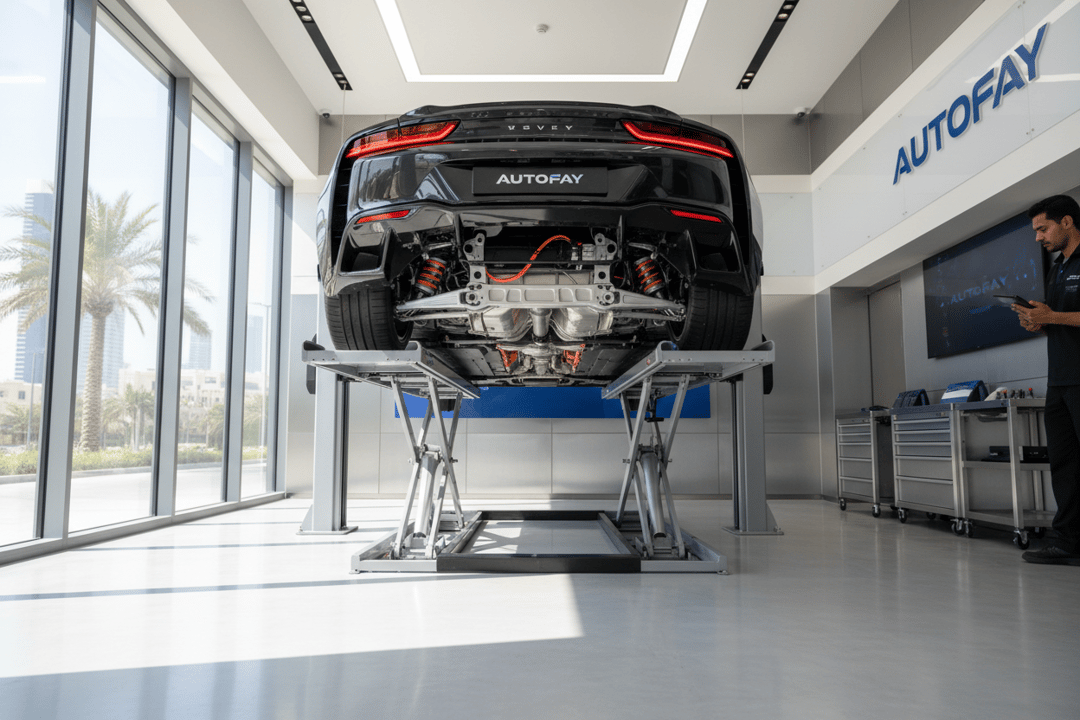
High-performance suspension components are designed to handle lateral G-forces, but thermal cycling in the UAE climate accelerates material degradation. The bushings connecting the control arms to the chassis absorb road shocks. Polyurethane or rubber materials harden and crack over time, resulting in a loose, unstable feeling during cornering.
- Dampers and Struts: Bilstein or Meyle dampers are standard on M5s. Fluid leaks inside the strut body indicate the unit has reached the end of its life, leading to poor ride control and increased stopping distances.
- Steering Rack: The hydraulic or electric steering rack requires clear fluid levels. Low fluid causes a whining noise and heavy steering effort, while worn seals allow air into the system, causing a loss of power steering assist.
- Subframe and Mounts: The engine and transmission mounts are critical for NVH (Noise, Vibration, and Harshness) control. Excessive movement here transmits engine noise into the cabin and compromises alignment.
Wheel alignment is essential for tire longevity. Aggressive driving habits in the UAE heat warp the suspension geometry, causing uneven tire wear and rapid degradation of the tire tread.
Electrical Systems and Climate Control
The complexity of the electrical architecture in a modern M5 introduces numerous potential failure points. The battery is the heart of the electrical system; a weak battery struggles to provide the cranking amps required for the high-compression engine. This leads to slow cranking and can prevent the car from starting in extreme heat.
| System | Common Failure | Impact |
|---|---|---|
| Climate Control | AC Compressor Clutch | Engine overheating due to lack of cooled intake air |
| Electrical | Window Regulators | Failure to seal the cabin, allowing dust entry |
| Sensors | Temperature Sensors | Incorrect data sent to ECU, leading to limp mode |
The air conditioning system is vital for performance. The engine pulls air from the engine bay; if the AC fails, the intake air temperature rises, causing the engine management system to retard timing to prevent detonation. This results in a significant loss of horsepower. Inspectors must verify the AC blows ice cold and maintains pressure on the low-pressure side.
The Impact of UAE Climate
The desert environment presents unique challenges for vehicle longevity. High ambient temperatures accelerate the oxidation of engine oil, reducing its viscosity and lubricating properties. This leads to increased internal friction and wear.
Extreme heat also affects the chassis. Temperatures exceeding 50°C cause rubber bushings to soften and lose structural integrity faster than in temperate climates. Electrical connectors expand and contract, creating micro-gaps that can corrode over time. A comprehensive inspection must account for these thermal stressors by checking for heat-induced varnish on electrical components and examining the condition of the tires for cracking caused by UV exposure and high heat.
Standardized Inspection Protocols
Reliable inspection requires a systematic approach. Professionals utilize digital tools to analyze the vehicle's behavior beyond the naked eye. A computer diagnostic scan reveals hidden fault codes in the engine, transmission, ABS, and airbag systems that the driver cannot perceive.
AutoFay provides a on-location inspection service covering all 7 Emirates. Their packages offer varying levels of detail, from a basic computer diagnostic to a comprehensive vehicle check. The comprehensive package includes a panel-by-panel body inspection, frame integrity checks, and a detailed road test. Inspectors assess the brake pad thickness percentage rating and tire manufacturing dates to ensure the vehicle meets safety standards.
Reviewing fluid levels and conditions provides immediate insight into the owner's maintenance discipline. Dirty, low, or burnt-smelling transmission fluid is a red flag indicating severe neglect. A road test evaluates acceleration, braking, noise levels, and vibrations to ensure the drivetrain is functioning within factory specifications.
AutoFay inspects 410+ checkpoints with HD photos and PDF report. Book at autofay.ae or call +971542584458.




0 Comments
No comments yet. Be the first to share your thoughts!