

The BMW 3 Series remains a dominant figure in the UAE used car market due to its driving dynamics and brand prestige. However, ownership brings a responsibility to understand the specific mechanical traits of this platform. The E90, F30, and G20 generations require rigorous scrutiny before purchase. A pre-purchase inspection separates a well-maintained daily driver from a costly project car. This guide outlines the critical areas an inspector evaluates and the specific red flags associated with this model.
Engine and Cooling System Vulnerabilities
The N54 and N55 engines found in the E90 and F30 generations utilize twin-turbo technology. This engineering delivers impressive power but introduces specific maintenance challenges. Inspectors focus heavily on the cooling system and high-pressure fuel pumps. The plastic water pumps in these engines are known to fail prematurely, often leading to overheating. Overheating in a BMW engine frequently results in a blown head gasket or warped cylinder heads. This outcome transforms a potential purchase into an expensive engine rebuild.
High-pressure fuel pumps are another critical failure point. When these components fail, they can dump fuel into the engine oil, causing rapid degradation of engine bearings. An inspector checks the oil for signs of fuel dilution and listens for unusual noises during a road test. The condition of the cooling hoses and thermostat housing must also be verified to ensure thermal regulation remains consistent across the 50-degree Celsius UAE climate.
Electrical Complexity and Control Systems
BMW vehicles are renowned for their complex electronic architecture. The 3 Series relies on a network of sensors and actuators to manage the Variable Valve Timing (Vanos) and the Dynamic Stability Control (DSC). A failure in the Vanos solenoids or the control unit disrupts the air-fuel mixture. This disruption often manifests as rough idling, hesitation during acceleration, or a check engine light persistently illuminating.
Inspectors utilize an On-Board Diagnostics (OBD) scan to retrieve manufacturer-specific codes. Standard consumer scanners often fail to read BMW-specific error logs. The DSC module is particularly sensitive; its failure can disable stability control, a major safety concern. Furthermore, the iDrive infotainment systems and dashboard clusters may display flickering pixels or unresponsive inputs, indicating a failing capacitor or board.
Structural Integrity and Water Intrusion
Rust is a concern in the UAE, though it is often caused by road salt ingress during transport or poor wash practices rather than coastal humidity. Inspectors examine the door sills, chassis rails, and undercarriage for bubbling paint or corrosion. Bubbling paint is a strong indicator that the vehicle has been subjected to flood damage or that water has been trapped behind the coating.
Water intrusion through the panoramic sunroof is a notorious issue specific to the 3 Series. The drainage tubes often clog with dust and debris. When clogged, water accumulates in the headliner and drains into the cabin. Over time, this moisture seeps into the B-pillar and rear footwells, promoting mold growth and causing electrical short circuits in the rear door modules. Inspectors lift the carpets to check for dampness or a musty odor, which signals this specific failure.
- Door Sills: Check for bubbling paint indicating corrosion.
- Rear Footwells: Look for signs of water staining or mold.
- Chassis Rails: Inspect for structural damage or rust.
Suspension and Drivetrain Health
The handling characteristics of the 3 Series depend on a robust suspension system. In the UAE’s hot climate, rubber bushings degrade faster than in temperate regions. Inspectors examine the control arm bushings for cracks or distortion. A failure here alters the alignment geometry, leading to uneven tire wear and a vague steering feel.
On the F30 generation, the rear subframe mounting points are susceptible to cracking. If left unaddressed, the subframe can shift, causing vibration and alignment issues. The inspection includes a road test to listen for clunking noises over bumps and to check for vibration under braking. The rear differential may also emit whining noises if the bearings are worn, signaling imminent transmission failure.
The Professional Inspection Methodology
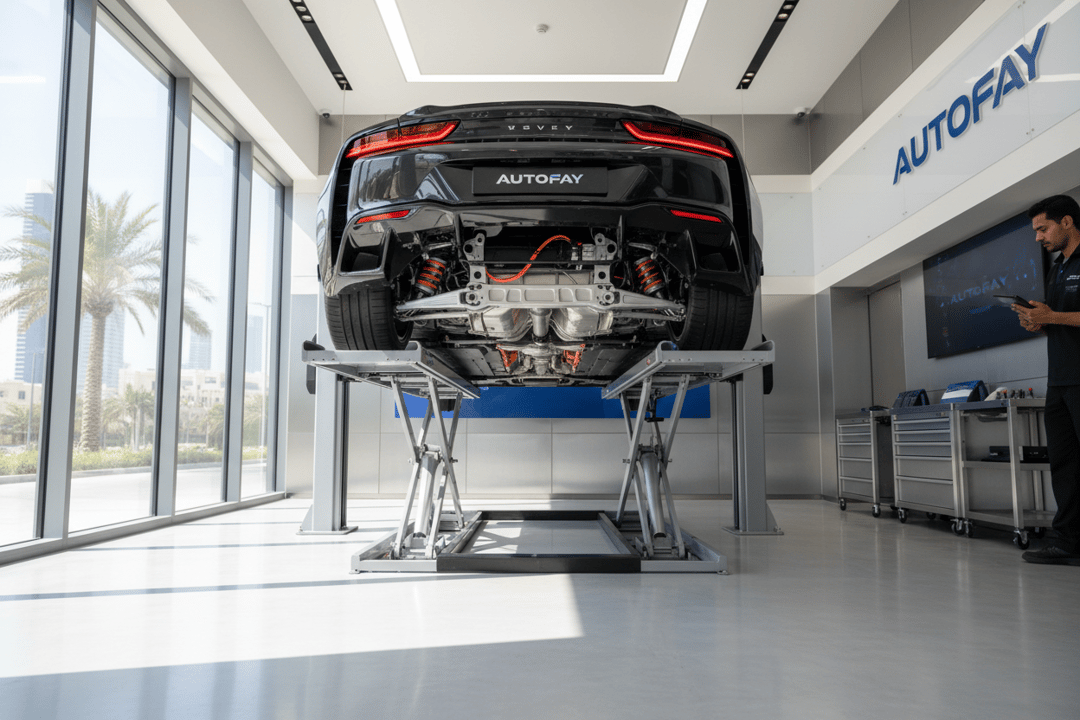
A comprehensive pre-purchase inspection goes beyond a visual walk-around. It requires a systematic approach across 25 distinct categories. A experienced inspector evaluates the vehicle from the ground up, starting with the tires. Tires with a manufacturing date older than six years pose a stability risk, regardless of tread depth. Fluids are examined for color and consistency; dirty or dark transmission fluid indicates the gearbox has not been serviced on schedule.
The inspection concludes with a dynamic test drive. This phase assesses acceleration, braking performance, and noise levels. Inspectors verify that the ABS and airbag systems are functioning correctly via the OBD port. This holistic process covers 250+ specific checkpoints to ensure the vehicle meets safety and operational standards.
| Inspection Package | Service Inclusions | Price |
|---|---|---|
| Computer Diagnostic | Engine, Transmission, ABS, Airbag codes scan | AED 99 |
| Body & Computer | Panels, paint condition, OBD scan, road test | AED 250 |
| Comprehensive | 410+ checkpoints, frame integrity, suspension, fluids, HD photos, PDF report | AED 299 |
Investing in a professional inspection mitigates the risk of purchasing a vehicle with hidden defects. Standard warranties in the UAE often exclude pre-existing mechanical faults or flood damage. A detailed report provides the data necessary to negotiate the purchase price or walk away from a compromised vehicle.
AutoFay inspects 410+ checkpoints with HD photos and PDF report. Book at autofay.ae or call +971542584458




0 Comments
No comments yet. Be the first to share your thoughts!