
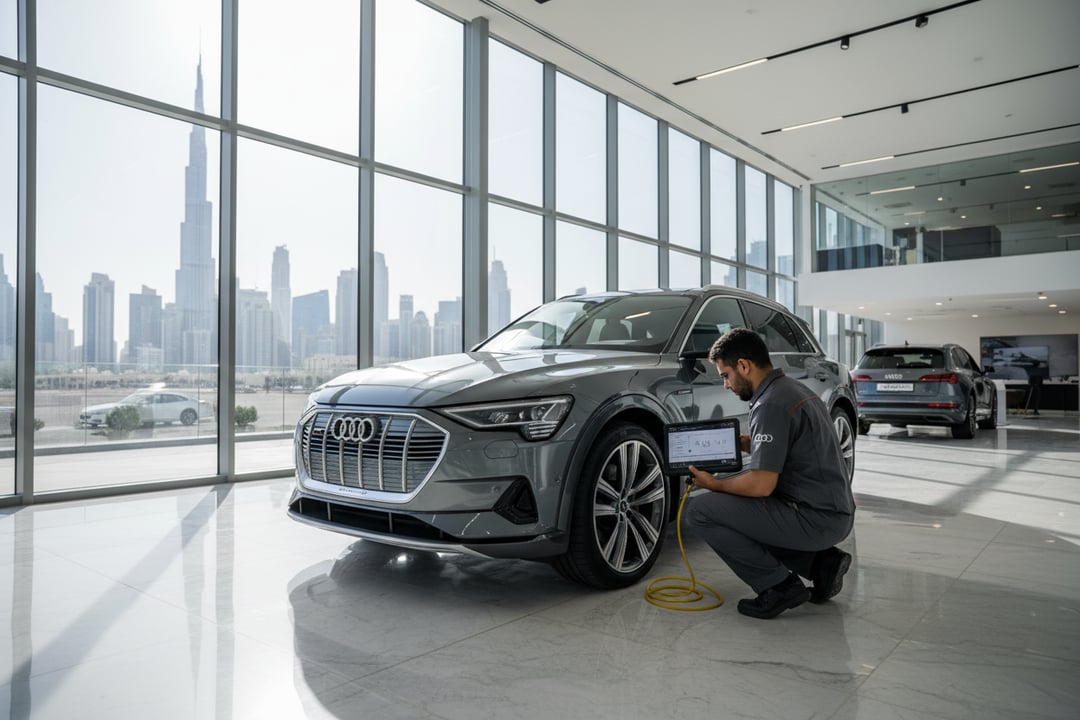
The Audi e-tron represents a significant milestone for the German manufacturer, transitioning from internal combustion engines to a high-voltage electric powertrain. However, purchasing a used e-tron in the UAE requires a specialized technical approach that differs from inspecting traditional gasoline vehicles. The complexity of the electric drivetrain, the high-voltage battery pack, and the specialized thermal management systems introduce unique failure points that standard mechanics may overlook. A rigorous pre-purchase inspection is not merely a formality; it is a necessity to uncover latent defects that could compromise safety or lead to costly future repairs. Understanding the specific vulnerabilities of this model is the first step toward securing a reliable asset.
The Traction Inverter: A Critical Failure Point
The traction inverter is the electronic heart of the Audi e-tron, responsible for converting direct current from the battery into alternating current for the electric motors. Early generations of the e-tron utilized Insulated Gate Bipolar Transistors (IGBT) that are susceptible to thermal stress and electrical imbalance. When these components fail, the vehicle often enters a limp mode, severely restricting speed and acceleration. Failure to detect a failing inverter via professional diagnostics can result in total drivetrain loss, rendering the vehicle immobile until the high-voltage system is serviced by a specialized electric vehicle center.
Battery Health and Thermal Management
The 95 kWh battery pack sits at the core of the vehicle's value proposition. In a climate where ambient temperatures can exceed 45°C, the thermal management system is under constant strain. Inspectors must verify that the liquid cooling loops are functioning correctly to prevent cell degradation. A malfunction in the cooling system leads to rapid battery aging, resulting in diminished range and reduced charging speeds. Furthermore, the battery management system must communicate correctly with the vehicle's onboard computer to ensure the State of Charge (SOC) display matches actual capacity. A discrepancy here often indicates software calibration issues or hardware degradation.
Suspension and Drivetrain Complexities
The e-tron utilizes a heavy, all-wheel-drive layout that places significant stress on the rear independent suspension. The air suspension system, common in Audi models, is prone to leaks caused by wear on the rubber bellows or O-rings. A compromised air strut leads to a sagging rear end, which alters the vehicle’s aerodynamics and tire wear patterns. Additionally, the rear-mounted electric motor is air-cooled in some configurations; inadequate airflow due to debris accumulation or a failed cooling fan can cause the motor to overheat during prolonged high-speed driving on UAE highways.
What Professionals Check: The Inspection Categories
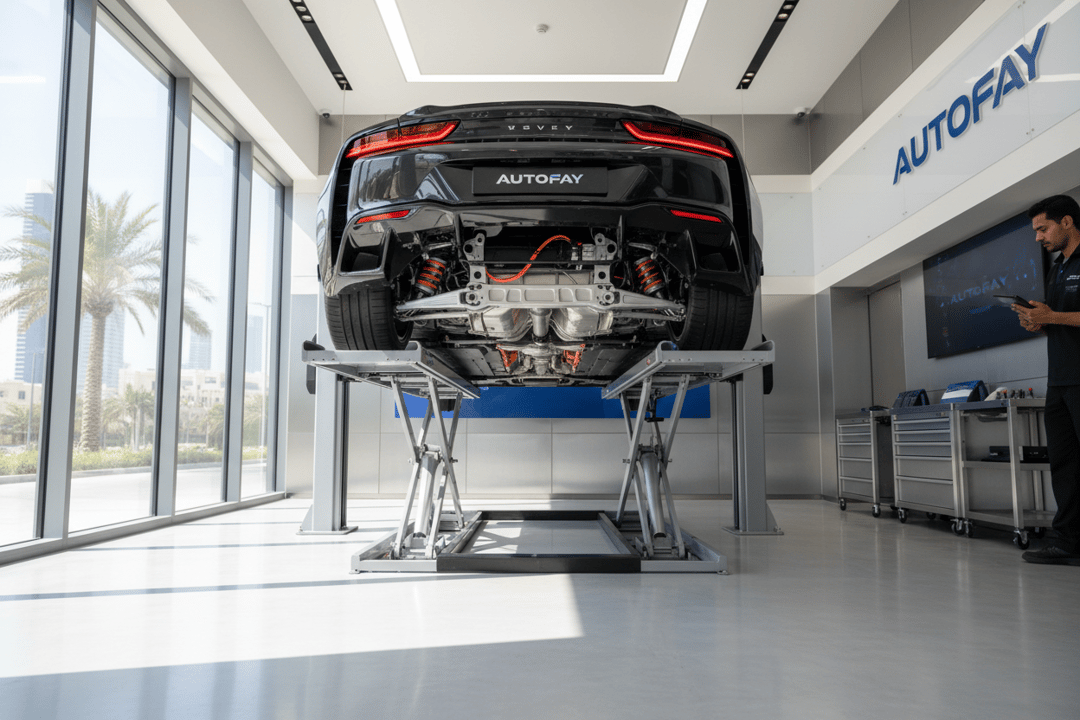
A comprehensive inspection goes beyond a visual walk-around; it requires a systematic evaluation of the vehicle's electrical and mechanical integrity. Professional service providers utilize a structured approach to ensure no component is overlooked. This systematic method highlights the importance of specialized equipment in validating the health of an electric vehicle.
| Category | Inspection Focus |
|---|---|
| Computer Diagnostics | Scanning for high-voltage error codes and communication faults between the BMS and control modules. |
| Body & Paint | Panel-by-panel analysis to identify repainted sections that may hide impact damage. |
| Frame & Structure | Checking the chassis rails and floor pan for corrosion or collision distortion. |
| Engine & Drivetrain | Verifying motor operation, mounts, and cooling fans for unusual noise or vibration. |
| Brakes & Suspension | Evaluating pad thickness, rotor condition, and suspension linkage play. |
| Road Test | Testing acceleration, braking distance, and handling stability under load. |
Why a Professional Road Test Matters
The road test is the most critical phase of the inspection process for an electric vehicle. Unlike internal combustion engines, electric motors deliver instant torque, which places a sudden load on the drivetrain and transmission components. An inspector listens for high-pitched whining noises from the transmission or inverter, which indicate bearing wear. They also monitor the braking system, as regenerative braking wears on brake pads differently than conventional friction braking. A smooth, linear acceleration with no hesitation confirms the powertrain is healthy, while erratic behavior signals a potential fault in the motor controller or battery output.
Red Flags Specific to the e-tron
When evaluating a pre-owned Audi e-tron, certain symptoms should immediately raise suspicion. Buyers must recognize that these are not minor inconveniences but indicators of potential catastrophic system failure.
- Slow Charging Rates: If the vehicle takes significantly longer than the manufacturer’s specification to charge, it may indicate a degraded onboard charger or a failing DC-DC converter.
- High-Voltage Warning Lights: The presence of yellow or red warning icons on the dashboard related to the 400V high-voltage system requires immediate investigation to avoid safety hazards.
- Uneven Tire Wear: Due to the heavy battery weight, the rear tires typically wear faster and unevenly. Significant cupping or feathering indicates suspension issues or alignment problems.
- Fluid Leaks: Coolant leaks from the battery pack are critical. Leaks in the rear axle area suggest air suspension failures.
The Value of a professional inspection
Investing in a professional inspection prevents the acquisition of a vehicle with hidden liabilities. The cost of a missed defect far outweighs the fee for a thorough evaluation. Specialized services offer mobility, covering all seven Emirates to ensure the vehicle can be inspected at the buyer's convenience. These services provide digital reports that document the vehicle’s condition with high-definition documentation.
For a detailed assessment, specialized packages are available to suit different levels of scrutiny. These options provide varying degrees of analysis, from a basic computer scan to a full mechanical and structural evaluation.
- Computer Diagnostic (AED 99): A targeted scan of the onboard computer to identify error codes and communication faults.
- Body & Computer (AED 250): A combination of exterior damage assessment and computer diagnostics to verify electrical integrity.
- Comprehensive (AED 299): A full 410+ checkpoint inspection covering body, frame, engine, transmission, brakes, suspension, tires, and fluids, including a detailed road test.
AutoFay inspects 410+ checkpoints with HD photos and PDF report. Book at autofay.ae or call +971542584458


0 Comments
No comments yet. Be the first to share your thoughts!