
The intense ultraviolet radiation and soaring ambient temperatures in the United Arab Emirates place unprecedented stress on vehicle tires. Unlike temperate climates where tires may last for years, UAE road conditions accelerate the chemical breakdown of rubber compounds. Tires are the sole point of contact between the vehicle and the asphalt, making their condition a matter of critical safety. Neglecting tire maintenance in this environment does not merely lead to poor performance; it creates a catastrophic risk of failure at highway speeds. A proactive approach to tire care requires understanding the specific degradation mechanisms caused by heat and UV exposure.
Managing Pressure in Extreme Heat
Temperature fluctuations significantly alter the internal pressure of a tire, a phenomenon governed by the ideal gas law. As ambient temperatures rise, the air inside the tire expands, increasing pressure. However, driving generates additional frictional heat, further pressurizing the system. If a tire is over-inflated, the contact patch with the road decreases, leading to reduced traction and uneven wear on the center of the tread. Conversely, if tires are under-inflated, the sidewalls flex excessively, generating dangerous heat that can compromise the structural integrity of the tire casing.
- Check tire pressure monthly, adjusting for the season and before long-distance travel.
- Never rely on the tire pressure reading on the driver's side door placard; verify with a calibrated gauge at the valve stem.
- Reduce tire pressure by 0.2 to 0.3 bar (3 to 5 PSI) when driving on sand, but restore it immediately after leaving the dunes.
UV Damage and Sidewall Integrity
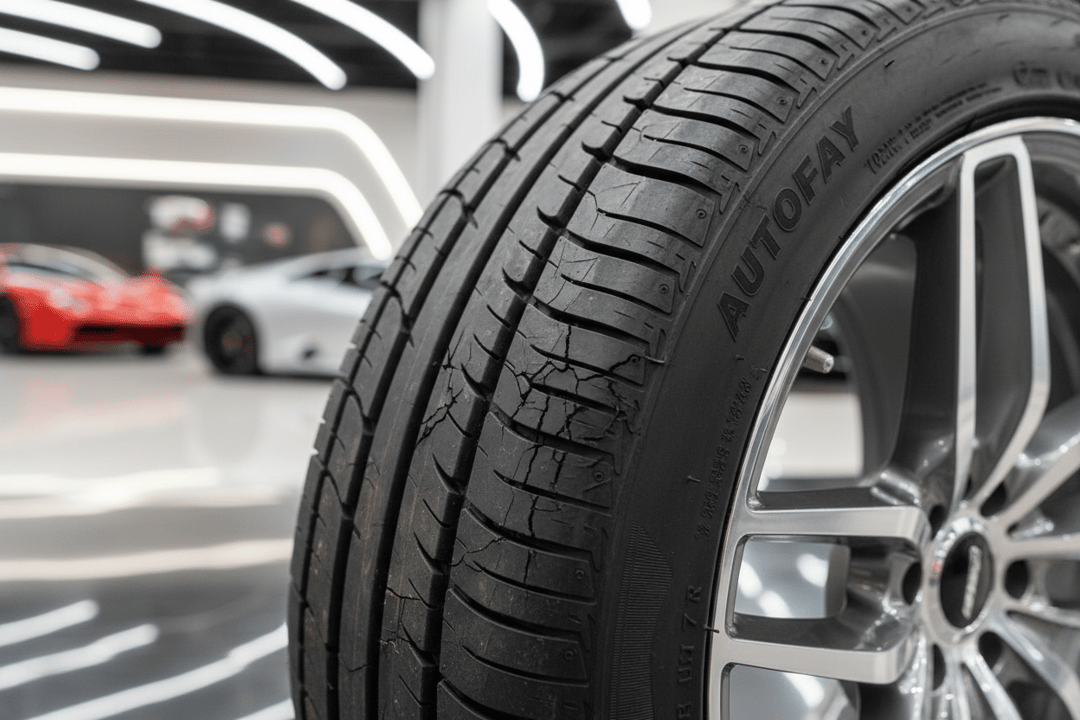
The harsh desert sun emits high levels of ultraviolet (UV) radiation, which acts as a drying agent for the rubber polymers in tire sidewalls. While the tread is designed to wear down gradually, the sidewall is engineered to flex repeatedly without permanent deformation. When UV exposure causes the rubber to dry out, it loses its elasticity and becomes brittle. This condition, often referred to as "dry rot," manifests as fine cracks running radially along the sidewall. These cracks compromise the tire's ability to withstand cornering forces and road impacts.
- Inspect the sidewalls for any radial cracks, especially around the bead area where the tire sits on the rim.
- Look for bulges or blisters on the sidewall, which indicate internal separation of the rubber compounds due to heat stress.
- Apply a quality tire dressing to protect the sidewall from UV degradation, though avoid products that contain silicone, which can degrade the rubber compound over time.
The Irrelevance of Mileage: Manufacturing Date Importance
In the UAE, low vehicle mileage often leads owners to believe their tires are still safe, regardless of their age. Rubber compounds have a limited shelf life even when not mounted on a vehicle. A tire's age is determined by its manufacturing date, located on the sidewall within a four-digit code (e.g., 3523 indicates the 35th week of 2023). As tires age, the oils in the rubber evaporate, causing the material to harden and lose its ability to absorb shock. A tire older than six years is generally considered at the end of its service life, regardless of tread depth.
| Tire Age | Risk Level | Recommended Action |
|---|---|---|
| < 3 Years | Low | Regular inspection for pressure and alignment issues. |
| 3 - 6 Years | Moderate | Deep visual inspection for sidewall cracking and hardening. |
| > 6 Years | High | Immediate replacement due to increased risk of blowout. |
Recognizing Dangerous Tire Conditions
Not all tire damage is visible to the naked eye, and some conditions develop rapidly under load. Tires become dangerous when structural components are compromised, leading to sudden loss of vehicle control. Vibration during driving often signals internal damage such as a broken belt or separated sidewall plies. Even subtle imperfections, like a nail embedded in the tread, can cause slow leaks that allow pressure to drop while the vehicle is stationary. Relying solely on visual checks is insufficient; a professional assessment is necessary to detect hidden defects.
- Avoid driving on tires with cuts or punctures larger than a quarter-inch in diameter.
- Replace any tire that has experienced a severe impact with a pothole or curb, even if no visual damage is apparent.
- Listen for changes in the road noise; a thumping or rhythmic vibration indicates a potential imbalance or internal failure.
The Value of a Professional Inspection
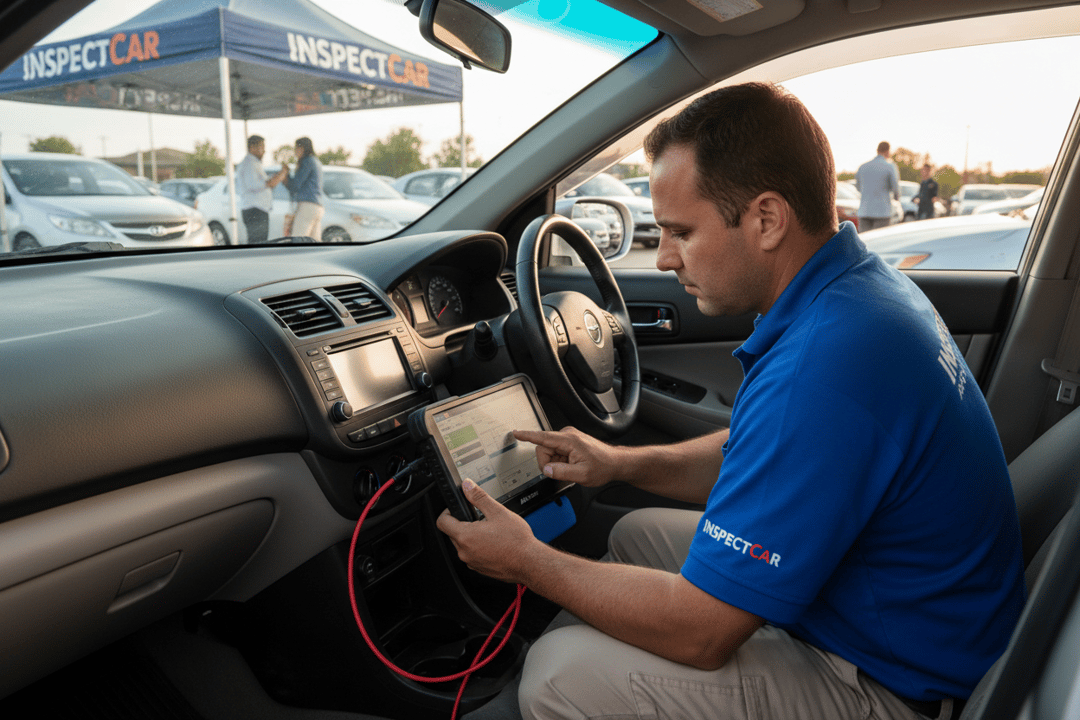
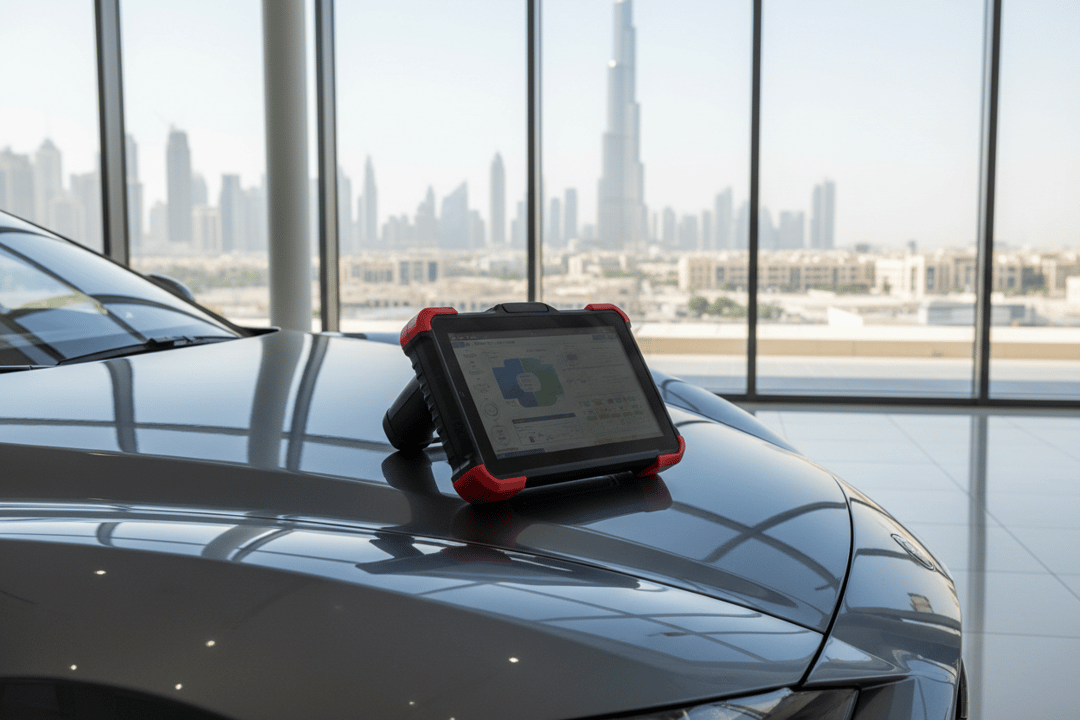
Routine maintenance is insufficient to guarantee safety in the UAE's extreme climate. A professional inspection provides a comprehensive evaluation of the vehicle's condition, covering over 410+ checkpoints across 25 distinct categories. Professional on-location inspection services offer convenience, bringing the diagnostic equipment directly to the owner's location across all seven Emirates. These inspections go beyond visual checks, utilizing computer diagnostics to identify underlying issues that may contribute to tire wear or safety hazards.
Understanding the scope of a professional inspection helps vehicle owners prioritize necessary maintenance. The standard inspection packages cover critical areas including the engine, transmission, and ABS systems, as well as structural integrity. For a comprehensive review, the Comprehensive Inspection Package includes a detailed road test to evaluate braking, acceleration, and noise levels, ensuring the tires perform correctly under real-world driving conditions. The Body & Computer Package is also available for owners seeking a detailed report on panel-by-panel paintwork and engine management codes.
- Utilize the Computer Diagnostic service to identify error codes before replacing tires to rule out alignment or steering issues.
- Request the Comprehensive Inspection to evaluate the suspension and braking systems, which directly influence tire longevity and safety.
- Use the on-location inspection to obtain a detailed report with HD photos and a PDF summary, documenting the exact condition of the vehicle before purchasing or selling.
AutoFay inspects 410+ checkpoints with HD photos and PDF report. Book at autofay.ae or call +971542584458

0 Comments
No comments yet. Be the first to share your thoughts!