
Toyota vehicles dominate the automotive landscape in the Emirates, valued for their mechanical durability and resale retention. However, local operating conditions—intense heat, abrasive desert dust, and high traffic density—accelerate wear on specific components. Understanding these common failure points allows owners and prospective buyers to maintain mechanical integrity and avoid unexpected breakdowns. Mechanical inspection provides the necessary data to assess vehicle health beyond visual appearance.
The Impact of UAE Climates on Toyota Longevity
The extreme ambient temperatures in the UAE place significant stress on a vehicle's chemical composition and mechanical tolerances. High under-hood temperatures accelerate the evaporation of essential fluids and the breakdown of rubber components. Simultaneously, the prevailing dust accelerates the abrasion of moving metal parts and clogs filtration systems. Vehicles subjected to these elements require more frequent attention to critical systems than those in temperate climates.
Common Wear Items and Replacement Timelines
While Toyota engines are renowned for their longevity, peripheral components have finite lifespans dictated by usage and environment. Ignoring these wear items leads to secondary damage, such as warped rotors due to worn brake pads or overheating transmissions due to degraded cooling systems.
- Batteries: Extreme heat is the primary enemy of lead-acid batteries in the region. Electrolyte evaporation reduces charge capacity, leading to failure during hot starts. Most batteries in UAE service require replacement every three to five years.
- Brake Pads and Rotors: Dust and heat build-up cause brake pads to wear faster than in clean environments. Aged brake fluid absorbs moisture, reducing its boiling point and increasing stopping distances. Inspectors typically rate brake pad thickness; significant reduction indicates immediate replacement needs.
- Tires: The combination of high road temperatures and hard braking generates excessive heat in tire compounds. Tires degrade chemically over time, even if tread depth remains sufficient. Manufacturing year is a critical metric, as rubber compounds become brittle after six years regardless of mileage.
| Component | Typical Wear Point | Inspection Focus |
|---|---|---|
| Brake Pads | 30,000 to higher mileage | Pad thickness, rotor condition, fluid level |
| Tires | 40,000 to higher mileage | Manufacturing date, tread depth, sidewall cracks |
| Engine Coolant | 2 to 3 years | Ph level, oil contamination, level |
| Batteries | 3 to 5 years | Crank voltage, physical corrosion |
Suspension and Steering Integrity
Toyota models, particularly the Camry and Corolla, are frequently utilized as taxis and ride-hailing vehicles in the Emirates. This high-intensity usage subjects the suspension system to harsh impacts and constant load cycling. Worn suspension components do not just affect ride comfort; they alter wheel alignment, causing uneven tire wear and compromising steering response. Critical items include shock absorbers, struts, ball joints, and bushings.
Engine and Transmission Diagnostics: The OBD Scan
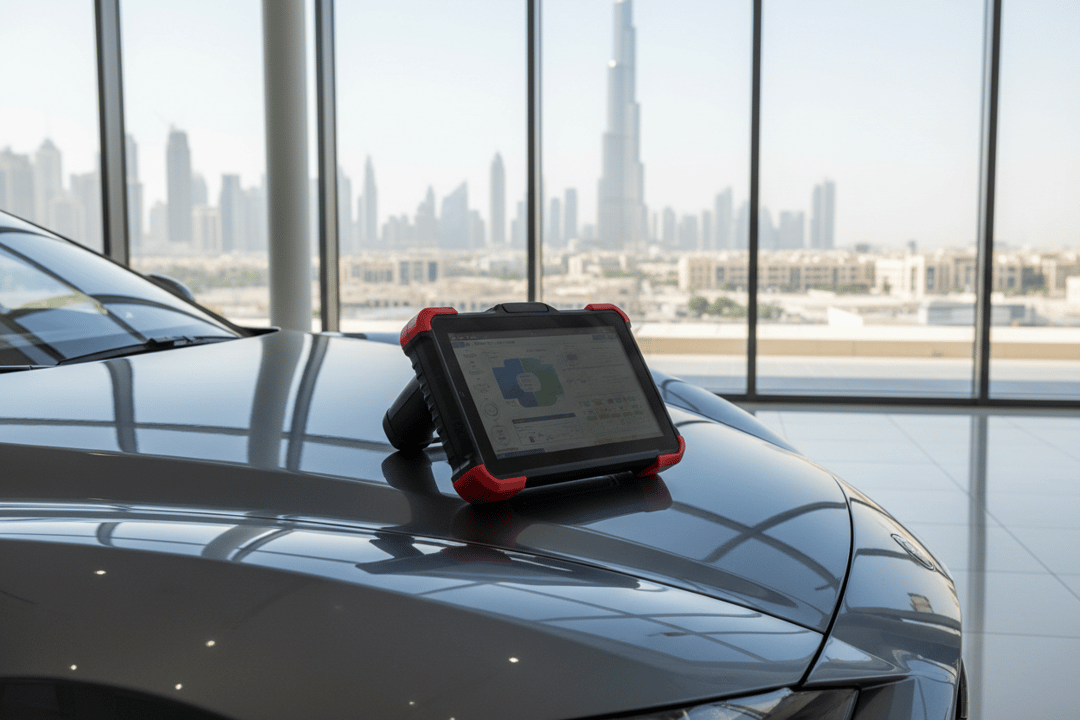
Visual inspection cannot reveal internal faults or stored error codes within the electronic control units. An On-Board Diagnostics (OBD) scan connects to the vehicle’s computer to read data regarding the engine, transmission, ABS, and airbag systems. A scanner identifies "Check Engine" lights that may be intermittent or turn off once the vehicle cools down, often masking transmission faults or catalytic converter issues.
Utilizing a diagnostic service is cost-effective compared to fixing a hidden transmission failure. For a standard computer diagnostic, the fee is Computer Diagnostic AED 99. This service uncovers the root cause of warning lights, preventing misdiagnosis and ensuring repairs are targeted effectively.
Body, Frame, and Paint Quality
While Toyota build quality is robust, collision history is often hidden beneath layers of new paint or cosmetic repairs. A thorough inspection analyzes the vehicle at the panel level to determine if repairs are original or aftermarket. Inspectors measure panel gaps to ensure structural alignment has not been compromised by a collision. Furthermore, paint thickness gauges verify whether panels have been resprayed, which can indicate accident damage or poor restoration quality.
For a detailed assessment of the vehicle’s exterior condition combined with engine diagnostics, the Body & Computer AED 250 package provides a comprehensive report. This inspection covers panel-by-panel analysis for original versus repainted surfaces and checks structural integrity of the frame rails and pillars.
The Role of Comprehensive Pre-Purchase Inspection
A comprehensive mechanical and structural inspection is the definitive method to prevent surprise repairs after a vehicle purchase. This high-level service reviews 25 distinct categories covering everything from fluid condition to road test performance. A professional inspection identifies "hidden" defects such as frame damage from low-speed curb impacts or transmission slipping that occurs only under load.
The Comprehensive AED 299 package offers the most detailed coverage, including a full road test to evaluate acceleration, braking, and unusual vibrations. This investment provides a written report detailing the vehicle's true mechanical condition before the buyer commits to the transaction.
AutoFay inspects 410+ checkpoints with HD photos and PDF report. Book at autofay.ae or call +971542584458





0 Comments
No comments yet. Be the first to share your thoughts!