

The relentless UAE sun acts as a relentless accelerator for vehicle deterioration. Temperatures often exceed 50°C, subjecting automotive finishes to extreme thermal stress. This environment strips away protective oils and degrades the chemical bonds in the paint. Consequently, the vehicle’s aesthetic value and structural integrity are compromised over time. Understanding the mechanics of this degradation is essential for vehicle preservation.
The Mechanics of Clear Coat Failure
The clear coat is the topmost layer of paint, designed to protect the base color from UV rays and minor abrasions. In the UAE, the UV index remains consistently high, causing the polymers in the clear coat to break down. This chemical reaction is known as oxidation. As the clear coat oxidizes, it loses its shine and develops a dull, hazy appearance. This is often mistaken for dirty paint but cannot be removed by a standard wash.
Left unchecked, the clear coat will eventually become porous. Water and dirt penetrate this weakened layer, reaching the base paint. This leads to "alligatoring," where the surface texture resembles reptile skin. Eventually, the oxidation eats through to the metal substrate. Once the clear coat is completely breached, rust becomes inevitable. The vehicle's frame and body panels suffer permanent cosmetic and structural damage.
Oxidation Prevention and Treatment
Preventing oxidation requires a proactive approach rather than a reactive one. Regular washing removes abrasive sand and dust that can act like sandpaper during high-speed driving. Wax provides a temporary sacrificial layer to protect the paint, but it melts away in extreme heat. For long-term protection, ceramic coatings are the superior choice in the region.
Ceramic coatings are liquid polymers that bond chemically to the vehicle's paint. Unlike wax, they form a semi-permanent shield that does not wash away. This layer repels water, dirt, and UV rays. The hydrophobic effect makes cleaning easier, as contaminants struggle to stick to the surface. Furthermore, a ceramic coating significantly reduces the heat absorption of the paint, keeping the vehicle cooler and slowing down the oxidation process.
Paint Protection Film (PPF): The Physical Shield
For maximum protection against physical damage caused by road debris, Paint Protection Film, or PPF, is the definitive solution. PPF is a thermoplastic urethane film applied over the painted surfaces of a car. It acts as a sacrificial armor, absorbing the impact of rocks, potholes, and debris that would otherwise chip the paint.
Modern PPF is optically clear and self-healing. When the film is heated by sunlight or warm water, minor scratches and swirl marks fade away. This technology ensures that the vehicle retains its showroom gloss despite daily commuting. While installation is labor-intensive, the long-term preservation of the paint bodywork is unmatched. It is particularly recommended for the hood, bumpers, and side mirrors, which are the most exposed areas on a vehicle.
Identifying Inspection Signs of Sun Damage
Detecting sun damage requires a trained eye and a methodical approach. As a vehicle inspector, I look for specific indicators of clear coat failure and oxidation. The roof and hood are typically the first areas to show signs of fading and dullness due to direct overhead exposure. The A-pillars and B-pillars often display a stark contrast in color, indicating that they have faded differently than the rest of the vehicle.
Another critical sign is the presence of "orange peel" texture. This occurs when the paint fails to level out during application or as a result of baking in the sun. Inspectors also check for pitting. Pitting is microscopic craters in the paint surface caused by the sun reacting with embedded contaminants. This texture traps dirt and moisture, accelerating further corrosion. A professional inspection will also look for peeling or blistering edges, which signal that the paint has separated from the metal.
The Role of Professional Vehicle Inspection
While visual inspection is important, a professional inspection offers a comprehensive assessment that goes beyond the surface. DIY inspections often miss hidden issues, particularly those affecting the undercarriage and frame. The UAE heat expands and contracts metal components, stressing the welds and joints. Without a detailed check, structural weaknesses can go unnoticed.
AutoFay provides a rigorous inspection process designed to uncover these issues. We utilize a system of 410+ checkpoints across 25 distinct categories. This ensures that no aspect of the vehicle's condition is overlooked. Our on-location inspection allows us to inspect the vehicle at your location across all seven Emirates. The inspection includes a road test to evaluate brakes, suspension, and engine performance under load.
| Inspection Category | Key Focus Areas |
|---|---|
| Body & Paint | Panel-by-panel analysis for original/repainted/repaired sections, clear coat integrity, and oxidation. |
| Frame & Structure | Inspection of rails, pillars, and floor pans for structural stress or rust intrusion. |
| Engine & Mechanical | Sound analysis, mount integrity, and emission smoke color checks. |
| Brakes & Suspension | Pad percentage rating and suspension component condition. |
| Tires & Fluids | Manufacturing date verification, tread depth, fluid levels, and oxidation. |
Maintenance Packages and Service Options
Choosing the right inspection package depends on the vehicle's age and usage history. A simple diagnostic check can identify electronic faults, which are often exacerbated by the heat. For vehicles showing signs of wear, a comprehensive inspection is necessary to assess the range of damage.
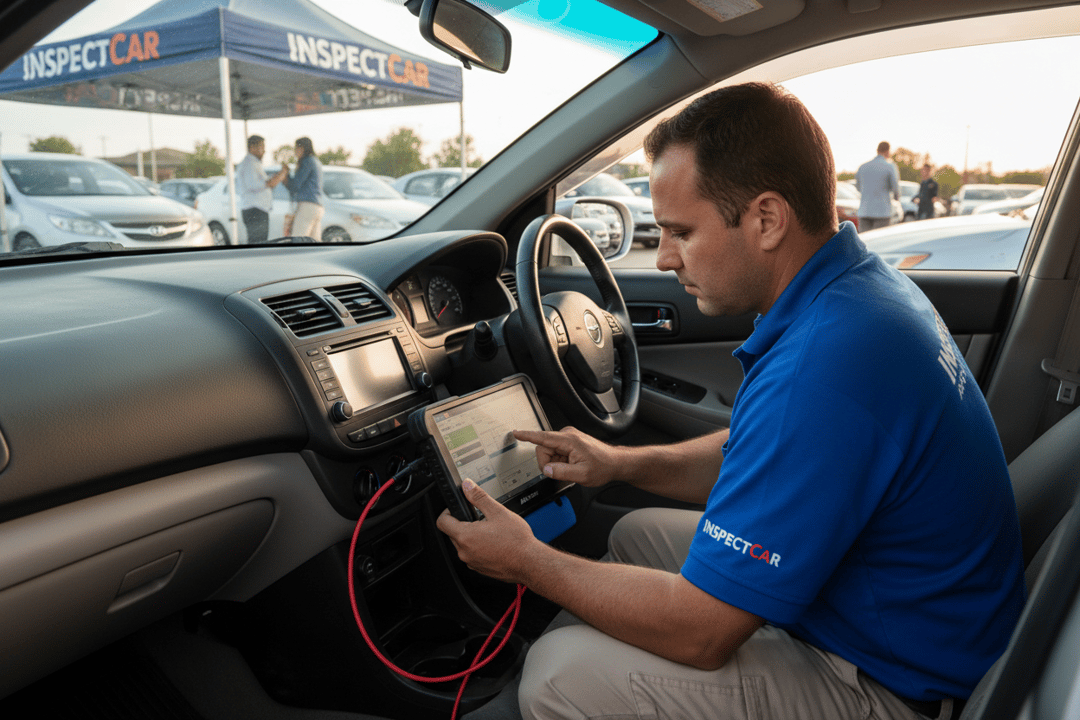
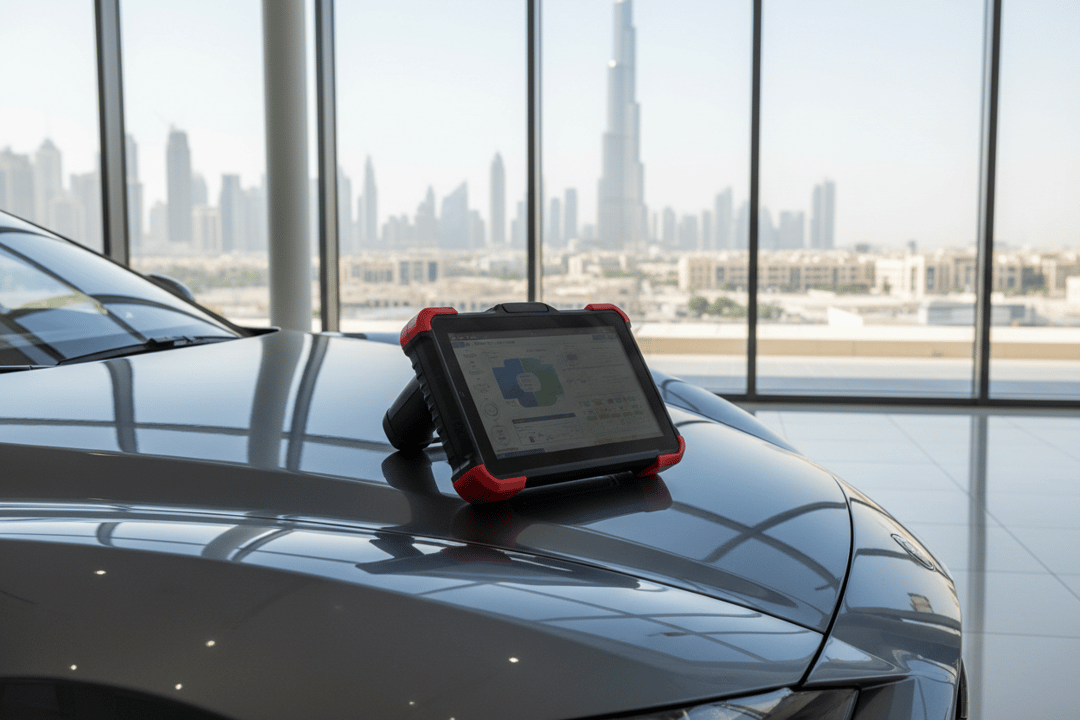
- Computer Diagnostic AED 99: This package scans for engine, transmission, ABS, and airbag codes. It is the first step in identifying electronic failures caused by high temperatures.
- Body & Computer AED 250: This includes the diagnostic scan plus a detailed inspection of the body and paint condition. It is essential for identifying clear coat failure and oxidation.
- Comprehensive AED 299: The most thorough option, covering the engine, brakes, suspension, tires, fluids, frame, and a complete road test. This ensures the vehicle is safe to drive and mechanically sound.
Regular maintenance of your vehicle's paint is not merely cosmetic; it is a matter of mechanical preservation. By understanding the risks posed by the UAE climate and utilizing professional inspection services, you can preserve the value and longevity of your asset. Ignoring paint damage leads to rust, which compromises the safety and structural integrity of the vehicle.
AutoFay inspects 410+ checkpoints with HD photos and PDF report. Book at autofay.ae or call +971542584458
0 Comments
No comments yet. Be the first to share your thoughts!