
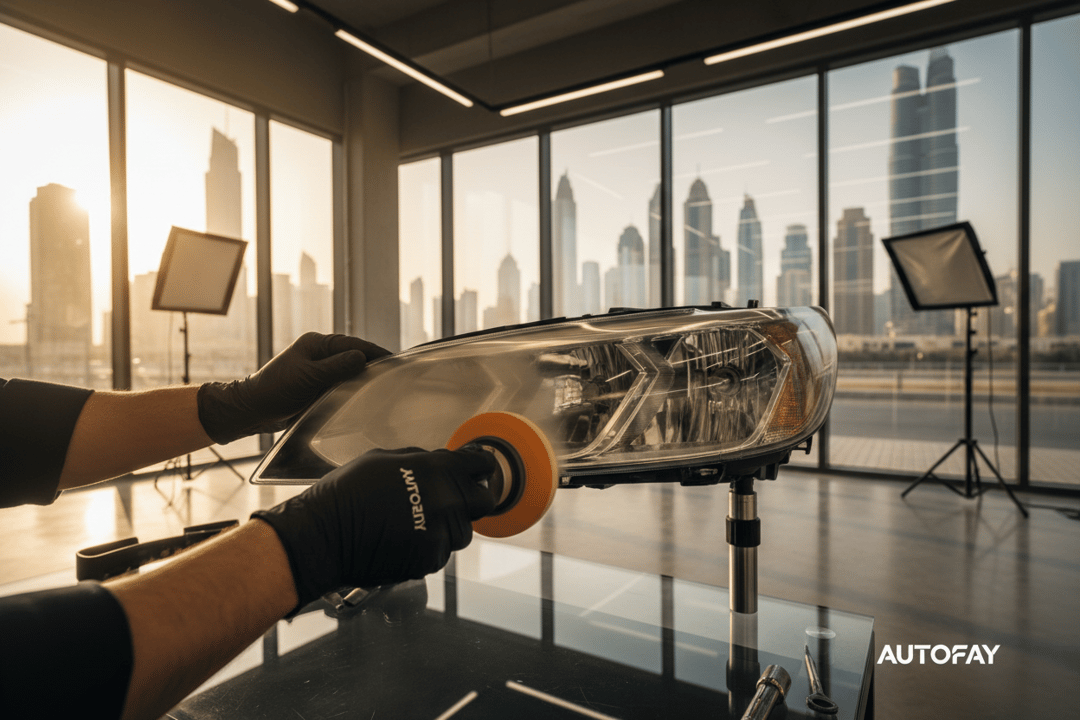
Headlights serve as the primary visual communication tool between a vehicle and its surroundings. In the United Arab Emirates, the intensity of solar radiation places immense stress on automotive exterior components. Polycarbonate plastic lenses, commonly used in headlight housings, absorb ultraviolet (UV) radiation from the sun. This absorption triggers a chemical process known as degradation, leading to surface oxidation and internal fogging. The result is a yellowed, hazy appearance that significantly reduces light output and clarity. For vehicle owners, understanding the mechanics of this degradation is essential for maintaining safety and passing regulatory standards.
The Science of UV Degradation in the UAE Climate
The UAE climate is characterized by high UV index levels and extreme heat. These environmental factors accelerate the breakdown of the protective coating on headlight lenses. When this coating fails, the underlying plastic reacts with oxygen and moisture in the atmosphere. This chemical reaction creates a layer of cloudiness that scatters light rather than directing it. Over time, this oxidation can render headlights nearly opaque, posing a severe hazard during night driving or adverse weather conditions.
It is important to distinguish between surface oxidation and internal fogging. Surface oxidation occurs on the top layer of the lens and can often be addressed through polishing. Internal fogging happens when moisture penetrates the seal of the headlight assembly and condenses inside. Internal fogging is a more complex issue, as it requires disassembly and sealing repairs rather than simple polishing. Ignoring these issues leads to a gradual loss of visibility, increasing reaction times for drivers and pedestrians alike.
Restoration vs. Replacement: A Technical Comparison
When headlights become cloudy, owners are often faced with a choice between restoration and full replacement. Professional restoration involves sanding the surface to remove the oxidized layer and applying a clear protective coating. This process is effective for minor to moderate cloudiness and retains the original OEM housing. However, restoration is not a permanent solution. The new coating has a lifespan, and the underlying plastic continues to degrade, meaning the process may need to be repeated every two to three years.
Replacement involves removing the original unit and installing a new headlight assembly. This option ensures the lens is free of oxidation and often includes updated technology, such as HID or LED modules. While replacement guarantees clarity, it is a more invasive procedure that requires significant labor and sourcing costs. Furthermore, improperly installed replacement units can lead to electrical issues or misalignment with the vehicle's bodywork. Drivers must weigh the longevity of a new component against the recurring nature of the restoration process.
| Criteria | Restoration | Replacement |
|---|---|---|
| Effectiveness | Restores surface clarity; limited lifespan | Guarantees new lens condition |
| Cost | Lower initial cost; requires periodic maintenance | High initial cost; long-term durability |
| Complexity | Surface-level intervention | Full component swap; electrical integration |
Operational Safety and Visibility Risks
Cloudy headlights do not just look bad; they compromise the vehicle's safety systems. The scattering of light reduces the beam pattern, meaning the driver sees less of the road ahead. This reduction in visibility is particularly dangerous in the early morning or late evening when the sun is low on the horizon. Additionally, weak headlights make it difficult for oncoming traffic to identify your vehicle, increasing the risk of accidents.
Another critical safety aspect is the braking distance. Diminished light reduces the driver's ability to perceive hazards quickly. In the context of the UAE’s fast-paced highways, such as Sheikh Zayed Road or Emirates Road, this delay can be catastrophic. Furthermore, headlights are essential for signaling intentions to other drivers. If the lens is hazy, the brightness of the turn signals or high beams may be diffused, leading to confusion and potential collisions.
RTA Regulations and Vehicle Integrity
Vehicle inspection authorities in the UAE enforce strict standards regarding exterior lighting. The Roads and Transport Authority (RTA) in Dubai and Abu Dhabi require that headlights be clear and free from obstructions. If an inspection vehicle fails due to "dismal" or obstructed headlights, the owner must pay a re-test fee. This adds an unnecessary financial burden to vehicle ownership.
Headlight condition is often indicative of the overall maintenance history of the vehicle. Poor headlight maintenance suggests that other components may also have been neglected. For example, a vehicle with severe headlight oxidation may also have accumulated dirt in the radiator or worn-out tires. Ensuring headlight clarity is part of a broader commitment to vehicle safety and compliance.
Comprehensive Vehicle Inspection Standards
At AutoFay, we evaluate vehicle condition through a rigorous process involving over 410+ checkpoints across 25 categories. Our inspection protocol goes beyond a visual check of the lights to assess the vehicle's overall structural and mechanical health. We categorize our services to cover all aspects of vehicle safety, ensuring no detail is overlooked.
Our Body & Computer package at AED 250 provides a detailed assessment of the vehicle's external condition, including the paintwork, panel alignment, and the functionality of electronic systems. This package is essential for used car buyers who want to verify that the vehicle's exterior, including lighting units, is in good order. For a more thorough evaluation, our Comprehensive package at AED 299 covers the frame, engine, transmission, brakes, suspension, and tires. This level of inspection ensures that the vehicle is roadworthy and mechanically sound.
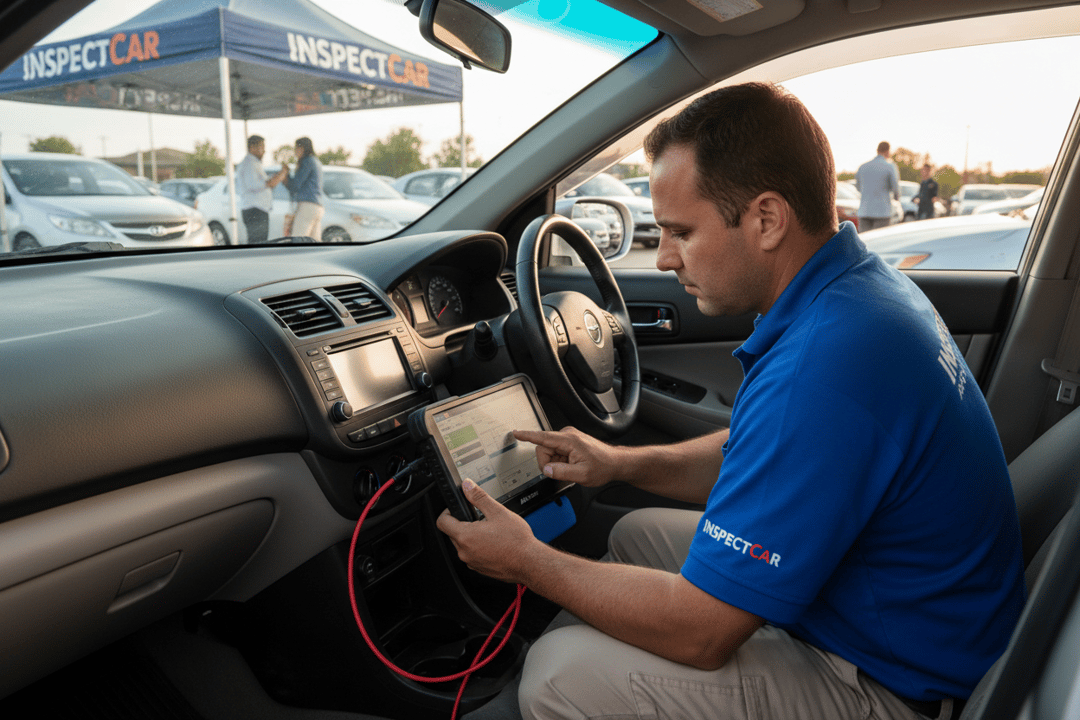
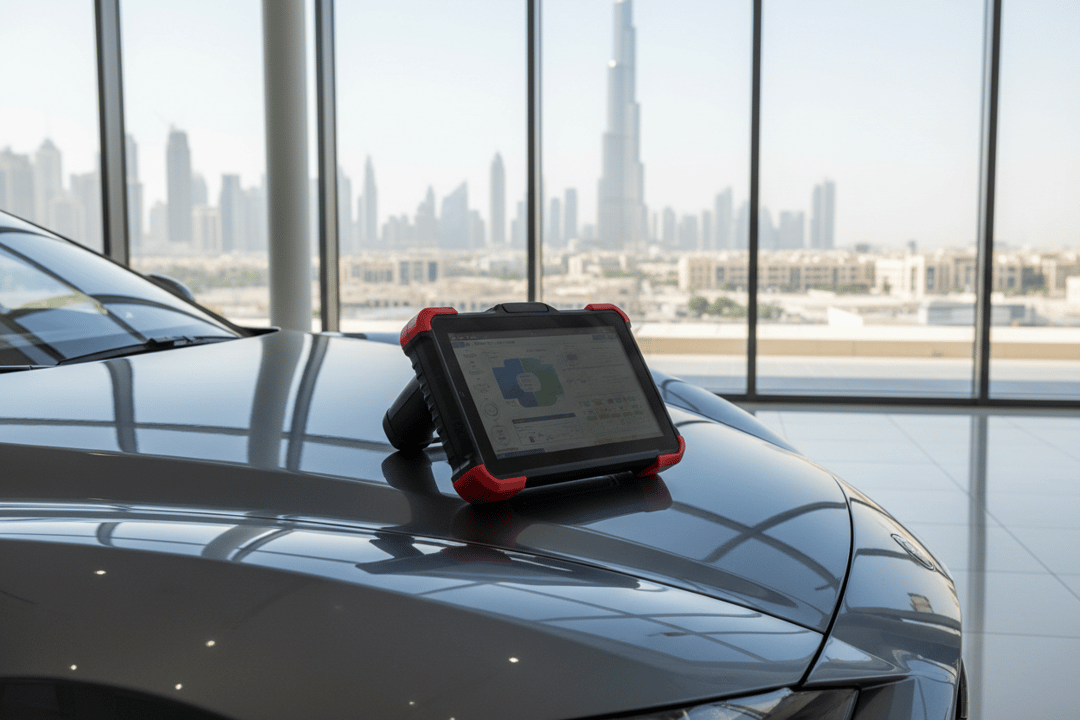
We also offer a Computer Diagnostic service for AED 99, which scans the engine, transmission, ABS, and airbag systems for error codes. This helps identify electrical issues that may be related to the lighting system, such as faulty relays or wiring problems. Our on-location inspection is available across all seven Emirates, bringing professional inspection directly to the customer's location.
- Body & Paint: We assess panel-by-panel conditions, identifying original, repaired, or repainted sections.
- Frame & Structure: Inspection of rails, pillars, and floor pan for alignment and structural integrity.
- Engine & Mechanical: Evaluation of engine sound, mounts, and fluid conditions (oil, coolant, brake fluid).
- Suspension & Tires: Assessment of shock absorbers, springs, and tire manufacturing dates for wear analysis.
Ensuring Roadworthiness and Compliance
Regular vehicle maintenance is the best preventative measure against headlight degradation. However, inspections remain the definitive method for verifying that a vehicle meets safety standards. A professional inspection service like AutoFay provides a transparent report highlighting any deficiencies, including headlight clarity issues.
Driving with compromised headlights is a violation of traffic safety regulations. It endangers the driver, passengers, and other road users. Addressing headlight issues promptly—whether through restoration or replacement—is a necessary step in vehicle ownership. By combining preventative maintenance with regular professional inspections, drivers can ensure their vehicles remain safe and compliant on UAE roads.
AutoFay inspects 410+ checkpoints with HD photos and PDF report. Book at autofay.ae or call +971542584458
0 Comments
No comments yet. Be the first to share your thoughts!