

The transmission is the mechanical backbone of any vehicle, converting engine power into the controlled movement required for safe driving. In the extreme climate of the United Arab Emirates, where ambient temperatures often exceed 40°C, the role of transmission fluid—known as Automatic Transmission Fluid or ATF—becomes critical. This fluid serves three primary functions: it lubricates moving internal components, provides hydraulic pressure to shift gears, and acts as a cooling agent to dissipate the immense heat generated by the torque converter. Neglecting this essential fluid leads to accelerated wear, premature component failure, and a complete loss of drivability. Understanding the state of your ATF is not merely a maintenance task; it is a diagnostic necessity for vehicle longevity.
Diagnosing ATF Condition: Color and Smell
A vehicle owner can perform a preliminary health check on the transmission by observing the fluid’s physical state. Fresh ATF typically possesses a bright, translucent red or pink hue, though some manufacturers use amber or green-tinted fluids. This color indicates the presence of antioxidants that prevent the fluid from breaking down under heat and pressure. As the fluid degrades, these antioxidants are consumed, and the oil begins to oxidize, resulting in a darker coloration.
Fluid that has turned dark brown or black is a clear sign that the fluid has been exposed to excessive temperatures for too long. This color change often coincides with the presence of carbon particles and varnish, which are byproducts of burnt fluid. Furthermore, the fluid may appear thick, syrupy, or gritty to the touch, suggesting internal clutch material has worn away and suspended in the oil. The smell is equally diagnostic. Healthy ATF has a faint, sweet odor similar to fresh berries or marshmallows. A burnt, acrid, or metallic smell indicates that the fluid has overheated, likely causing the clutch packs and bands inside the transmission to scorch and degrade.
Understanding ATF Specifications and Types
Not all transmission fluids are created equal; using the wrong type can result in poor shift quality, delayed engagement, or catastrophic internal damage. The most common specifications found in vehicles sold in the UAE include Dexron, Mercon, ATF Type T-IV, and specific CVT fluids. Dexron VI is the current standard for many General Motors vehicles, offering improved shear stability and low-temperature performance. ATF Type T-IV is the industry standard for many Toyota and Lexus models. CVT (Continuously Variable Transmission) fluids are chemically distinct from traditional automatic fluids and are often dyed bright blue or green to prevent cross-contamination.
Modern vehicles often require synthetic blends or fully synthetic fluids to handle higher torque outputs and the thermal stresses of stop-and-go traffic. It is vital to consult the owner’s manual or a professional technician before selecting a fluid. Mixing incompatible fluids can neutralize the additive packages designed to protect seals and gaskets, leading to leaks. In the UAE, where vehicles may be subjected to heavy loads on highways and idling in traffic, using a fluid with a higher viscosity index can provide better protection against thermal thinning.
Flush vs. Drain-and-Fill: The Mechanics of Service
There are two primary methods for changing transmission fluid: the flush and the drain-and-fill. Understanding the difference is crucial for vehicle health. A flush involves removing the old fluid from the transmission and circulating new fluid through the system using a machine, simultaneously flushing out contaminants from the cooler and lines. This method replaces nearly 100% of the fluid. While effective at removing sludge and metal shavings, it carries a higher risk of dislodging debris that may be stuck in the transmission valve body, potentially causing blockages and shifting irregularities.
The drain-and-fill method is the more conservative approach. It involves removing the transmission pan to drain the fluid that has settled at the bottom and replacing the filter. Typically, this process removes only about 30% to 50% of the fluid. A drain-and-fill is less invasive and carries a lower risk of introducing damage. However, it leaves the majority of the old, degraded fluid in the system, which can dilute the fresh fluid over time, though it is generally considered the safest method for vehicles with high mileage or those suspected of having internal sludge issues.
| Method | Process | Fluid Replacement | Risk Profile |
|---|---|---|---|
| Flush | Machine circulates new fluid through system | Usually 100% of fluid | High risk of dislodging debris |
| Drain-and-Fill | Removal of pan and filter replacement | 30% to 50% of fluid | Low risk, conservative approach |
Debunking Sealed Transmission Myths
A common misconception among vehicle owners is the concept of a "sealed for life" transmission. Many manufacturers label their transmissions as sealed, implying that the fluid never needs to be changed. This label often refers to the absence of a dipstick, meaning the fluid level cannot be checked manually by the driver. However, the absence of a dipstick does not mean the fluid is immortal. Heat, friction, and the chemical breakdown of additives occur regardless of whether the driver can see the oil level.
Another myth is that a transmission with no leaks does not need fluid changes. Fluid degradation is an internal process, not an external one. Over time, the fluid loses its ability to protect against friction, leading to increased wear on the clutch plates and gears. Even if the fluid looks clean on the dipstick, microscopic chemical changes may have occurred that are invisible to the naked eye. For vehicles used in the UAE, where stop-and-go traffic and extreme heat are frequent, adhering to the manufacturer’s recommended service intervals or extending them to every 40,000 to 60,000 kilometers is essential.
The Importance of Professional Inspection
While visual inspection of transmission fluid provides valuable clues, it is rarely sufficient to diagnose the health of a modern transmission. Modern vehicles are equipped with complex computer systems that monitor transmission performance. A transmission that shifts harshly, slips, or hesitates may have a minor electrical fault, a sensor issue, or a mechanical problem that is not immediately visible during a fluid check. Relying solely on visual cues can mask underlying issues that will eventually lead to a complete transmission failure.
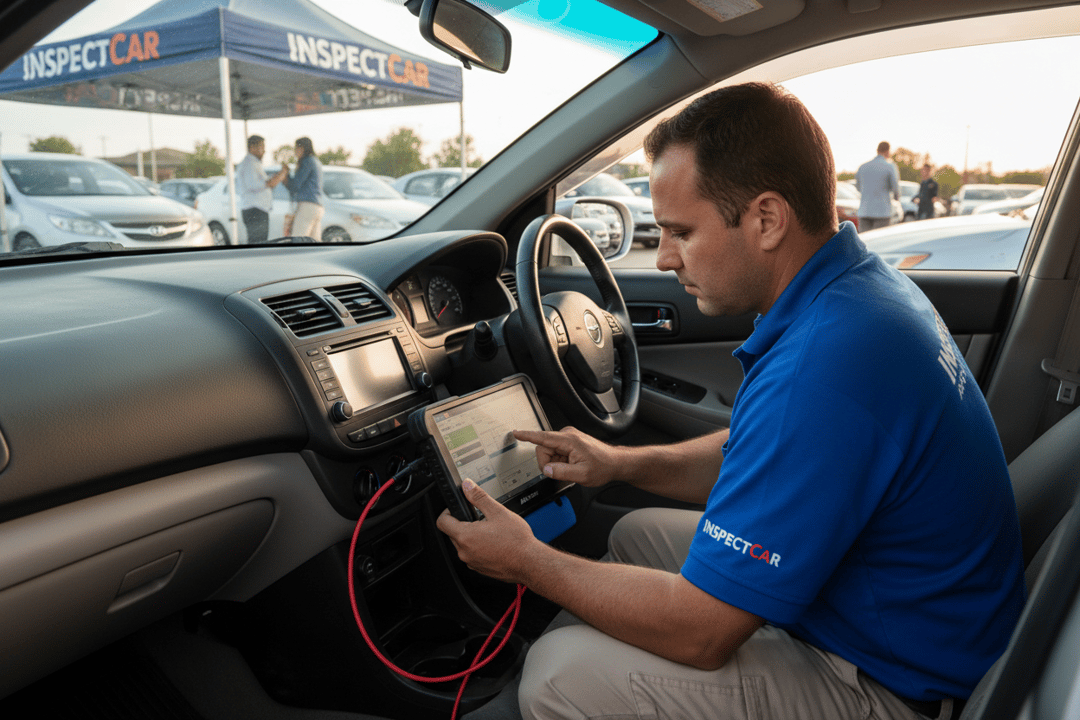
Comprehensive vehicle inspection services are designed to bridge the gap between visual checks and complex diagnostics. Professional inspectors utilize computer diagnostics to read transmission trouble codes and observe live data streams, such as hydraulic pressure and shift solenoid performance. This data, combined with a thorough road test, allows for a definitive assessment of the transmission’s health. Services like those offered by AutoFay provide a detailed evaluation of the vehicle’s condition across 25 different categories, ensuring that no symptom is overlooked.
When purchasing a used vehicle in the UAE, verifying the transmission fluid and the vehicle’s overall health is a non-negotiable step. A vehicle may appear mechanically sound on the surface, but a neglected transmission can result in a costly surprise shortly after purchase. A comprehensive inspection package offers peace of mind by identifying potential transmission issues before they escalate into irreversible damage. These packages typically include a computer diagnostic scan, a road test to evaluate shifting behavior, and a review of fluid levels and conditions.
Integrated Vehicle Health and Fluids
Transmission health does not exist in a vacuum; it is interconnected with other vehicle systems. For instance, a failing cooling system can cause the transmission to overheat, leading to fluid breakdown. Similarly, a slipping transmission can place undue stress on the engine, potentially causing it to overheat. A holistic inspection approach is the most effective way to maintain a vehicle. Inspectors evaluate components like the radiator, water pump, and hoses to ensure the cooling system is functioning correctly.
Services such as the Body & Computer package for AED 250 provide essential data regarding the vehicle’s electronic systems, which are the eyes and ears of the transmission. By identifying sensor errors early, owners can address minor issues before they trigger a transmission fault. The Comprehensive package for AED 299 expands the scope to include a detailed look at the engine, suspension, brakes, and tires, ensuring that the vehicle is safe for the road. This level of scrutiny is vital in the UAE market, where vehicles undergo rigorous daily use.
Regular maintenance of transmission fluid is the most cost-effective way to prevent major repairs. A fluid change is significantly cheaper than replacing a torque converter or rebuilding the transmission. However, knowing *when* to change the fluid is just as important as doing it. A professional inspection can determine if the transmission is mechanically sound enough to withstand a flush, or if a drain-and-fill is the safer alternative. Ignoring the warning signs of degraded fluid accelerates wear on the transmission clutches and bands, leading to slippage and eventual hard failure.
Ultimately, the condition of the transmission fluid is a barometer of the vehicle’s overall mechanical health. It reflects how well the vehicle has been maintained and how gently it has been driven. In the demanding conditions of the UAE, where vehicles face high ambient temperatures and demanding driving conditions, proactive maintenance is the only way to ensure reliability. Regularly scheduled inspections, coupled with adherence to fluid change intervals, will extend the life of the transmission and protect the investment in the vehicle.
Vehicle owners should prioritize regular professional inspections to monitor the health of their transmission and other critical systems. A professional service provides the technical expertise required to interpret fluid condition and vehicle behavior accurately. By utilizing on-location inspection services available across the seven Emirates, vehicle owners can ensure their cars are thoroughly checked without disrupting their daily schedules.
AutoFay inspects 410+ checkpoints with HD photos and PDF report. Book at autofay.ae or call +971542584458.


0 Comments
No comments yet. Be the first to share your thoughts!